Lee Jae-seok: The Man Who Chose ‘Dialogue’ Before the Walls of Religion
[Religion Column]
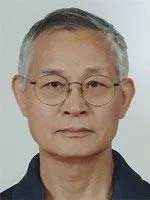
By Jeong Seong-soo, Senior Reporter on Religious Affairs, Segye Times (Original Article)
Religion can unite people, but at times, it also builds the highest walls. People split into factions despite believing in the same God, and reject others simply because their doctrines differ. Opening one’s heart to dialogue across entirely different religions is harder still. Thus, interfaith harmony is far easier said than done. In modern Korean religious history, one figure dedicated years of hard work in the field to tear down these walls: Lee Jae-seok, former President of the Korean Council of Religious Leaders.
Born in Cheongyang, South Chungcheong Province, in 1933, he was a young student at Chung-Ang University studying law, dreaming of becoming a judge while preparing for the higher civil service examination.
In 1956, during his junior year, a chance encounter with the Unification Church reshaped the trajectory of his life. The following year, he embarked on pioneer evangelism in Cheonan. His early religious life was passionate: after completing a one-week fast in the summer of 1957, he headed down to Cheonan and spent 10 months roaming the alleys to preach. At the time, relations between established Christian churches and the Unification Church were hostile. Once, while visiting a Presbyterian church to debate doctrine with a pastor, he was shouted at as a “heretic” and chased out of the building.
What makes his story remarkable is that the very man who experienced such rejection spent his later life building bridges between established churches and the Unification Church. The turning point came in 1966. While serving as the pastor of Seoul 3rd Church, Lee began holding joint revival services with Protestant ministers. In November of that year, he co-founded the “Christian Interdenominational Movement Headquarters” alongside five pastors from established churches. Defying expectations, their first event—a minister meeting in Seoul—attracted 180 pastors from 27 different denominations. A surprising number of clergy responded to the call to meet across denominational lines. This initiative stemmed not just from personal passion, but also aligned with the Unification Church’s interdenominational and interreligious spirit of human peace and harmony.
However, the walls remained high. As word spread that the movement headquarters was connected to the Unification Church, backlash from the Protestant community intensified. Planned revivals collapsed, and collaborating ministers departed. A remark Lee left during this period remains poignant today: he realized that the Korean church community was “far more interested in ‘who is doing it’ than ‘what is being done.'” He keenly felt a reality that prioritized a person’s affiliation over the intrinsic value of their work. Though the setbacks often brought him to tears in secret, he refused to step back.
Instead, to overcome that wall, he directly sought dialogue with Pastor Kang Won-yong, one of the leading figures in Korean Protestantism at the time. Lee wanted to appeal that “the Unification Church is an undeniable reality” and that rather than ignoring or opposing it, “we must build a new relationship of mutual understanding and cooperation.” However, meeting the immensely busy Pastor Kang proved difficult. Learning that Kang was heading to Busan the next day, Lee purchased a plane ticket to Busan on the spot. Meeting Kang at Gimpo Airport, Lee boarded the same flight, saying, “I came out just to speak with you, even if only during the flight.”
That tenacity eventually bore fruit. In September 1968, 30 leaders from established churches and 10 Unification Church representatives—including Sun Myung Moon—sat down together at the Academy House in Suyu-ri, Seoul. Hong Hyeon-seol, President of the Methodist Theological Seminary, led the prayer; Kang Won-yong delivered opening remarks; Sun Myung Moon offered greetings; and Association President Yoo Hyo-won gave a lecture on the Divine Principle, followed by a Q&A session. Though this meeting did not mature into sustained dialogue, the fact that leaders met face-to-face to listen to one another rather than treating the Unification Church purely as an object of rejection was notable in itself.
Lee’s endeavors expanded beyond interdenominational dialogue into broader interfaith harmony. He widened exchanges through the Korea Religious Affairs Research Institute, collaborating with Catholic Father Park Yang-woon and Anglican Father Jo Gwang-won. In 1970, he achieved a major milestone: the Unification Church joined the Korean Association of Religious Orders (now the Korean Council of Religious Leaders) as its eighth member body, joining the existing seven major religions (Catholicism, Anglicanism, Buddhism, Confucianism, Cheondoism, Won Buddhism, and Daejongism) in shared dialogue and cooperation. Serving as President of the Council in 1988 to foster interfaith reconciliation was the culmination of these lifelong efforts.
While perspectives on those events may vary depending on one’s religious stance, one truth shines clearly through his life: he never gave up on dialogue. Religious harmony does not mean unifying doctrines; it means recognizing differences, meeting as neighbors, and joining hands for the common good. Today, our society faces similarly high walls of conflict surrounding religion, politics, ideology, and generations. The tendency to judge people by “which side they are on” before engaging in genuine dialogue remains strong.
It is worth reflecting on whether the mindset Lee observed half a century ago—prioritizing ‘who does it’ over ‘what is done’—has truly vanished. This is why re-examining the life of Lee Jae-seok, a follower of a minority religion, holds value today. The interdenominational and interreligious path he walked was both an individual’s persistence and a journey that translated faith ideals into concrete interfaith dialogue. How should the social value of a religion be measured? For Lee Jae-seok, who lived lowering social walls and bridging people together, the answer to that question was always ‘dialogue.’