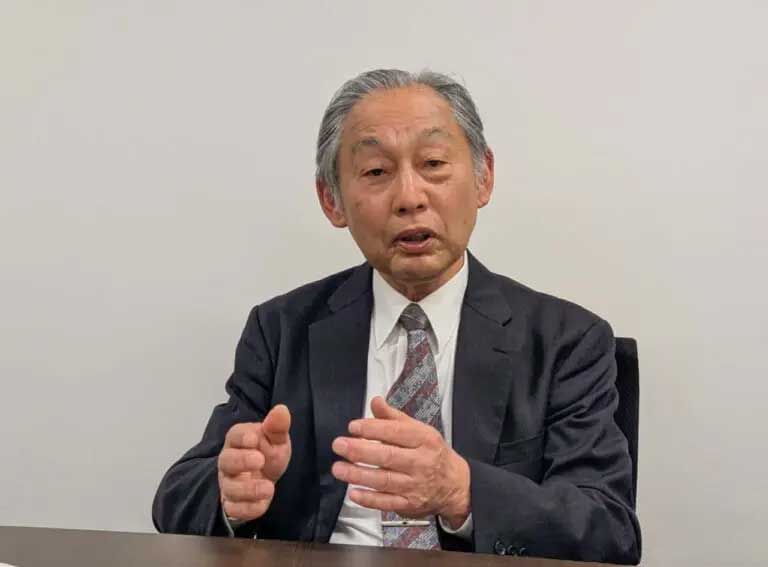
Hiroshi Kurose on religious corporation status
Understanding the Japanese dissolution decision: The Supreme Court’s recognition of the continued existence of the religious organization even though it lost its corporation status
Tokyo, 13th July 2026 – Published as an article in the Japanese newspaper Sekai Nippo. Republished with permission. Translated from Japanese. Original article.
[Opinion]
Dissolution Order and the Supreme Court’s Decision Confirm the Continued Existence of the Family Federation as a Religious Organization
by Rev. Hiroshi Kurose 黒瀬博, Tokyo West Baptist Church
Worship Facilities Should Be Returned Immediately
On 22nd June, the Supreme Court of Japan dismissed the special appeal filed by the Family Federation for World Peace and Unification (formerly the Unification Church). As a result, the dissolution order has become final.
Without addressing the constitutional issues involved, the Supreme Court fully affirmed the decisions of the Tokyo District Court and the Tokyo High Court. Naturally, this outcome is deeply disappointing for members of the Family Federation. However, now that the decision is final, there is little point in continuing to debate its contents.
Court decisions are like an umpire’s call in baseball. Even if a ruling is mistaken, time moves forward on the basis of that decision. The reasoning behind this decision is flawed, but just as an erroneous call in baseball cannot be reversed after the game proceeds, neither can this result. Going forward, the focus should shift toward preserving a record of the decision’s injustice.
Distinguishing the Religious Corporation from the Religious Organization
One point made clear by the Supreme Court’s decision is that the dissolution order applies to the religious corporation (宗教法人 – shūkyō hōjin), while the religious organization (宗教団体 – shūkyō dantai) itself is permitted to continue to exist.
This distinction had already been hinted at by the district and high courts, but the Supreme Court’s explicit recognition of it is noteworthy. At the same time, there remains considerable room for interpretation regarding what this continued existence (存続) actually entails. Likewise, opinions differ over what the dissolution order itself legally means. It is therefore still worthwhile to examine these questions carefully.
The distinction between a religious corporation and a religious organization may seem obvious in common understanding, but legally it is much less clear.
For foundations, there are general incorporated foundations and public-interest foundations, both of which possess legal personality. Religious organizations, however, do not possess legal personality. Consequently, they not only lose tax-exempt privileges but also face numerous practical disadvantages, such as being unable to maintain bank accounts.
Nevertheless, Articles 1 and 2 of the Religious Corporations Act describe the conditions under which a religious organization qualifies to become a religious corporation – for example, engaging in religious activities and possessing places of worship. The language used even suggests that a religious organization could be the holder of legal rights such as ownership.
In practice, however, religious organizations cannot be registered as legal entities, making it unlikely that they can actually serve as holders of legal rights. The theoretical question then arises: do religious organizations have any right to own property?
This resembles questions such as whether a parent-teacher association or a school reunion association can own property. While they may exercise de facto control over property, they generally do not hold legal title. By the same reasoning, a religious organization is not a legal entity but merely a private association.
Today in Japan, obtaining legal status as a religious corporation has become extremely difficult. As a result, religious leaders seeking to conduct religious activities may instead establish incorporated associations or foundations and carry out their religious work within those legal frameworks. I have in fact heard of such cases.
From now on, not only will obtaining religious corporate status be difficult, but the recent dissolution order has made clear that even after obtaining such status, there is a risk that the organization’s assets may be seized if it is dissolved. Consequently, more religious groups are likely to choose not to incorporate at all. Even organizations that already possess legal personality may voluntarily dissolve their religious corporation and instead reorganize as foundations.
No one can predict the future with certainty, but this dissolution order will almost certainly prompt new developments within Japan’s religious community. The Supreme Court has clearly distinguished between religious corporations and religious organizations, stating that only the corporation – not the organization – is dissolved.
Nevertheless, there are also explanations suggesting that the religious organization itself should effectively disappear. For example, seizing places of worship used by the religious corporation prevents the religious organization from carrying out its activities. Some have even argued that the organization should change its name. More generally, many people have come to believe that the court’s decision dissolved the religious organization itself.
The decision states that “because the religious organization continues to exist, there is no violation of religious freedom.” Yet in practice, does the decision not aim at dissolving the religious organization as well? Such ambiguity is problematic.
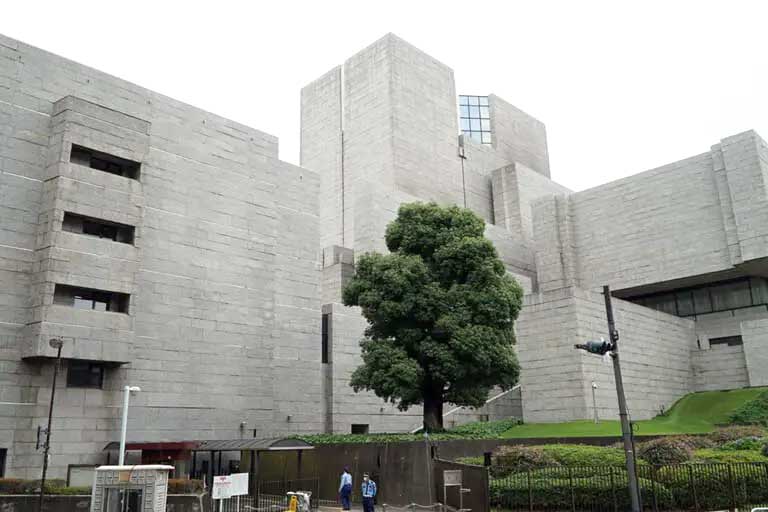
An Irrational Judicial Decision
The Supreme Court confirmed that the religious organization continues to exist. Therefore, it is only natural that the liquidator should conduct the liquidation process in a manner that does not infringe upon the religious organization‘s freedom of religion.
At present, however, the liquidator has seized all of the Family Federation‘s places of worship. Since such facilities are indispensable to religious activity, they should immediately be returned to the Family Federation.
Likewise, cemeteries and memorial parks owned by the Family Federation constitute religious ritual property and therefore should not be subject to liquidation. Selling them would be unlawful, and the seizures should immediately cease, with management transferred to related Family Federation organizations.
Many commentators have already pointed out flaws in the Court’s reasoning. I would further point out that the practical results are equally unreasonable.
The dissolution order was issued on the grounds that the Family Federation‘s aggressive solicitation of donations constituted unlawful conduct and that similar unlawful conduct might continue in the future. Yet the dissolution order applies only to the religious corporation while allowing the religious organization to continue.
What has happened since? The religious organization continues collecting donations just as before. Since this is legally permissible, no one condemns it or calls it unlawful. What does this mean? It means that donation practices carried out after the decision are legal, while essentially the same conduct before the decision was deemed unlawful. This obvious self-contradiction lies at the heart of the dissolution order.
The Court also stated that “there is no effective means other than a dissolution order to prevent aggressive fundraising.” Yet in reality the decision has done nothing to prevent such fundraising. This is the kind of irrational decision currently being handed down by the courts.
As I have argued before, religious corporations possess legal personality and therefore possess legal rights. It is thus possible to compare a religious corporation to an individual person.
Suppose an individual committed a civil wrong. Instead of ordering that person to compensate the victim for the damages caused, imagine a court stripped the individual of all property and transferred any remaining assets to someone else.
Suppose the court then justified this by saying: “The individual is still alive and able to function, so there is no constitutional problem.” Such reasoning would be absurd. Yet that is essentially what has happened through this dissolution order.
The Liquidator Must Follow the Law
Although the dissolution order has become final, the liquidation of the organization‘s assets still remains. The liquidator is currently disposing of assets, but naturally must comply with the law.
Under Article 49-5 of the Religious Corporations Act, if the religious corporation cannot fully satisfy its debts, bankruptcy proceedings must begin. At that point, the liquidator‘s duties end, and responsibility passes to the bankruptcy trustee.
Thus, the liquidator‘s authority is limited. Under Article 49-2, those duties consist only of: completing ongoing business, collecting claims and paying debts, and transferring any remaining assets. The most important of these is the payment of debts.
The liquidator is currently inviting creditors to file claims through public notice. However, donations are not debts. The same is true of charitable gifts, religious offerings, and gifts generally. If such contributions could routinely be reclaimed as debts, ordinary economic and social activity would become impossible.
Accordingly, only illegal donations could become subjects of liquidation. However, the liquidator has no authority to determine whether a donation was illegal. Liquidation concerns established claims and debts; the law does not authorize the liquidator to decide questions of legality.
How, then, should this be handled? Each individual case must be decided by a court. Only after a court, having considered all of the circumstances, issues a judgment recognizing a claim for repayment does a donation become a legally enforceable debt that the liquidator may process.
If the liquidator makes that determination independently without a court judgment, it exceeds the scope of the liquidator‘s authority and could itself lead to legal sanctions. The liquidator has already seized the Family Federation‘s worship facilities. This may itself be unlawful.
Although the court’s decision appears to authorize such action, anyone reading Article 1 of the Religious Corporations Act can readily see that conducting religious ceremonies lies at the core of freedom of religion.
The statute expressly states that it “shall not be interpreted so as to restrict” religious freedom. Given that language, seizing worship facilities violates the law. Even now it is not too late.
The liquidator should immediately reopen the worship facilities to the Family Federation and cease interfering with religious services. Article 188 of the Penal Code must also be considered.
That provision criminalizes interference with religious worship. If the liquidator seizes places of worship and thereby prevents believers from worshipping, this may constitute a criminal offense.
Allowing worship services to continue would not interfere with the liquidation process. The liquidator should not obstruct freedom of religion in matters unrelated to liquidation duties.
For this reason as well, the worship facilities should promptly be returned – or at minimum reopened – to the Family Federation.
The Supreme Court’s decision has made the dissolution order final. At the same time, it has clearly established that the religious organization itself has not been dissolved.
Accordingly, we must continue to speak out so that the spirit of the Religious Corporations Act – which respects the religious activities and freedom of religion of religious organizations – is not ignored.
Featured image above: Hiroshi Kurose (黒瀬博): Born in 1951 in Hiroshima Prefecture. Completed a master’s in legal philosophy at Waseda University in 1975. Graduated from Tokyo Theological Seminary in 1978 and the Advanced Theology Program at Seinan Gakuin University in 1979. Completed studies at Zurich Baptist Seminary in 1984. Currently pastor of Tokyo West Baptist Church. Major works include The Development of a New Christianity (Good Time Publishing). Photo: Sekai Nippo