Investigative journalist takes you inside the hidden plot to eradicate a religion: Japan’s campaign against faith minority Family Federation

a speech given by Japanese investigative journalist and prize-winning author Masumi Fukuda (福田ますみ) at a press conference on the theme “Japan: The Hidden Story Behind the Eradication of a Religion”, held at the Brussels Press Club in Brussels, Belgium on 29th June 2026, organized by Human Rights Without Frontiers (HRWF), an independent non-profit NGO. Translated from the transcription of the original Japanese,
First of all, thank you very much to everyone for taking time out of your busy schedules to gather here today. As I was just introduced, my name is Masumi Fukuda. I am a freelance journalist from Japan.
As was also mentioned, I am not a believer in this religion. In fact, I am not affiliated with any religion at all. I am simply an independent freelance journalist.
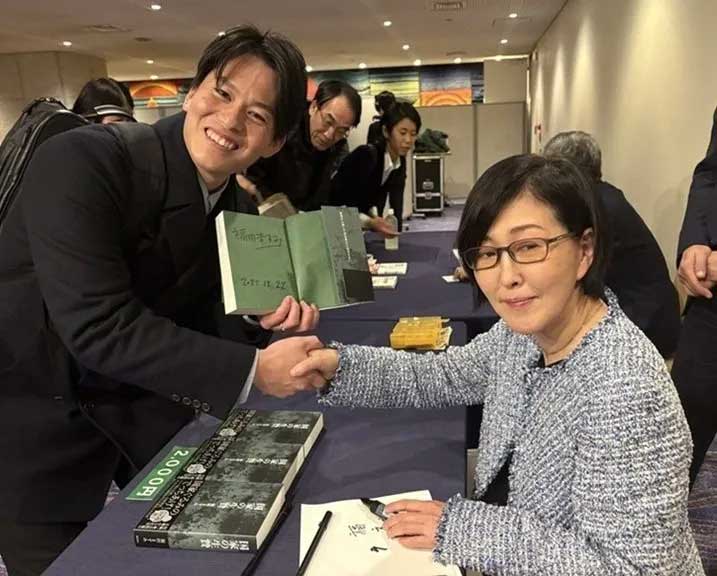
Last November, I published a book entitled The State’s Sacrifice (国家の生贄 – Kokka no Ikenie). It is a nonfiction work compiled and revised from a series of articles that I had been publishing in a monthly magazine since the end of 2022.
Allow me to briefly introduce myself. Including The State’s Sacrifice, I have published seven books.
One of my earlier nonfiction books, Fabrication (Detchiage), became a bestseller with over 230,000 copies sold. It received a major literary award, was adapted into a film last year, and was released on Netflix this year, where it ranked No. 1 in the Japanese film category for two consecutive weeks. The year before last, I also received the Wilbur Award in the United States, which honors outstanding works related to religion.
Readers of my latest book, The State’s Sacrifice, have reacted with great astonishment. They have written comments such as:
- “Terrible wrongdoing was taking place where ordinary citizens could not see.”
- “This reveals truths that the media refuses to tell.”
- “It is filled with facts everyone should read.”
I believe that nearly everything I wrote in this rather thick book will be completely new information to most Japanese citizens. However, it is unquestionably true. On the cover, it says: “We must not turn our eyes away from the truth.”
This book is a report about the former Unification Church. Today, what I want to tell you is precisely what is written in this book.
Many of you probably think of Japan as an advanced democratic nation where freedom, human rights, and religious liberty are firmly established. However, today’s Japan is no longer such a country. Freedom of religion is being violated. The foundations of constitutional government and the rule of law are being shaken. Japanese democracy itself is facing a crisis.
Some of what I say will overlap with previous speakers, but first I would like to explain the former Unification Church – now officially called the Family Federation for World Peace and Unification – a religious organization that originated in Korea. Until 2015, its official name was the Holy Spirit Association for the Unification of World Christianity, commonly known as the Unification Church. For familiarity’s sake, I will continue to use the name “Unification Church“.
Once again, let me emphasize that I am not a member of this church. I am simply an ordinary citizen. As already explained, dissolution proceedings have already begun against this religious corporation. Its headquarters and churches throughout Japan have been placed under the control of court-appointed administrators and effectively closed. Members are no longer allowed to enter their churches.
In other words, believers can no longer gather for worship. They have lost the places where they held services and religious ceremonies. Nearly 2,000 staff members employed by the church across Japan have also been affected, and many have already been dismissed by the court-appointed administrators. As you can imagine, it is extremely difficult for them to find new employment.
After the assassination of former Prime Minister Shinzo Abe (安倍晋三), something completely unexpected happened to ordinary members of the former Unification Church.
They began experiencing various forms of persecution and discrimination. Some members have committed suicide. Some lost their jobs after their employers learned that they belonged to the church. Students were deeply shocked when they heard teachers telling classmates that the Unification Church was an evil religion. Volunteer organizations affiliated with church members found that local governments rejected all of their offers of community service.
The church received numerous threatening letters. Church buildings were vandalized with large graffiti calling them a “cult”. For a time, the internet and social media were flooded with defamatory attacks against the church.
The most serious discrimination has been directed toward church employees. Some have been unable to rent apartments. Others have had lease renewals denied. Some have been refused credit cards. There have even been cases where people seeking medical treatment were turned away because the name of the church appeared on their health insurance information.
As I said earlier, Japan is a country that constitutionally guarantees freedom of religion. So did this religious organization receive a dissolution order because it committed extraordinarily serious crimes?
Many of you may know about the Aum Shinrikyo incident in the 1990s. In 1995, Aum Shinrikyo released sarin gas in the Tokyo subway. Including its other crimes, 29 people were killed and nearly 6,000 were injured. Its founder and senior leaders were sentenced to death for murder. Naturally, because of these horrific crimes, Aum Shinrikyo received a dissolution order.
But is the Unification Church similarly an evil organization? Did it also commit mass murder? The answer is no. The situation is completely different. As an organization, the Unification Church has not committed a single criminal offense. Neither its leaders nor any of its tens of thousands of members have committed murder or violent crimes. So why is the Unification Church being dissolved?
The primary reason is disputes over donations. Why, then, was the Unification Church [See editor’s note 1 below] ordered to dissolve? The answer is surprising: primarily because of disputes over donations.
Donations are indispensable to any religious organization. However, Japanese courts have ruled that when a religious organization accepts donations that exceed what society considers reasonable, those donations may be deemed unlawful.
In earlier court cases, the typical reasoning was that people had been induced to donate through fear – for example, by being told that they or their ancestors would suffer misfortune or go to hell unless they made donations. In other words, the courts found that they had been pressured or intimidated into giving money.
Over the years, many civil lawsuits were filed against the Unification Church [See editor’s note 1 below], and the church lost many of them. I will explain later why so many lawsuits were brought.
I will not go into the details of those cases today, but in many instances the plaintiffs prevailed despite lacking convincing evidence. In my view, a series of unjust judgments accumulated over time.
I believe this happened because almost none of Japan’s judges have any religious faith, and many tend to view new religious movements such as the Unification Church [See editor’s note 1 below] through the lens of prejudice, seeing them simply as cults. It may also be that, given the overwhelmingly negative media coverage, judges feared that ruling in favor of the church [See editor’s note 1 below] would damage public confidence in the courts.
More recently, the courts have gone even further. They have ruled that believers may sincerely think they donated of their own free will, yet were actually subjected to improper psychological influence without realizing it, making the donations unlawful.
This is an extraordinary conclusion. It comes very close to saying that having religious faith is itself a form of victimization. In effect, it amounts to recognizing the controversial theory of “mind control” [See editor’s note 2 below].
In addition to these civil judgments, something even more remarkable occurred in the dissolution proceedings.
The court treated settlements and out-of-court agreements between the church and former members as evidence that the church [See editor’s note 1 below] had committed unlawful acts. On that basis, the court issued the dissolution order.
In other words, the outcomes of civil disputes – which were simply a means of resolving disagreements over donations between the church [See editor’s note 1 below] and former members – were used as the legal foundation for dissolving the entire religious organization.
Furthermore, in the dissolution case, the court concluded, without any concrete evidence, that the church [See editor’s note 1 below] would probably continue causing problems related to large donations in the future. The court even went so far as to examine the church‘s religious doctrines and teachings, concluding that because it was an undesirable religion, there was little prospect that it would reform itself.
Until now, this would have been unthinkable in Japan. Japanese courts have traditionally regarded it as taboo to pass judgment on the content of religious doctrine. It was inconceivable that a court would evaluate whether a religion’s teachings were good or bad. The court, in effect, assumed the role of an inquisitor. For these reasons, I believe the dissolution order is entirely unjust.
It cannot be regarded as a fair judgment based on strict evidentiary standards, because the existence of unlawful conduct was never adequately established. It is also true that this one-sided decision was made against the backdrop of years of highly biased media coverage portraying the Unification Church [See editor’s note below] as nothing more than a cult.
How did things reach this point? In the 1980s, companies operated by members of the Unification Church [See editor’s note 3 below] imported products from South Korea – including multi-level pagodas and large stone urns – and sold them at prices far above their market value. These sales practices became the subject of widespread public criticism. They came to be known as “spiritual sales” (霊感商法 – reikan shōhō).
A group calling itself the National Network of Lawyers Against Spiritual Sales was established, claiming that its purpose was to help “victims” of these practices. This organization, commonly known as the National Network of Lawyers (全国弁連 – Zenkoku Benren), consisted of more than 300 lawyers, many of whom were politically left-leaning, including members of the far left.
Founded in May 1987, the network worked closely with the media to portray “spiritual sales” as a massive fraudulent enterprise. Their campaign was so successful that the Unification Church itself came to be seen as the villain.

However, the companies importing and selling these products were not operated by the church itself. They were businesses run by individual church members.
Moreover, both the number of alleged “victims” and the amount of financial “damage” were, in my opinion, greatly exaggerated by the National Network of Lawyers. Not a single one of these cases ever resulted in criminal fraud charges. In fact, I interviewed several believers who had purchased these products and who told me they had experienced what they regarded as genuine miracles afterward.
The media adopted a policy of completely ignoring such testimonies. As a result, the public was presented with a highly distorted picture of what had actually happened. Meanwhile, the companies involved stopped importing and selling stone urns, pagodas, and similar products in March 1987. From that point onward, the number of complaints steadily declined.
By the time former Prime Minister Shinzo Abe (安倍晋三) was assassinated, the type of sales activity referred to as “spiritual sales” had virtually disappeared. Nevertheless, investigations continue to be conducted as though the Unification Church were still engaged in such practices.
However, I believe the true purpose behind the creation of the National Network of Lawyers lay elsewhere. Its real objective was to block the enactment of Japan’s proposed Anti-Espionage Law (スパイ防止法).
In 1987, organizations affiliated with the Unification Church were conducting a nationwide campaign supporting the passage of anti-espionage legislation. The Japanese Communist Party, left-wing media organizations, labor unions, and teachers’ unions strongly opposed the proposal. Because many members of the National Network of Lawyers were themselves affiliated with the Communist movement, they likewise opposed the Anti-Espionage Law.
One of the network’s leading figures at the time, attorney Hiroshi Yamaguchi (山口博), stated quite openly that the real issue was not simply “spiritual sales”. He argued that the movement surrounding the Unification Church was closely tied to conservative political activities, and that those activities needed to be stopped.
In other words, from its very beginning, the campaign against the Unification Church [See editor’s note below] was not solely about consumer protection. It was also deeply connected with political conflict in Japan.
For many years, however, the campaign made only limited progress. Then everything changed on 8th July 2022. Former Prime Minister Shinzo Abe (安倍晋三) was assassinated. The suspect claimed that his mother had made enormous donations to the Unification Church, causing his family to fall into financial ruin, and that he therefore blamed Mr. Abe because of his perceived connection to the church.
Immediately after the assassination, virtually every major television station and newspaper in Japan began reporting on the Unification Church day after day. From morning until night, viewers were presented with stories portraying the church as an exceptionally dangerous organization. The media repeatedly featured former members and lawyers critical of the church, while giving almost no opportunity for the church itself or its members to explain their position.
As a result, public opinion shifted dramatically. People came to believe that the church itself was responsible for the assassination, even though the church had not committed the crime. The man who carried out the assassination acted alone. Yet the public’s anger was redirected toward the church.
The media’s reporting created an atmosphere in which criticizing the church became not only acceptable but expected. Politicians, government agencies, and local authorities all came under pressure to distance themselves from the religious organization.
As criticism intensified, the government changed its own position. For many years, successive governments had maintained that the Religious Corporations Act allowed dissolution orders only when a religious organization had committed serious criminal acts. That had long been the accepted legal interpretation. However, after Abe’s assassination, the government reversed that interpretation.
It announced that repeated civil violations could also provide sufficient grounds for dissolving a religious corporation. This represented a fundamental change in legal policy. In my opinion, the interpretation of the law was altered in order to make it possible to dissolve the Unification Church [See editor’s note 3 below].
The Ministry of Education, Culture, Sports, Science and Technology (MEXT) then launched an investigation into the church. Questionnaires were sent repeatedly, demanding vast amounts of documents and information. The investigation expanded further and further. Eventually, the ministry petitioned the court for a dissolution order.
Throughout this process, the media overwhelmingly portrayed these developments as both natural and necessary. Very few journalists questioned whether the legal standards themselves had changed. Even fewer asked whether freedom of religion might be endangered if a religious organization could be dissolved without having committed criminal offenses.
That, however, is precisely the question that should concern us. Today, it is the Unification Church [See editor’s note 3 below]. Tomorrow, it could be another religious organization. Once the government acquires the power to dissolve a religious body without criminal convictions, every religious community becomes vulnerable.
The issue is therefore much larger than one particular church. It concerns the future of religious liberty in Japan. Freedom of religion exists to protect unpopular religions as well as popular ones. If that principle is abandoned, then constitutional rights themselves begin to lose their meaning.
That is why I decided to investigate this issue. When I began my research, I did not expect to reach these conclusions. Like many ordinary Japanese people, I had accepted what the media had reported about the Unification Church [See editor’s note 3 below]. But as I examined court records, official documents, and the historical evidence, I discovered that many of the commonly accepted narratives were either incomplete or misleading. The more I investigated, the more convinced I became that something was fundamentally wrong.
As a journalist, I believe my responsibility is not to defend any particular religion. My responsibility is to uncover facts. Whether those facts are popular or unpopular should not matter. Journalism exists to pursue the truth. If the media reports only one side of a story while ignoring evidence that points in another direction, then it is failing in its duty.
That is why I wrote The State’s Sacrifice (国家の生贄 – Kokka no Ikenie). My hope is that readers will examine the evidence for themselves rather than simply accepting what television or newspapers tell them.
The question before us is not whether we agree with the beliefs of the Unification Church [See editor’s note 3 below]. People are free to approve of those beliefs or reject them. The real question is whether a democratic nation governed by the rule of law can take away a religious organization‘s legal status without demonstrating criminal wrongdoing.
That question should concern every citizen, regardless of religious belief.
Thank you very much.
[Editor’s note 1: Although Masumi Fukuda uses the name “Unification Church” and also the word “church”, please be aware that the Unification Church in Japan in 2015 changed its name to Family Federation for World peace and Unification.]
[Editor’s note 2: In Japan, the “mind-control” myth has been a powerful tool used to stigmatize and suppress new religious movements (NRMs), particularly since the 1980s. The concept suggests that NRMs manipulate or “brainwash” their followers, depriving them of free will and rational thought. This narrative gained traction after the 1995 Aum Shinrikyō sarin gas attack, when public fear of dangerous cults intensified. Although Aum was an extreme and violent exception, the incident cast suspicion on all NRMs, allowing critics, media, and the government to label diverse groups as manipulative or psychologically coercive.
The “mind-control” myth serves multiple social and political functions. It simplifies complex questions of belief, making it easier to portray converts as victims rather than as individuals exercising spiritual agency. This framing justifies legal and social intervention, including the coercive “deprogramming” of believers – sometimes involving confinement or psychological pressure to force renunciation of faith. Lawyers, ex-member groups, and certain media outlets have used the idea of mind control to construct NRMs as threats to family stability and national order, reinforcing social conformity and Japan’s preference for established, non-controversial religions such as Buddhism and Shinto.
In recent years, the myth resurfaced following the 2022 assassination of former Prime Minister Shinzo Abe, whose attacker cited resentment toward the Family Federation. A public outrage largely created by media reignited scrutiny of NRMs, and politicians and journalists revived “mind-control” rhetoric to explain fundraising and recruitment practices. Critics argue that this framing discourages genuine religious tolerance and critical examination of Japan’s restrictive religious climate. Overall, the “mind-control” myth functions less as a scientific or psychological concept and more as a moral panic – a cultural weapon used to delegitimize minority faiths and to reaffirm mainstream social norms about religion, obedience, and the boundaries of acceptable belief.]
[Editor’s note 3: Although Masumi Fukuda uses the name “Unification Church” and also the word “church”, please be aware that the Unification Church in Japan in 2015 changed its name to Family Federation for World peace and Unification.]