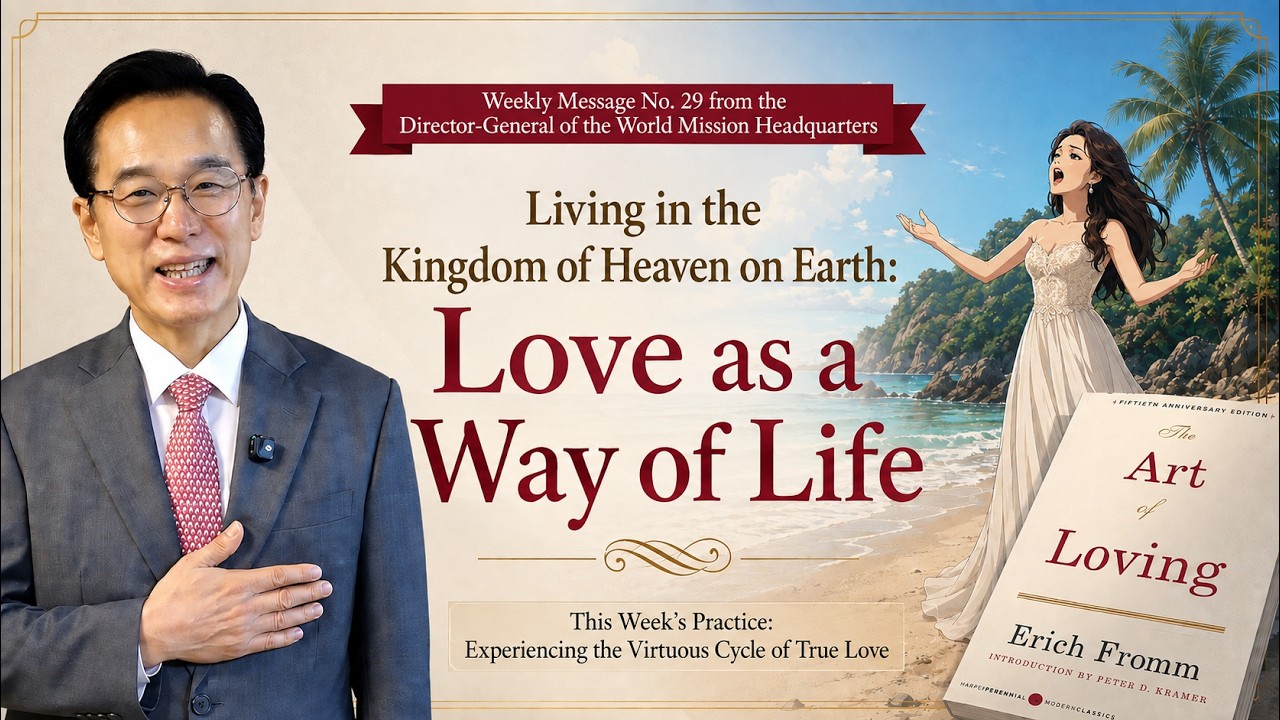
Weekly Message from Rev. Ken Doo, the Director-General of the World Mission Headquarters (No. 29), Living in the Kingdom of Heaven on Earth: Love as a Way of Life delivered on August 14, 2026
Click to Read Korean: 지상천국생활, 사랑을 삶으로 만드는 법
Click to Read Japanese: 地上天国生活、愛を人生(生き方)とする方法
Dear beloved members and blessed families around the world,
I pray that this week will be one in which you come to know Heavenly Parent’s love and practice it in your lives so that it may bear fruit as joy and happiness within your family and community.
1. Summary of Last Week’s Message
Last week, we observed that the answer Heaven has prepared to the question of the happiness that everyone has long sought, is “life in the kingdom of heaven on earth.” We reflected on how its essence lies in perfecting, through true love, our relationships with Heavenly Parent, with other people, and with all things of creation. We affirmed together that happiness is the fruit of relationships, that love is what forms those relationships, and that the Three Great Blessings are Heavenly Parent’s blueprint for creation to bring those relationships to perfection.
This brings us to an important issue: “How can we make true love a part of our lives?” In this third message on this theme, I would like us to explore together the specific path by which we can learn, practice, and experience in our hearts the true love that brings us to life in God’s kingdom on earth.
2. True Love: Love Perfected in Relationships
According to the Principle, love is the force that the subject partner gives to the object partner, while beauty is the force that the object partner returns to the subject partner in response. Love does not end simply when one person gives it. It is perfected through the relationship of give and take between subject and object partners. When I give love and the other person responds with joy, that joy returns to me and gives rise to even greater love and happiness. True love, therefore, is not just an emotion that remains within the heart. Love is to be expressed through our lives and relationships. Only when love is conveyed to another person and returns to us as joy does it bear fruit.
In his book The Art of Loving, Erich Fromm presents love not simply as an emotion, but as an art that must be learned and practiced. Just as we must learn to read music and practice repeatedly in order to sing well, love too must be learned and practiced. We need to learn how to love and attend Heavenly Parent, and how to love our spouse, our children, our neighbors.
Yet love is not perfected simply by knowing about it. As we live day by day, we must repeatedly practice the love that we have learned. Even when we do not do it well, we try again. Even when we make mistakes, we do not give up. Through this process, we gradually learn how to love. Love grows through practice.
Ultimately, true love begins with “learning,” grows through “practice,” and is perfected within our relationships through “heartfelt experience.” Then how can we cultivate that love in our own lives? Let’s look more closely at the real process of learning, practicing, and experiencing true love.
3. Learning Love, Practicing Love, and Experiencing Love in Our Hearts
The first step is learning love. Learning Heavenly Parent’s Will and the principle of true love—through hoondokhae and worship—is the first step toward living in the heavenly kingdom on earth.
To sing well, we need sheet music. To learn a foreign language, we need a textbook. To cook delicious food, we need a recipe. In the same way, before we can practice true love, we first need to learn what true love is and how we should give love. Therefore, coming to know and learn about love through the Word is the first stage of our life in the kingdom of heaven.
The second step is practicing the love we have learned. The second stage of living in God’s kingdom on earth is to repeatedly practice, in our daily lives, the true love we have learned, so that this love can take substantial form through our lifestyle.
A song is not perfected by sheet music alone. We must learn how to breathe properly, produce the notes, and practice repeatedly before the song truly becomes our own. In the same way, learning a foreign language does not end with memorizing vocabulary and grammar. We must actually listen, speak, and use the language consistently before it becomes our own. Nor is knowing a recipe enough to become a good cook. We need to make the dish ourselves, sometimes even failing, and gradually build up experience before it truly becomes our own home cooking.
True love is the same. Once we have learned about love through the Word, we must begin practicing it in our actual relationships, starting with small things. Even when things do not go well, we must try again. Even when we make mistakes, we must not give up, but continue practicing. When we create an environment in which we practice love and continue patiently training ourselves, the true love we have learned through the Word will gradually take substantial form. Ultimately, love is not perfected merely by knowing about it. Repeated practice becomes a habit, and when that habit becomes part of our character and takes root in our lives, love finally becomes substantial.
The third step is to convey the love we have learned through practice to another person and experience in our hearts how that love bears fruit as joy and affection within the relationship.
The purpose of learning and practicing a song is to touch someone’s heart and bring them joy. When someone hears my singing and experiences joy, I too feel even greater joy and happiness. Likewise, we do not learn a foreign language simply to acquire linguistic ability. When we understand another person’s language and culture, communicate with them, and share our hearts with one another, we experience the joy of relationship, and our own world becomes deeper and broader. The same is true when we cook. The purpose of learning a recipe and practicing it repeatedly is not merely to eat delicious food by ourselves. When we share food that we have lovingly prepared with our family or neighbors and see their happiness, we too share in their joy.
In this way, the purpose of learning and practicing is not merely to perfect our own ability. When what I have learned flows outward to another person, when that love bears fruit as joy in the other, and when I in turn share and experience that joy in my own heart, greater happiness results.
4. From the Word to Substance, and from Substance to Heart
When speaking about happiness, True Parents have often used the example of “the singer on a deserted island.” They asked, in essence, “Even if someone had spent an entire lifetime as a professional singer, could that person be happy if he or she were left alone on a deserted island singing at the top of their voice with no one there to listen?” True Parents taught that happiness can be realized only when there is a relationship with an object partner. (Collected Works of Sun Myung Moon, Vol. 522, p. 263)
No matter how outstanding a singer may be, he or she cannot experience complete joy if there is no one to hear the song. On the other hand, when the song brings inspiration and joy to another person, and that person’s joy returns to the singer, a relationship of happiness is created in which love and joy flow back and forth.
True love is the same. Love cannot be perfected by oneself alone. When I give love and the other person responds with beauty, that relationship gives rise to still greater love and joy. This is the process by which love and beauty take substantial form within relationships. Living in the kingdom of heaven on earth means creating this virtuous cycle of true love in our everyday lives.
True Parents have taught, “The purpose of the Word is for everyone to embody it, and the purpose of that embodiment is to realize a heart of love (shimjeong).” These words show us concisely how living in the kingdom of heaven on earth unfolds in our lives. Through the Word, we learn love. Through practice, we make that love substantial. And when we share that love within our relationships, we experience joy and heart. Thus, “Word, substance, and a heart of love” are expressed in our lives as “learning, practice, and heartfelt experience.” In other words, the Word becomes substantialized and embodied in our hearts (shimjeong); in the same way, what we learn is brought into reality through practice and ultimately becomes something we experience deeply, spiritually, in our hearts. This is the way we actualize in our lives the blueprint of creation as expressed through the Three Great Blessings. This is the path by which we create life in the kingdom of heaven on earth through the virtuous cycle of true love.
5. This Week’s Practice: Experiencing the Virtuous Cycle of True Love
Learning love, practicing love, and through that love experiencing each other’s joy and heart—this is the path to making life in the heavenly kingdom a reality in our daily lives.
Dear brothers and sisters,
During this week, I invite you to personally experience the “virtuous cycle of true love,” which is the practical way of living in the kingdom of heaven on earth. First, through a scripture reading or worship, learn and inscribe in your heart one expression of love that you will practice that day. Then put that love into practice in your life. It does not need to be anything grand. Begin with something small: offering a warm word, listening attentively to another person until they have finished speaking, or being the first to say, “I’m sorry.” A small act of love that you can practice right now is enough.
Then, at the end of the day, quietly reflect on what changed in the other person’s expression and in your relationship when you took the initiative to give love, and what kind of joy and heart arose within you. Finally, before going to sleep, report the result to Heavenly Parent in a prayer of gratitude. In this way, please create each day a small cycle of “learning, practicing, and experiencing love in your own heart.”
Love is not perfected simply by thinking about it, nor does it end when you take action. When we learn love through the Word, practice that love, and experience in our hearts the joy and heart that it creates within our relationships, our lives will gradually be transported to the kingdom of heaven.
This week, there is no need to begin with anything grand. Begin by expressing love first to the one person whom you most need to love. That one small expression of love can change our family. Change within our families can transform our communities. And that, ultimately, can become the beginning of the kingdom of heaven on earth that we dream of. I pray that this week each of you will experience in your own life what it means to become a subject partner of love.

세계선교본부장 주간 메시지 29, 지상천국생활, 사랑을 삶으로 만드는 법, 2026년 8월 14일
존경하고 사랑하는 전 세계 축복가정 식구님 여러분,
하늘부모님의 사랑을 배우고 삶으로 실천하여, 그 사랑이 가정과 공동체 안에서 기쁨과 행복으로 열매 맺는 한 주가 되시기를 기원합니다.
1. 지난주 메시지 요약
지난주 우리는 인류가 오랫동안 찾아온 행복에 대한 하늘의 답이 바로 ‘지상천국생활’이며, 그 핵심은 하늘부모님과 사람, 그리고 만물과의 관계를 참사랑으로 완성해 가는 데 있음을 살펴보았습니다. 행복은 관계의 열매이고 사랑은 그 관계를 이루는 원리이며, 3대축복은 그 관계를 완성하기 위한 하늘부모님의 창조설계도라는 사실을 함께 확인했습니다.
그렇다면 이제 중요한 것은 하나입니다. ‘참사랑을 어떻게 우리의 삶으로 만들어 갈 것인가?’ 이번 제3편에서는 지상천국생활을 이루는 참사랑을 어떻게 배우고, 연습하고, 체휼할 수 있는지 그 구체적인 길을 함께 찾아보고자 합니다.
2. 참사랑은 관계 속에서 완성되는 사랑
원리적으로 사랑은 주체가 대상에게 주는 힘이고, 미는 그 사랑에 대해 대상이 주체에게 돌려주는 힘입니다. 따라서 사랑은 일방적으로 주는 데서 끝나는 것이 아니라, 주체와 대상이 서로 주고받는 관계 속에서 완성됩니다. 내가 사랑을 주고 대상이 기쁨으로 응답할 때, 그 기쁨은 다시 나에게 돌아와 더 큰 사랑과 행복을 만들어 냅니다. 그렇기 때문에 참사랑은 마음속에만 머무는 감정이 아닙니다. 사랑은 삶과 관계 속에서 드러나야 하며, 그 사랑이 대상에게 전달되어 기쁨으로 돌아올 때 비로소 관계 속에서 열매를 맺습니다.
에리히 프롬은 『사랑의 기술』에서 사랑을 단순한 감정이 아니라 배우고 훈련해야 하는 기술로 바라봅니다. 노래를 잘하려면 악보를 배우고 반복해서 연습해야 하듯이 사랑에도 배움과 연습이 필요합니다. 우리는 하늘부모님을 어떻게 사랑하고 모셔야 하는지, 배우자와 자녀, 이웃을 어떻게 사랑해야 하는지 배워야 합니다.
그러나 사랑은 아는 것만으로 완성되지 않습니다. 배운 사랑을 실제 삶 속에서 반복하여 연습해야 합니다. 잘되지 않더라도 다시 시도하고, 실수하더라도 포기하지 않는 과정 속에서 우리는 사랑하는 법을 조금씩 익혀 갑니다. 사랑 역시 연습을 통해 성장하는 것입니다.
결국 참사랑은 ‘배움’에서 시작하여 ‘연습’으로 성장하고, ‘체휼’을 통해 관계 속에서 완성됩니다. 그렇다면 이 사랑을 우리의 삶 속에서 어떻게 만들어 갈 수 있을까요? 이제 ‘배우고, 연습하고, 체휼하는’ 참사랑의 구체적인 방법을 살펴보겠습니다.
3. 사랑을 배우고, 사랑을 연습하고, 사랑을 체휼하다
첫 번째는 사랑을 배우는 것입니다. 말씀 훈독과 예배를 통해 하늘부모님의 뜻과 참사랑의 원리를 배우는 것이 지상천국생활의 첫걸음입니다.
노래를 잘하려면 악보가 필요하고, 외국어를 배우려면 교과서가 필요하며, 맛있는 요리를 만들려면 레시피가 필요합니다. 참사랑을 연습하기 위해서도 먼저 참사랑이 무엇인지, 어떻게 사랑해야 하는지를 배워야 합니다. 그러므로 말씀을 통해 사랑을 알고 배우는 것, 이것이 지상천국생활을 시작하는 첫 번째 단계입니다.
두 번째는 배운 사랑을 연습하는 것입니다. 지상천국생활의 두 번째 단계는 배운 참사랑을 삶 속에서 반복적으로 연습하여 사랑이 우리의 삶에 실체로 자리 잡게 하는 것입니다.
노래는 악보만으로 완성되지 않습니다. 호흡법을 익히고 소리를 내며 반복해서 연습해야 비로소 자신의 노래가 됩니다. 외국어도 단어와 문법을 배우는 것에서 끝나는 것이 아니라 실제로 듣고 말하며 꾸준히 사용해야 자신의 언어가 됩니다. 요리 역시 레시피를 아는 것만으로는 부족합니다. 직접 만들어 보고 때로는 실패하면서 경험을 쌓아야 비로소 자신의 요리가 됩니다.
참사랑도 마찬가지입니다. 말씀을 통해 사랑을 알았다면 이제 작은 것부터 실제 관계 속에서 연습해야 합니다. 잘되지 않더라도 다시 시도하고, 실수하더라도 포기하지 않고 반복해야 합니다. 사랑을 연습할 수 있는 환경을 만들고 인내와 훈련을 거듭할 때, 말씀으로 배운 참사랑이 우리의 삶 속에 실체로 자리 잡게 됩니다. 결국 사랑은 아는 것만으로 완성되지 않습니다. 반복된 연습이 습관이 되고, 습관이 인격이 되어 우리의 삶에 자리 잡을 때 비로소 사랑은 실체가 됩니다.
세 번째는 연습을 통해 익힌 사랑을 대상에게 전하고, 그 사랑이 관계 속에서 기쁨과 심정으로 열매 맺는 것을 체휼하는 것입니다.
노래를 배우고 연습하는 것은 결국 자신의 노래로 누군가에게 감동과 기쁨을 주기 위해서입니다. 내가 부른 노래를 듣고 누군가가 기뻐할 때, 나 역시 더 큰 기쁨과 행복을 느끼게 됩니다. 외국어를 배우는 것도 단순히 언어 능력을 갖추기 위해서가 아닙니다. 상대의 언어와 문화를 이해하고 소통하며 서로의 마음을 나눌 때, 관계의 기쁨과 함께 나의 세계도 더욱 깊어지고 넓어집니다. 요리도 마찬가지입니다. 레시피를 익히고 반복해서 연습하는 목적은 혼자 맛있는 음식을 먹는 데 있지 않습니다. 정성껏 만든 음식을 가족과 이웃에게 나누고 그들이 기뻐하는 모습을 바라볼 때, 나 역시 함께 기뻐하게 됩니다.
이처럼 배움과 연습의 목적은 나의 기술을 완성하는 데 있지 않습니다. 내가 배운 것을 대상에게 흘려보내고, 그 사랑이 대상의 기쁨으로 열매 맺으며, 그 기쁨을 다시 내가 함께 체휼할 때 비로소 더 큰 행복이 만들어집니다.
4. 말씀에서 실체로, 실체에서 심정으로
참부모님께서는 행복을 설명하시면서 ‘무인도의 성악가’라는 예를 자주 말씀하셨습니다. “평생을 성악가로 살아온 사람이라도 무인도에 버려져 혼자서 목이 터지라고 노래를 부른다고 해서 행복하겠습니까?”라고 물으시며, 행복은 “반드시 상대적 관계를 갖춘 자리에서야 성립되는 것”이라고 말씀하셨습니다. (문선명선생말씀선집 522권, p.263)
아무리 뛰어난 성악가라도 자신의 노래를 들어줄 대상이 없다면 온전한 기쁨을 경험하기 어렵습니다. 반대로 자신의 노래가 누군가에게 감동과 기쁨을 주고, 그 기쁨이 다시 자신에게 돌아올 때 비로소 사랑과 기쁨이 오가는 행복의 관계가 만들어집니다.
참사랑도 이와 같습니다. 사랑은 혼자 완성되는 것이 아니라, 내가 사랑을 주고 대상이 미로 응답할 때 그 관계 속에서 더 큰 사랑과 기쁨으로 완성됩니다. 이것이 사랑과 미가 관계 속에서 실체로 나타나는 참사랑의 과정이며, 지상천국생활은 이러한 참사랑의 선순환을 우리의 일상 속에서 만들어 가는 삶입니다.
참부모께서는 “말씀의 목적은 실체요, 실체의 목적은 심정이다”라고 말씀하셨습니다. 이 말씀은 지상천국생활이 어떻게 삶으로 이어지는지를 함축적으로 보여줍니다. 말씀을 통해 사랑을 배우고, 연습을 통해 사랑을 실체화하며, 그 사랑을 관계 속에서 나눌 때 기쁨과 심정을 체휼하게 됩니다. ‘말씀, 실체, 심정’은 우리의 삶에서 ‘배움, 연습, 체휼’로 나타납니다. 다시 말해서 ‘말씀’은 ‘실체’를 거쳐 ‘심정’으로 체화되며, 이는 우리의 삶에서 ‘배움’이 ‘연습’을 통해 ‘체휼’로 구현되는 과정과 같습니다. 이것이 3대축복이라는 창조설계도를 삶으로 구현하는 방법이며, 참사랑의 선순환을 통해 지상천국생활을 만들어 가는 길입니다.
5. 번 주 실천: 참사랑의 선순이환 체험하기
사랑을 배우고, 사랑을 연습하며, 그 사랑을 통해 서로의 기쁨과 심정을 체휼하는 것. 이것이 지상천국생활을 실제 삶으로 만들어 가는 길입니다.
사랑하는 식구님,
이번 한 주는 지상천국생활의 실천 방법인 ‘참사랑의 선순환’을 직접 경험해 보시기 바랍니다. 먼저 말씀 훈독이나 예배를 통해 오늘 연습할 사랑 한 가지를 배우고 마음에 새겨 보십시오. 그리고 그 사랑을 삶 속에서 직접 시도해 보십시오. 거창한 일이 아니라 작은 것부터 시작하시면 됩니다. 따뜻한 말 한마디, 상대의 이야기를 끝까지 들어주는 것, 먼저 미안하다고 말하는 것처럼 지금 내가 할 수 있는 작은 사랑이면 충분합니다.
그리고 하루를 마치며 내가 먼저 사랑을 주었을 때 상대의 표정과 관계가 어떻게 달라졌는지, 내 마음에는 어떤 기쁨과 심정이 일어났는지를 조용히 돌아보십시오. 마지막으로 잠들기 전, 그 결과를 하늘부모님께 감사기도로 보고해 보십시오. 그렇게 ‘배우고, 연습하고, 체휼하는’ 작은 순환을 매일 만들어 가시기 바랍니다.
사랑은 생각한다고 완성되지 않고, 행동한다고 끝나는 것도 아닙니다. 말씀을 배우고, 사랑을 연습하며, 그 사랑이 관계 속에서 만들어 내는 기쁨과 심정을 체휼할 때 우리의 삶은 조금씩 지상천국으로 변화됩니다.
이번 한 주, 거창한 일을 시작하지 않아도 좋습니다. 내가 가장 사랑해야 할 한 사람에게 먼저 사랑을 표현해 보십시오. 그 작은 사랑 하나가 우리 가정을 변화시키고, 가정의 변화가 공동체를 변화시키며, 마침내 우리가 꿈꾸는 지상천국의 시작이 될 것입니다. 이번 주에는 내가 사랑의 주체가 되는 삶을 체휼하는 한주가 되시길 기원드립니다.

世界宣教本部長 週間メッセージ29, 地上天国生活、愛を人生(生き方)とする方法, 2026年 8月 14日
尊敬し、愛する全世界の祝福家庭の食口の皆様、
天の父母様の愛を学び、人生で実践して、その愛が家庭と共同体の中で喜びと幸福として実を結ぶ一週間となりますよう祈願いたします。
1. 先週のメッセージの要約
先週、私たちは人類が長い間探し求めてきた幸福に対する天からの答えが、まさに「地上天国生活」であり、その核心は天の父母様と人間、そして万物との関係を真の愛によって完成させていくところにあるということを見てきました。
幸福は関係の結実であり、愛はその関係を成り立たせる原理であり、三大祝福はその関係を完成させるための天の父母様の創造設計図であるという事実を、共に確認いたしました。
そうであるならば、今や大切なことはただ一つです。「真の愛を、どのように私たちの人生(生き方)として成していくのか」ということです。
今回の第3編では、地上天国生活を成していく真の愛を、どのように学び、練習し、体恤することができるのか、その具体的な道を共に探ってみたいと思います。
2. 真の愛は関係の中で完成される愛
原理的に、愛は主体が対象に与える力であり、美はその愛に対して対象が主体に返す力です。したがって愛は、一方的に与えるだけで終わるものではなく、主体と対象が互いに授け受ける/授受する関係の中で完成されます。
私が愛を与え、対象が喜びで応えるとき、その喜びは再び私に返ってきて、より大きな愛と幸せを築き上げます。そのため、真の愛は、心の中にとどまるだけの感情ではありません。
愛は人生(生活)と関係の中に現れなければならず、その愛が対象に伝わり伝わって、喜びとして返ってきた時、初めて関係の中で実を結ぶのです。エーリッヒ・フロムは『愛するということ』の中で、愛を単なる感情ではなく、学び、訓練しなければならない技術として捉えています。
上手に歌を歌うためには楽譜を学び、繰り返し練習しなければならないように、愛にも学びと練習が必要です。私たちは、天の父母様をどのように愛し、侍るべきか、配偶者や子女、隣人をどのように愛すべきなのかを学ばなければなりません。
しかし愛は、知っているだけでは完成しません。学んだ愛を、実際の人生(生活)の中で繰り返し練習しなければなりません。うまくいかなくても再び試み、失敗しても諦めない過程の中で、私たちは愛する方法を少しずつ身につけていきます。
愛もまた、練習を通して成長するものです。結局、真の愛は「学び」から始まり、「練習」によって成長し、「体恤」を通して関係の中で完成されます。それでは、この愛を私たちの人生の中でどのように築いていくことができるでしょうか。それでは、「学び、練習し、体恤する」真の愛の具体的な方法を見てまいります。
3. 愛を学び、愛を練習し、愛を体恤する
一つ目は、愛を学ぶことです。み言の訓読と礼拝を通して、天の父母様のみ旨と真の愛の原理を学ぶことが、地上天国生活の第一歩です。歌を上手になるためには楽譜が必要であり、外国語を学ぶためには教科書が必要であり、おいしい料理を作るためにはレシピが必要です。
真の愛を練習するためにも、まず真の愛とは何なのか、どのように愛すべきかを学ばなければなりません。したがって、み言を通して愛を知り、学ぶこと、これが地上天国生活を始める第一段階です。二つ目は、学んだ愛を練習することです。
地上天国生活の第二段階は、学んだ真の愛を人生(生活)の中で繰り返し練習し、愛が私たちの人生(生活)に実体として定着するようにすることです。歌は楽譜だけでは完成しません。呼吸法を身につけ、声を出して繰り返し練習してこそ、初めて、自分自身の歌になります。
外国語も単語や文法を学ぶだけで終わるのではなく、実際に聞いて、話し、たゆまず使い続けてこそ、自分自身の言語になります。料理もまた、レシピを知っているだけでは不足です。
実際に作ってみて、時には失敗しながら経験を積んでこそ、初めて、自分自身の料理になります。真の愛も同様です。み言を通して愛を知ったなら、今度は小さなことから、実際の関係の中で練習しなければなりません。
うまくいかなくても再び試み、失敗しても諦めずに繰り返さなければなりません。愛を練習できる環境をつくり、忍耐と訓練を重ねるとき、み言で学んだ真の愛が私たちの人生(生活)の中に実体として定着する様になります。
結局、愛は知っているだけでは完成しません。繰り返した練習が習慣となり、習慣が人格となって私たちの人生に定着する時、初めて愛は実体となります。
三つ目は、練習を通して身につけた愛を対象に伝え、その愛が関係の中で喜びと心情として実を結ぶことを体恤することです。歌を学び、練習するのは、結局、自分の歌によって誰かに感動と喜びを与えるためです。
自分が歌った歌を聞いて誰かが喜んでくれるとき、自分自身もより大きな喜びと幸福を感じます。外国語を学ぶことも、単純に言語能力を身につけるためだけではありません。
相手の言語と文化を理解して疎通し、お互いの心を分かち合うとき、関係の喜びとともに、自分の世界もより深く、より広くなっていきます。料理も同じです。
レシピを身につけ、繰り返し練習する目的は、一人でおいしい料理を食べることにあるのではありません。真心を込めて作った料理を家族や隣人と分かち合い、彼らが喜ぶ姿を見るとき、自分自身も共に喜ぶようになります。
このように、学びと練習の目的は、自分の技術を完成させることにあるのではありません。自分が学んだものを対象へと流し伝え、その愛が対象の喜びとして実を結び、その喜びを再び自分自身も共に体恤するとき、初めてより大きな幸福が築かれるのです。
4. み言から実体へ、実体から心情へ
真の父母様は、幸福を説明されながら、「無人島の声楽家」というたとえをよく話されました。「生涯を声楽家として生きてきた人であっても、無人島に一人置き去りにされ、たった一人で声を張り上げて歌ったところで、果たして幸せだと言えるでしょうか」と問いかけられ、幸せとは「必ず相対的関係を備えた場においてこそ成立するもの」であるとお話しになりました。(文鮮明先生み言選集522巻、p.263)
どんなに優れた声楽家であっても、自分の歌を聴いてくれる対象がいなければ、完全な喜びを経験することは難しいのです。
反対に、自分の歌が誰かに感動と喜びを与え、その喜びが再び自分に返ってくるとき、初めて愛と喜びが行き交う幸福な関係が築かれます。真の愛もこれと同じです。愛は一人で完成するものではなく、自分が愛を与え、対象が美で応えるとき、その関係の中でより大きな愛と喜びとして完成します。
これが、愛と美が関係の中で実体として現れる真の愛の過程であり、地上天国生活は、このような真の愛の善循環を私たちの日常の中に築いていく人生なのです。
真の父母様は「み言の目的は実体であり、実体の目的は心情である」とおっしゃられました。このみ言は、地上天国生活がどのように人生へとつながっていくのかを、含みを持たせて表しています。
み言を通して愛を学び、練習を通して愛を実体化し、その愛を関係の中で分かち合うとき、喜びと心情を体恤するようになります。「み言、実体、心情」は、私たちの人生の中で「学び、練習、体恤」として現れます。
言い換えれば、「み言」は「実体」を経て「心情」へと体化されますが、これは私たちの人生において「学び」が「練習」を通して「体恤」として具現される過程と同じです。これが、三大祝福という創造設計図を人生として具現する方法であり、真の愛の善循環を通して地上天国生活を築いていく道なのです。
5. 今週の実践:真の愛の善循環を体験する
愛を学び、愛を練習し、その愛を通してお互いの喜びと心情を体恤すること。これが、地上天国生活を実際の人生として築いていく道です。
愛する食口の皆様、
今週一週間は、地上天国生活の実践方法である「真の愛の善循環」を、直接体験してみてください。まず、み言訓読や礼拝を通して、今日練習する愛を一つ学び、心に刻んでみてください。
そして、その愛を実際の生活の中で試してみてください。大げさなことではなく、小さなことから始めればよいでしょう。温かい一言、相手の話を最後まで聞いてあげること、先に「ごめんなさい」と言うことのように)、今、自分ができる小さな愛で十分です。
そして一日の終わりに、自分が先に愛を与えたとき、相手の表情や関係がどのように変わったのか、自分の心にはどのような喜びと心情が湧き上がったかを、静かに振り返ってみてください。
最後に、眠りにつく前、その結果を天の父母様に感謝の祈りとしてご報告してみてください。そのようにして「学び、練習し、体恤する」小さな循環を、毎日築いていかれますように願います。
愛は考えただけでは完成せず、行動しただけで終わるものでもありません。み言を学び、愛を練習し、その愛が関係の中で築き出される喜びと心情を体恤するとき、私たちの人生は少しずつ地上天国へと変化していきます。今週一週間、大げさなことを始めなくても構いません。自分が最も愛すべき一人の人に、まず愛を表現してみてください。
その小さな愛一つが私たちの家庭を変化させ、家庭の変化が共同体を変化させ、ついに私たちが夢見る地上天国の始まりとなることでしょう。今週は、自分(自分自身)が愛の主体となる人生を体恤する一週間になられますよう祈念いたします。