Blog of Unification Theological Seminary
By William P. Selig
When the test result came back positive a few weeks before Thanksgiving, I couldn’t believe my eyes. I’d followed all the recommendations — two vaccine shots, physical distancing, mask-wearing, hand-washing — yet still, I was infected with the COVID-19 virus.
Thankfully, the symptoms were mild, but for the following 10 days, I self-quarantined, which meant staying in my office, eating by myself, and distancing from my wife and family.
The experience was terrible. It was not so much the illness itself — I could deal with the flu-like symptoms — but I was troubled by the sense of “uncleanliness,” and that a passerby could “catch” my disease. It was also impossible not to feel fear and ponder the worst-case scenario. Instead of imagining a future with our grandchildren, I was left to wonder — are my affairs in order?
During this period of uncertainty, I drew on my experience teaching “Spiritual Formation and Integration,” which I describe as a process to discern God’s presence in our lives. I explain to the students that His concern is not how much money is in our 401(k) account, but the amount of love in our hearts. Through self-reflection, self-examination and contemplation, the students are guided to identify the “sacred” in the “ordinary,” and move closer to our Heavenly Parent.
Though there are different ways to understand spiritual formation, I resonate with Christian scholar Dallas Willard (1935-2013), who believed that people of all faiths go through spiritual formation. He uses the metaphor of flying to demonstrate its meaning: “One of the things I most like about flying is when you take off through the clouds and finally break through them into the sunlight.… It is so thrilling to break into the sunlight.” I appreciate this colorful image of breaking through the clouds into the sunlight as a way to describe spiritual growth. “Very likely we will not become perfect for some time yet,” he says, “but we can, as Paul urged the Philippians to do, ‘become blameless and innocent, children of God above reproach in the midst of a crooked and perverse generation, among whom you shine like stars in the world.’”
An excellent resource for our class discussions is Invitation to a Journey: A Road Map for Spiritual Formation by J. Robert Mulholland, Jr. (1936-2015), who defines spiritual formation as “the process of being formed in the image of Christ for the sake of others.” This is a straightforward definition which uses Jesus as the model for a person who loves and serves selflessly, and lives/dies for a greater cause.
According to Mulholland, “Spiritual formation is not an option! The inescapable conclusion is that life itself is a process of spiritual development. The only choice we have is whether that growth moves us toward wholeness in Christ or toward an increasingly dehumanized and destructive mode of being.”
To help recognize God in their life stories, the students are required to write a spiritual autobiography. They are generally amazed and relieved at the healing and sense of closure that comes with openly and honestly sharing the ups and downs of their spiritual growth and faith formation.
Though the process of reflection obviously begins by looking at oneself, an important step in growth is when the students see their individual spiritual formation within a larger context. It is a leap in maturity, when a person recognizes how their personal growth is intimately connected to the family, and subsequently to the community, the nation and even the world.
UTS co-founder Dr. Hak Ja Han Moon often describes the family as the prime vehicle for spiritual growth. She calls the family the substantial embodiment of God:
In this way, heaven and earth are united, and the barriers that have separated human beings from God can be eliminated. The gateway to a free, innocent, and open relationship of true love between heaven and earth, between our Heavenly Parents and all God’s children is opened up.
During my time of isolation, family played an important role in caring for my needs. My wife, Donna, provided loving attention and along with the support I received from my faith community, and teaching experiences, I was well-armed with the grounding tools that helped me cope. Evening Zoom meetings with other members going through the same ordeal lifted my spirit. Each night testimonies were shared about families offering communal support through prayers, visits to the affected families and bringing ready-to-eat meals. As an interconnected community, the message that we are the body of Christ, and willing to come together during times of duress brings me comfort and strength.
God’s Presence: Past and Present
In seeking God’s presence, on top of my struggle with COVID, I couldn’t help recalling my situation 21 years ago when I was diagnosed with hepatitis C, an infectious disease of the liver. During the year-long treatment, which thankfully was successful in ridding my body of the virus, I remember often feeling “unclean,” and the anxiety I felt knowing that I could accidentally infect an innocent person. At that time, our family went on a spiritual retreat to Brazil. All families were tasked to take on chores and I was assigned to clean the dining room after meals. One day, I sustained a small cut on my hand while fishing and the more I thought on it the more fearful I became. Just a single drop of my contaminated blood on a tabletop or door handle, and someone, even an innocent child, could get infected. It was a terrible feeling to believe that I was a threat and danger to others.
So here I was 21 years later dealing with the same fears, and despite a lifelong process to be “in the image of Christ,” I found myself once again a carrier of a deadly, infectious disease. The same existential questions came to mind: Why is this happening? What did I do wrong? Is this punishment? A test?
As I did 21 years ago, I turned to my faith to get through this ordeal. I pushed aside my fears and applied my most important life lesson — accept what comes my way and deal with it. I’m not saying that whatever happens is for the best or because it’s the will of God, but the “ideal” life that we all want simply means that whatever happens, “I-deal” with it.

Key Life Lessons
I have learned through my life experiences that, first, just because I am sick, stressed, or depressed does not mean that God has stopped existing or loving me. The miracle of faith is not that bad things happen or don’t happen, but that we are never alone even when we find ourselves in the storms of life.
There’s an amazing inspirational story about Rev. Sun Myung Moon when he was sentenced to a communist labor camp in North Korea in 1948. The prisoners led a tortuous life working long hours with little sleep or food. Most inmates didn’t live more than six months. Despite the horrific circumstances, Father Moon’s attitude toward God did not diminish. About that experience, he shared with his followers:
I never prayed from weakness. I never complained. I was never angry at my situation. I never even asked His help, but was always busy comforting Him and telling Him not to worry about me. The Father knows me so well. He already knew my suffering. How could I tell Him about my suffering and cause His heart to grieve still more? I could only tell Him that I would never be defeated by my suffering.
Father Moon accepted, dealt with, and made the most of that terrible situation. He didn’t blame anyone for his troubles or wonder if had done something wrong in God’s eyes. Instead, he kept his identity as a son of God, and despite the circumstances, worked to turn what externally appeared as hell on earth, into an opportunity to witness and advance the providence.
The second lesson is about labels. It’s easy to take on the label and identify myself as being “sick,” but it’s important to put aside that sort of negative thinking, and declare that “I am not my disease. That is not who I am!” I can’t control the fact that I had hep C or COVID, but I can control my attitude and how I deal with it. The takeaway lesson is not to define myself or anyone by a label or external condition. A person’s true identity is found in the inside, as when the Prophet Samuel recognized David’s qualifications to be king of Israel. He said, “The Lord has sought for Himself a man after His own heart.” (1 Sam. 13:14)
The Full Armor of God
Was it the medicine, the prayers, or a miracle that rid my body of the viruses? Perhaps I’ll never know, but in the long run I think the real miracle was the sense of re-birth that I’ve experienced, and the breakthrough epiphany that God might have a better plan than anything I could ever imagine.
Dr. Mulholland says:
Everyone is in a process of spiritual formation. We are being shaped into either the wholeness of the image of Christ or a horribly destructive caricature of that image — destructive not only to ourselves but also to others, for we inflict our brokenness upon them . . . The direction of our spiritual growth infuses all we do with intimations of either Life or Death.
COVID doesn’t care if you’re rich, poor, white, black, religious, an atheist, or where you live. The pandemic has brought everyone to think in new ways about identity, priorities and relationships. Where we find ourselves on that continuum of understanding and sensitivity about God, ourselves, family, and our neighbors is what spiritual formation is all about.
Finding God in our life story is very challenging and perhaps even more so during the pandemic, but one thing is certain: this will not be the last pandemic or crisis we face. My biggest takeaway: Do not allow external forces to control or define you. Mother Moon calls us to be like the sunflower which follows the sun throughout the day; in other words, keep your face to the sunshine and you won’t be confused by the shadow or misled by the dark side of life.
Let’s heed the visual image of Dallas Willard who calls us to fly through the clouds of life and experience the thrill of breaking into the sunlight, and last but not least, Jesus’ exhortation in Matt. 5:16: “Let your light shine before others, that they may see your good deeds and glorify your Father in heaven.”♦
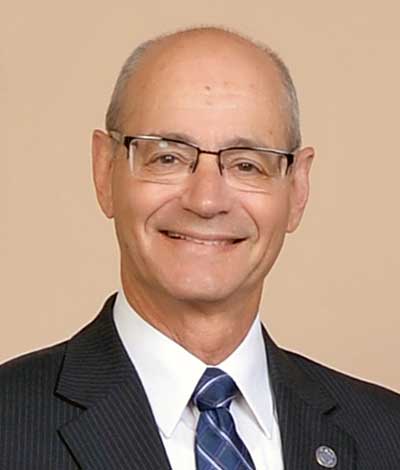
Dr. William P. Selig (UTS Classes of 1981 and 2012) has been Adjunct Assistant Professor at UTS since 2016. He teaches courses on “Spiritual Formation and Integration.” A board-certified chaplain (BCC), he has worked as a hospice volunteer and hospital chaplain in Maryland, Washington, DC, Virginia, and California. Dr. Selig graduated from the University of Maryland, and completed his degrees in Religious Education and Doctor of Ministry at UTS. He serves as the Communications Director for UPF International.