[Limits of Paternal Civilization, Vision of Maternal Salvation—Contribution]
By Sung-Jong Seo (Ph.D. in Theology)
This article was originally published in Korean in Segye Ilbo, a major South Korean daily newspaper, under the column series “Epic History of the Chosen Han People of Korea.” [Click here to view the original article.]
Read the other article in this series.
Now in the 21st century, humanity stands in the midst of a historic civilization-level transition. Behind the dazzling achievements of science, the breakdown of families, national divisions, and the roar of war reveal that the male-centered “paternal civilization”—which has prioritized power, justice, and judgment—has reached its limits. The deeper the age of chaos, the more the solution lies not in the phenomena, but at the origin. This series aims to trace the symbolism of the “Female Savior” embedded across Eastern and Western scriptures—from Christian Scriptures and the Geongon-hapdeok (Harmonious Virtue of Heaven and Earth) in the I Ching, to Buddhist and Taoist classics, as well as Korean secret texts (Bigi)—and to reflect on the imperative task of our time: the “Restoration of Parentness.” This is not an attempt to deny the era of the Father. Rather, it is a civilizational exploration to shed new light on the history of human salvation through the vision of the “Mother”—the source of life and love. Written by theologian Dr. Seong-Jong Seo, this series seeks a new horizon of maternal salvation at the tail end of paternal civilization, embarking on a journey to question the reality of the peace humanity has long yearned for. <Editor’s Note>
◆ Geongon-hapdeok: Finding the Lost Half of Heaven
Historian Arnold Toynbee explained the rise and fall of civilizations through “challenge and response,” along with the role of the “creative minority” in that process. The breakdown of families, extreme confrontation between nations, and the tragic, unrelenting wars facing humanity today are signals that the existing value system supporting our civilization has reached a critical tipping point. The human history written by male-centered narratives that put force and order first is now facing a massive civilizational question mark at its outer limits. As chaos deepens, wisdom inherently returns to the origin. The author seeks to trace the providential indications regarding the emergence of the “Female Savior”—the final puzzle piece of salvation that has long been hidden within the major scriptures of humanity’s spiritual heritage.
At the beginning of this grand journey, the author intends to address the Creator, whom we have vaguely called “God,” as “Heavenly Parent.” The Creator, Heavenly Parent, is not a strict judge, but a “Parent” who gives birth to and raises humanity with love. Just as a parent consists not only of a father but also a mother, we must face the reality that masculinity and femininity harmoniously coexist within the Divine Nature of God.
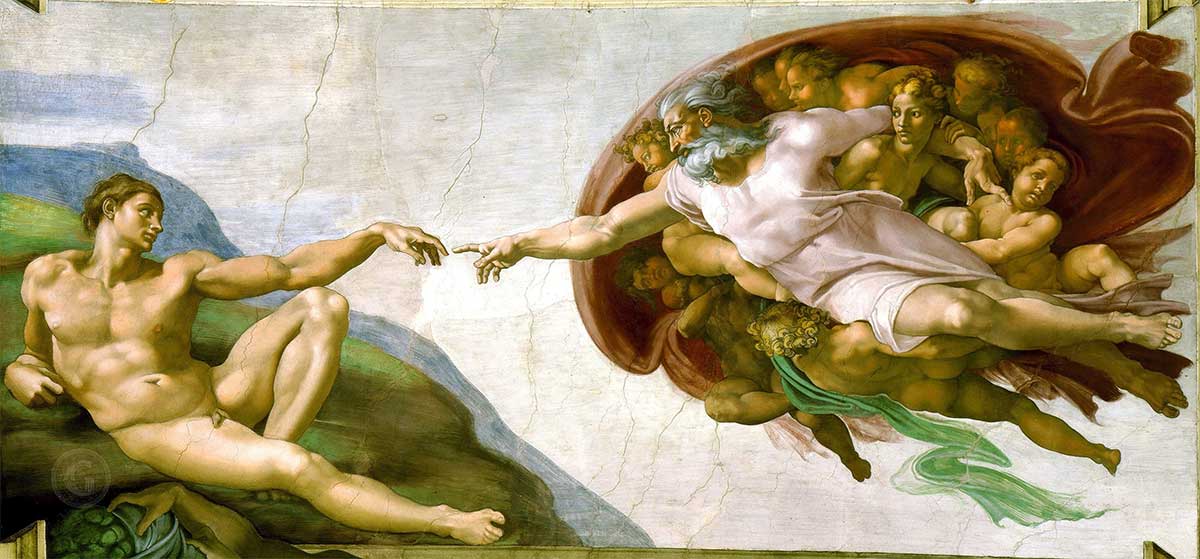
◆ The 2,000-Year-Old Secret of the Bible: “In Our Image”
For ages, humanity has perceived God solely as male. Christian civilization fixed God as “Father,” and history flowed within that patriarchal order. However, let us look again at the ancient record witnessed by the Bible. In Genesis 1:26, the very first book of the Bible, Heavenly Parent speaks at the moment of creating human beings:
“Let us make human beings in our image, after our likeness…”
The word to pay attention to here is the plural “us,” rather than the singular “I.” In fact, in the original Hebrew text of the Old Testament, God is recorded as “Elohim,” which is unequivocally a plural noun. With whom was God present that He referred to Himself as “us”? The answer is clearly revealed in the very next verse, verse 27.
“So God created human beings in His own image, in the image of God He created them; male and female He created them.” If the results created in the image of God were “male” and “female,” then the original image of God must naturally contain both a “masculine essence” and a “feminine essence.” If only “God the Father,” the prototype of man, existed, woman could not have been created. The very fact that woman exists serves as proof that the nature of “God the Mother” reality exists within the Divine Nature of God. In other words, the Creator God is not a solitary male deity, but Heavenly Parent who possesses both the character of Father and Mother.
◆ In-Depth Analysis of Elohim: Divine Dual Characteristics Revealed by Temple Theology
Traditional theology has interpreted Elohim as a “Majestic Plural” to elevate God’s authority. However, digging into its etymology and historical context reveals a more dynamic, dual-gendered Divine Nature.
First, looking at its grammatical structure, Elohim is formed by combining the masculine singular noun El with the plural suffix -im. This suggests that the Divine Nature is not confined to a single masculine persona, but is a harmonious plurality that embraces a complementary existence within itself. World-renowned biblical scholar Dr. Margaret Barker reinterprets this from the perspective of “Temple Theology.” According to her, in ancient temple faith, Elohim referred to a “heavenly family” that included the Supreme Father (El Elyon), His Son, and the “Divine Mother” who gave birth to them and brought harmony to all creation.
Second, there is a maternal reality hidden within the names of God. Dr. Barker interprets El Shaddai in the Bible not merely as “God Almighty,” but literally from its etymological root as “God with Breasts.” This serves as powerful evidence that the God of Abraham originally encompassed a feminine Divine Nature that nurtures children. Furthermore, Hokmah (Wisdom), depicted as the partner in creation, is personified as a female whose role is to weave all creation into a web of love.
Third, we have the testimony of historical and mystical traditions. Anthropologist Raphael Patai focused on the archaeological traces showing that the goddess Asherah was worshipped alongside Yahweh as His consort in the ancient temple of Israel. Jewish mysticism, Kabbalah, also emphasized the feminine aspect of God caring for the earth through the feminine noun Shekhina. The core of Kabbalah lies in uniting this separated masculine Divinity with the feminine Shekhina, viewing this union as the completion of God’s essence. In short, the Creator is not a solitary male god, but Heavenly Parent possessing the characteristics of both Father and Mother.
◆ The Principle of Yin and Yang and the Inevitability of the Only Begotten Daughter
This principle is not limited strictly to the Bible. Ancient Eastern wisdom, such as the I Ching (Book of Changes) and Taoism, also teaches that the fundamental reality of the universe consists of the harmony of Yin (陰) and Yang (陽). Where there is Heaven (Geon), there is Earth (Gon); where there is a stamen, there must be a pistil for life to be born. This is an eternal and unchangeable law of the universe.
Yet, uniquely within the history of human salvation, this law has lost its balance. We have waited for and believed in only the “Only Begotten Son”—a male savior. However, if the Only Begotten Son—the substantial embodiment of Heavenly Father—came, then the emergence of the “Only Begotten Daughter”—the substantial embodiment of Heavenly Mother—is a providential and logical necessity.
What is salvation? It is the process of rebirth through which fallen humanity is born anew as God’s True Children. Life is only complete when the seed of the father meets the womb of the mother. Just as a father alone cannot give birth to children, the history of salvation can only reach its final completion when there exists a Mother who gives birth to and nurtures life alongside the Father.
◆ An Exploration of Truth to Find the Lost Half
Today in our society, the term “Only Begotten Daughter” is sometimes at the center of controversy. However, let us take off the glasses of prejudice and step into the forest of scriptures. The Only Begotten Daughter is not a doctrine that appeared out of nowhere. She is the core of the Bible that Christianity overlooked, the completion of salvation anticipated by Buddhism through “female enlightenment” and the mercy of Avalokiteshvara, and the providential conclusion awaited by the prophetic texts of the Korean peninsula.
Restoring Heavenly Parent is the process of finding the lost half of Heaven—the “Mother.” That is precisely why we must seek the “Only Begotten Daughter” within the scriptures, which hold humanity’s ancient future.
To Be Continue…
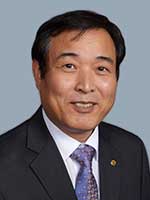
Author
Dr. Sung-Jong Seo received his Master’s degree from the Unification Theological Seminary (UTS) in New York, USA, and his Ph.D. from California Union University (C.U.U.). For 35 years, he has traveled between Korea, the United States, and Latin America, serving as a pastor and world peace activist. He presents insights encompassing religion, humanities, and contemporary issues through numerous books, including “Humanities Encountered During the COVID-19 Pandemic.”
Great article- One of those articles that makes us think deeply- and thinking is hard work. Question- The picture depicts God as a masculine figure embracing his wife while his children are around the parents. I think the conclusion is a stretch