
Weekly Message No. 25 from Rev. Ken Doo, the Director-General of the World Mission Headquarters, The Journey of the Commandments—Hyo and Jeong: Vertical and Horizontal Love, delivered on July 17, 2026
Click to Read Korean: 효와 정, 한민족 선민 대서사시의 심장
Click to Read Japanese: 孝(こう)」と「情(じょう)」, 韓民族・選民大叙事詩の心臓
Dear beloved blessed families and members around the world,
I pray that during this week your hearts as blessed families and members will be filled with longing for True Mother and with hyojeong, bringing comfort to Heavenly Parent’s heart and filling you with Heaven’s grace.
1. Review of Last Week’s Message
Last week, we reflected together on how the great religions and philosophies of both East and West, which have shaped humanity’s spiritual history, came together in an extraordinary convergence on the geopolitical stage of the Korean Peninsula. We also considered why we are called to study this final great epic of history.
Having laid this foundation for deeper understanding, we now arrive at a more fundamental question: What, specifically, are we meant to learn from this great epic of the chosen people? Today, drawing on insights from the history of religion and the perspective of Heaven’s providence, I would like to explore the profound relationship between the attributes of Heavenly Parent that have flowed continuously through the culture of the Korean Peninsula and the deepest essence of the original human heart.
2. The Providence as an Hourglass—A Great Transformation in Our Understanding of God and Love
To understand this, we must first examine the structure and direction through which Heaven’s providence has unfolded throughout human history.
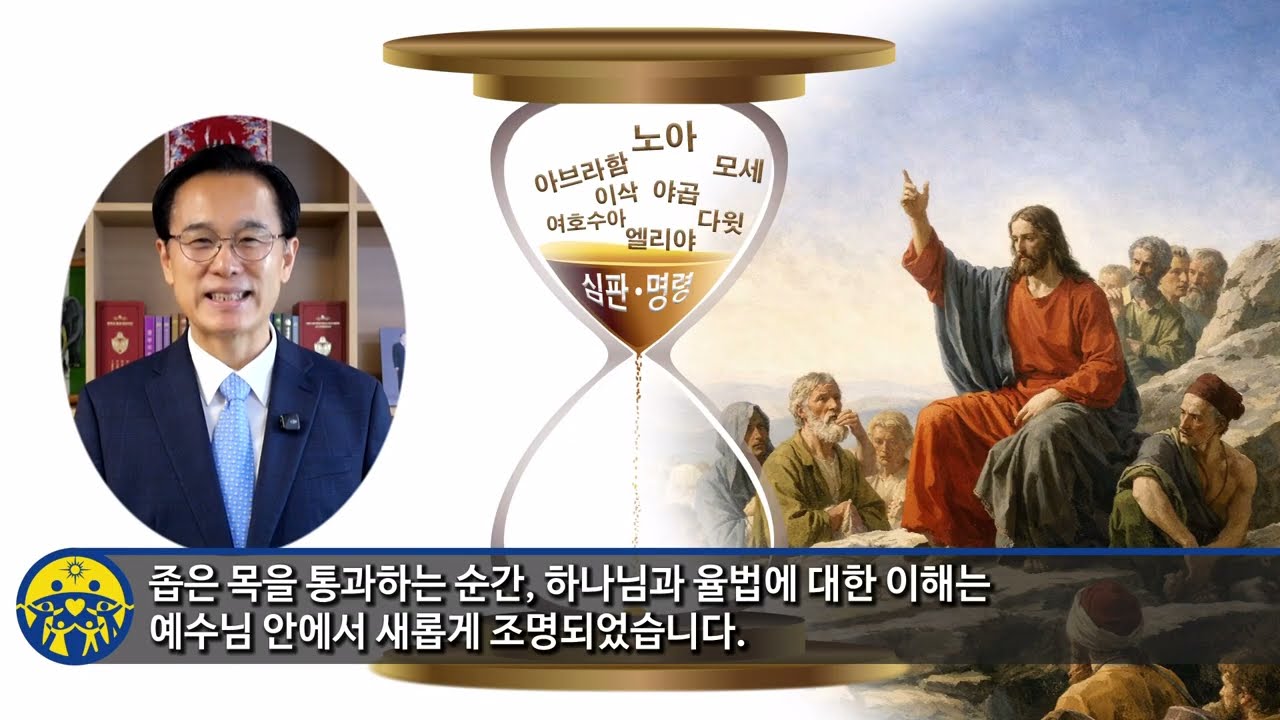
Heaven’s providence has flowed in a pattern much like an hourglass. Throughout the vast expanse of Old Testament history, God’s providence gradually converged upon a single point through the chosen people of Israel and the Law they upheld. At the very center of that convergence stood Jesus Christ, the only begotten Son. Yet this convergence was not simply a narrowing. As God’s providence passed through the narrow neck of the hourglass, God and the Law came to be understood in a new light through Jesus. Through the only begotten Son, God was revealed more fully—not merely as the sovereign who judges and commands, but as the loving Father who embraces His children. Likewise, the Law was elevated beyond a system of rules and regulations into a life of love for God and one’s neighbor.
The providential pattern revealed in The Great Epic of the Chosen Han People of Korea is the same. The history of the Han people, whom Heaven has prepared, gradually nurtured both the character of vertical love directed toward Heaven and the deep affection of horizontal love shared with those around us, as it moved toward a single providential climax. At the summit of this great convergence is the advent of the True Parents. True Father, the returning Messiah who inherited the mission of Jesus Christ, the only begotten Son, and True Mother, the only begotten Daughter appearing for the first time, were born on the Korean Peninsula and fulfilled the providence of the Marriage Supper of the Lamb.
Through the True Parents, God is no longer understood only as the omnipotent Sovereign and the one and only God, but has been revealed in substance as our Heavenly Parent—the True Parent of humankind, embodying heart and existing as the harmonious union of dual characteristics. Likewise, love for Heaven and for those around us has moved beyond the realm of abstract commandments to take concrete form as a way of life rooted in the four great realms of heart, embodied within each blessed family through the Blessing, following True Parents’ example. At the same time, the horizon of the chosen people has been opened anew, expanding beyond the boundaries of lineage, nationality, and race to embrace all blessed families throughout the world. The Great Epic of the Chosen Han People of Korea stands as a record bearing witness to this latest and most decisive chapter of that universal expansion.
3. The Journey of the Commandments—Hyo and Jeong as the Fulfillment of Vertical and Horizontal Love
How, then, has this universal attribute of Heavenly Parent—Heavenly Parent’s true love—been revealed and handed down through the world’s traditions of faith and morality?
The Torah, the five books of Moses that form the heart of the Old Testament, contains 613 commandments. At the heart of the Torah are the Ten Commandments. In the first five commandments, we learn gyeongcheon—reverence for Heaven, or love for Heaven—which establishes the foundation of our vertical relationship with Heavenly Parent. The remaining commandments teach ae-in, love for our neighbors, which establishes the order of our horizontal relationships with one another.
Later, when a teacher of the law asked Jesus which commandment was the greatest, Jesus summarized all 613 commandments that had permeated the history and culture of Israel in a single sentence: “Love God and love your neighbor.” In other words, love is the one principle that runs through the many commandments of the Old Testament and through the truth revealed in the New Testament.
Throughout history and across many civilizations, humanity has developed different traditions according to the growth of its spirituality and intellect. Yet Christianity’s love, Buddhism’s maitri, Confucianism’s ren, and Hinduism’s dharma and bhakti are all different expressions of the same attribute of Heavenly Parent’s true love. To save humankind, Heaven has sent, in every age, central figures who embodied this attribute. Humanity has striven to realize Heaven’s ideal world by following their lives and teachings. That long journey has become the greatest epic and the providential course of human history.
4. The Final Epic: Hyo and Jeong Blossoming on the Korean Peninsula
How, then, did this universal principle of true love take on its own distinctive form and mature within the history and culture of the Korean people?
From ancient times, the Korean people have regarded themselves as Cheonson Minjok, a people descended from Heaven, and have devoted themselves to reflecting the attributes of Heavenly Parent. The ancient Korean ideal of Hongik Ingan—living for the benefit of all humanity—present in the founding story of Dangun, marked the beginning of this tradition. It embodied the ideals of revering Heaven and loving one’s neighbors, and sought to establish those heavenly values as the foundation of human culture.
Beginning with the ideal of Hongik Ingan during the Gojoseon period, the Korean people have sought in every age to embody Heaven’s love in their daily lives. During the Unified Silla and Goryeo periods, the Buddhist spirit of compassion found expression in a culture that placed a high value on protecting and serving the nation and its people. During the Joseon Dynasty, Confucian values, with their emphasis on cultivating the goodness inherent within each person and on living in harmony with their neighbors, became the foundation of society. Then, in the modern era, as Christianity spread throughout Korea, the spiritual traditions of the East and the monotheistic faiths of the West met and became deeply intertwined on the Korean Peninsula.
As the civilizations and religious traditions of East and West met, influenced one another, and became deeply integrated on the Korean Peninsula, Heavenly Parent’s love and character finally found their unique cultural expression in hyo and jeong. Hyo is the deepest expression of reverence and devotion toward the unseen Heavenly Parent. It is the highest expression of vertical love. Jeong is the expression of horizontal love. It is the desire to share both joy and sorrow with our neighbors, born from the meeting of Buddhist compassion, Confucian virtue and ethics in relationships, and Christian love for one’s neighbor.
Through the long historical development of hyo and jeong, Heavenly Parent’s universal true love was ultimately revealed in concrete form on the Korean Peninsula through the advent of True Parents. By living lives of true love and hyojeong, reflecting the perfect harmony of hyo and jeong, True Parents personally showed humanity the path we are called to follow.
Ultimately, The Great Epic of the Chosen Han People of Korea teaches us how Heavenly Parent’s love and character are woven into Korea’s history and culture, the life and values of True Parents, who brought that love to completion, and our identity and mission as blessed families called to inherit that love and character. Hyo and jeong are the very heart of all these lessons—and the path to living them out in our daily lives.
5. This Week’s Practice: Learning More about Korean Hyo and Jeong
Beloved brothers and sisters,
The Great Epic of the Chosen Han People of Korea is by no means something that belongs only to the Korean people. What we encounter through this book is Heavenly Parent’s true love—the love that has worked faithfully throughout history to fulfill the promised word and recover God’s lost children.
As we study this great epic and become one with the lives of True Parents, the original hyojeong within us, which resembles Heaven but has long lain dormant deep in our hearts, begins to awaken. It becomes a time of universal grace as we resonate together and come to embody vertical and horizontal love, expressed through hyo and jeong.
With this in mind, why not take some time this week to learn a little more about Korean hyo and jeong? I encourage you to explore how the hyo and jeong that blossomed on the Korean Peninsula are similar to, and different from, the vertical and horizontal sentiments found among other peoples and nations. You might also watch one or two related videos.
Hyo and jeong are distinctive features of Korean culture and have received sustained attention from scholars. Therefore, you should be able to find a wide range of videos and other materials that discuss them.
Next week, we will consider how we can carry what we learn from The Great Epic of the Chosen Han People of Korea into our daily lives in concrete ways.
Once again this week, I pray that the boundless love and blessings of Heavenly Parent and True Parents will always be abundantly present your homes and lives.
Thank you
세계선교본부장 주간 메시지 25, 효와 정, 한민족 선민 대서사시의 심장, 2026년 7월 17일
존경하고 사랑하는 전 세계 축복가정 식구님 여러분,
참어머님을 향한 그리움과 효정의 마음이 축복가정과 모든 식구 여러분의 삶 속에 깊이 스며들어, 하늘부모님의 심정을 위로해 드리는 은혜로운 한 주가 되시기를 기원합니다.
1. 지난주 메시지 요약
지난주 우리는 인류 영성사를 장식해 온 동서양의 거대한 종교와 철학이 어떻게 한반도라는 지정학적 터전 위에서 대융합을 이루었는지, 그리고 왜 우리가 이 최종적인 역사적 대서사시를 공부해야 하는지에 대한 ‘이유’를 함께 성찰하였습니다.
이 깊은 배움의 초석 위에서 이제 우리는, 이 선민 대서사시를 통해 구체적으로 무엇을 배워야 하는가 하는 근원적 물음과 마주하게 됩니다. 오늘 저는 종교사적 통찰과 하늘 뜻의 관점을 바탕으로, 한반도 문화에 면면히 흐르는 하늘부모님의 속성과 인간 본심의 깊은 연관성을 함께 조명하고자 합니다.
2. 모래시계의 섭리 — 하나님과 사랑, 그 개념의 대전환
이를 이해하기 위해 먼저, 인류 역사를 관통해 온 하늘의 섭리가 어떠한 구조와 방향 속에서 전개되어 왔는지 살펴보고자 합니다.
하늘의 섭리는 마치 모래시계와 같은 형상으로 흘러왔습니다. 구약의 광대한 인류사는 이스라엘이라는 선민과 그들이 지켜 온 율법을 중심으로 점차 한 지점을 향해 수렴하였고, 그 구심의 정점에는 독생자 예수 그리스도께서 서 계셨습니다. 그러나 그 수렴은 단순한 축소가 아니었습니다. 좁은 목을 통과하는 순간, 하나님과 율법에 대한 이해는 예수님 안에서 새롭게 조명되었습니다. 독생자를 통해 하나님은 심판과 명령의 주권자를 넘어 자녀를 품으시는 사랑의 아버지로 더욱 충만히 계시되었고, 율법은 규범적 통제를 넘어 하나님과 이웃을 향한 사랑으로 승화되었습니다. 이와 함께 선민의 의미 또한 혈연적 경계를 넘어, 믿음 안에서 그리스도와 연합하는 모든 이에게로 보편화되었습니다.
『한민족 선민 대서사시』 역시 이와 같은 섭리적 구조를 보여줍니다. 하늘이 예비하신 한민족의 역사는 하늘을 향한 종적 사랑의 심성과 이웃을 향한 횡적 사랑의 정서를 점진적으로 숙성시키며 하나의 정점을 향해 흘러갑니다. 그 대수렴의 정점에 참부모의 현현이 있습니다. 독생자 예수 그리스도의 사명을 계승하신 재림메시아 참아버님과 초림독생녀 참어머님께서 한반도에 탄생하시어 어린양 혼인잔치의 섭리를 이루셨습니다.
참부모님을 통하여 하나님은 더 이상 전지전능한 주권자이자 유일신으로만 인식되는 분이 아니라, 심정을 지니시고 이성성상의 조화를 이루신 인류의 참부모, 곧 하늘부모님으로서 그 실체를 드러내셨습니다. 또한 하늘과 이웃을 향한 사랑은 추상적 계율의 차원을 넘어, 참부모님의 생애와 축복을 통하여 각 가정 안에서 체휼되는 실체적 사대심정권의 삶으로 구체화되고 있습니다. 이와 함께 ‘선민’의 지평 또한 새롭게 열려, 혈통과 국적, 인종의 경계를 넘어선 전 세계 축복가정으로 확장되고 있습니다. 『한민족 선민 대서사시』는 바로 이러한 보편적 확장의 가장 최근이자 결정적인 장을 증언하는 기록이라 할 수 있습니다.
3. 계명의 여정 — 종적·횡적 사랑으로 응축되는 효와 정
그렇다면 하늘부모님의 참사랑이라는 이 보편적 속성은, 인류의 신앙과 윤리 속에서 어떠한 원리로 계시되고 전승되어 왔을까요?
구약성서의 핵심인 모세 오경 ‘토라(Torah)’는 613개의 방대한 율법으로 구성되어 있습니다. 십계명은 토라의 핵심을 이루며, 십계명의 전반부는 하늘부모님과 인간의 수직적·종적 관계를 바로 세우는 ‘경천(敬天), 곧 하늘 사랑’을 가르치고, 후반부는 인간과 인간 사이의 수평적·횡적 관계의 질서를 세우는 ‘애인(愛人), 곧 이웃 사랑’을 가르칩니다.
훗날 율법학자가 예수님에게 가장 큰 계명이 무엇인지 물었을 때, 예수님은 이 이스라엘 민족 역사와 문화 속에 스며든 613개의 율법을 단 한 문장으로 ‘하나님을 사랑하고, 이웃을 사랑하라’고 정리하셨습니다. 즉, 성경의 수많은 율법과 신약의 진리를 관통하는 단 하나의 원리는 바로 ‘사랑’입니다.
이처럼 인류는 심령과 지능의 발달에 따라 역사와 지리를 달리하여 다양한 문명권을 일구어 왔지만, 기독교의 ‘사랑’, 불교의 ‘자애(Maitri)’, 유교의 ‘인(仁)’, 힌두교의 ‘다르마(Dharma)와 박티(Bhakti)’는 모두 하늘부모님의 속성인 참사랑의 또 다른 언어적 표현들이었습니다. 하늘은 인류를 구원하기 위해 시대마다 이 속성을 닮은 중심인물들을 보내셨고, 이들의 생애와 사상을 중심으로 인류가 하늘의 이상세계를 실현하고자 몸부림쳐 온 삶의 족적이 바로 인류사의 가장 위대한 서사이며 섭리적 노정이 되었습니다.
4. 한반도 문명사 속에서 꽃피운 효(孝)와 정(情)의 최종 서사시
그렇다면 이러한 보편적 참사랑의 원리는 한민족의 역사와 문화 속에서 어떠한 고유한 모습으로 구현되고 성숙해 왔을까요?
한민족은 예로부터 스스로를 하늘의 자손인 ‘천손민족’으로 부르며, 하늘부모님의 속성을 고스란히 닮고자 정성을 들여온 민족입니다. 한민족의 건국신화인 단군신화 속 홍익인간 사상은 바로 이러한 ‘경천애인(敬天愛人)’, 곧 하늘을 공경하고 이웃을 사랑하는 삶을 지상의 문화로 실현하고자 한 위대한 출발점이었습니다.
고조선의 홍익인간 정신을 출발점으로, 한민족은 시대마다 하늘의 사랑을 삶 속에 구현하고자 노력해 왔습니다. 통일신라와 고려 시대에는 불교의 자비 정신이 나라와 백성을 지키고 섬기는 문화로 꽃피었고, 조선 시대에는 인간 안에 깃든 선한 본성을 닦고 이웃과 더불어 살아가는 유교적 가치가 사회의 근간을 이루었습니다. 그리고 근현대에 이르러 기독교가 널리 받아들여지면서, 동양의 영적 전통과 서양의 유일신 신앙은 한반도에서 서로 만나고 깊이 어우러지게 되었습니다.
이처럼 동서양의 문명과 종교 전통이 한반도에서 서로 영향을 주고받으며 깊이 어우러지는 가운데, 하늘부모님의 사랑과 성품은 마침내 ‘효(孝)’와 ‘정(情)’이라는 독특한 문화적 정서로 꽃피었습니다. 효는 보이지 않는 하늘부모님을 향한 가장 깊은 공경과 헌신의 마음으로, 종적 사랑의 정수를 보여 줍니다. 정은 불교의 자비, 유교의 덕과 관계 윤리, 그리고 기독교의 이웃 사랑이 삶 속에서 서로 스며들며 형성된, 이웃과 기쁨과 아픔을 함께 나누는 횡적 사랑의 표현이라 할 수 있습니다.
이러한 효와 정의 역사적 숙성 위에, 하늘부모님의 우주적 참사랑은 참부모님의 현현을 통하여 한반도에서 구체적 실체를 드러내게 되었습니다. 참부모님께서는 참사랑과 효정의 삶을 몸소 보여 주심으로써 인류가 걸어가야 할 길을 밝히셨습니다.
결국 『한민족 선민 대서사시』를 통해 우리가 배워야 할 것은, 역사와 문화 속에 스며든 하늘부모님의 사랑과 성품, 그 사랑을 완성하여 보여 주신 참부모님의 삶과 가치, 그리고 그 사랑과 성품을 상속하는 축복가정으로서의 정체성과 우리가 걸어가야 할 사명입니다. 효와 정은 바로 이 모든 배움의 심장이자, 이를 삶 속에서 실천하는 길이라 할 수 있습니다.
5. 이번 주 실천: 한민족의 ‘효’와 ‘정’을 알아보기
사랑하는 식구 여러분,
우리가 배우는 이 선민 대서사시는 결코 한국인만의 전유물이 아닙니다. 이 책을 통해 우리가 마주하는 것은, 잃어버린 자녀를 찾기 위해 역사 이래 한결같은 정성으로 약속의 말씀을 이루어 오신 하늘부모님의 참사랑입니다. 우리가 이 대서사시를 배우며 참부모님의 생애와 하나 된다는 것은, 우리 마음 깊은 곳에 잠들어 있던 하늘을 닮은 본연의 ‘효정’을 일깨우고, 그 종적·횡적 사랑의 울림에 함께 공명하는 우주적 은혜의 시간이 되는 것입니다.
그런 면에서 이번 한 주에는 한국의 효와 정에 대해 조금 더 알아보는 시간을 가져 보시면 어떨까요? 한반도에서 꽃피운 효와 정이 다른 민족과 국가의 유사한 수직적·수평적 정서와 어떤 공통점과 차이점을 지니는지 직접 찾아보고, 관련 영상도 1~2편 시청해 보시기를 권합니다. 특히 효와 정은 한국 문화의 고유한 정서로서 그 특수성이 학계의 꾸준한 관심을 받아 온 만큼, 이를 다루는 다양한 영상과 자료를 쉽게 찾아보실 수 있을 것입니다.
다음 주에는 ‘한민족 선민 대서사시’를 통해 우리가 구체적으로 어떻게 삶으로 이어갈 것인지 함께 살펴보겠습니다.
이번 한 주도 하늘부모님과 참부모님의 지극한 사랑과 축복이 식구 여러분 모두의 가정과 삶 가운데 늘 풍성히 함께하시기를 기원합니다.
감사합니다.

世界宣教本部長 週間メッセージ 25, 「孝(こう)」と「情(じょう)」, 韓民族・選民大叙事詩の心臓 , 2026年7月17日
敬愛する全世界の祝福家庭、食口の皆様、
真のお母様への慕わしさと孝情の心が、祝福家庭とすべての食口の皆様の日々の生活の中に浸透し、天の父母様の心情を慰めてさしあげることのできる、恩恵深い一週間となりますようお祈りいたします。
1. 先週のメッセージの要約
先週、私達は、人類霊性史を彩ってきた東西洋の偉大な宗教と哲学が、どのようにして朝鮮半島(韓半島)という地政学的な舞台の上に大いなる融合を遂げたのか、そしてなぜ私達がこの最終的・歴史的大叙事詩を学ばなければならないのか、その「理由」について共に省察いたしました。
この深い学びの礎の上に、私たちは今、「この選民大叙事詩を通して具体的に何を学ぶべきなのか」という根源的な問いと向き合うことになります。本日、私は宗教史的な洞察と天のみ旨という観点から、朝鮮半島(韓半島)の文化に脈々と流れる天の父母様の属性と、人間の本心との深い関連性について共に照らし出したいと思います。
2. 砂時計の摂理・神と愛、その概念の大転換
これを理解するために、まず人類の歴史を貫いてきた天の摂理が、どのような構造と方向の中で展開されてきたのかを考察していきたいと思います。
天の摂理は、まるで砂時計のような形(形状)として流れてきました。旧約の広大な人類史は、イスラエルという選民と彼らが守ってきた律法を中心として、次第に一点へと収斂していき、その求心の頂点には独り子イエス・キリストが立っておられました。
しかし、その収斂は単なる縮小ではありませんでした。狭いくびれ(首の部分)を通過する瞬間、神様と律法に対する理解は、イエス様の中で新たな光として照らし出されました。
独り子を通して、神様は審判と命令の主権者を超え、子女を抱かれる愛の父として、より充ち満ちて啓示され、律法は規範的な統制を超えて、神様と隣人への愛として昇華されました。
これと共に「選民」の意味も、また血縁的な境界を越え、信仰の中でキリストと連結するすべての人へと普遍化されました。『韓民族選民大叙事詩』もまた、このような摂理的構造を示しています。天が準備された韓民族の歴史は、天に向かう縦的な愛の心性と、隣人へ向かう横的な愛の情緒を漸進的に成熟させながら、一つの頂点に向かって流れていきます。
その大いなる収斂の頂点に、真の父母の顕現があります。独り子イエス・キリストの使命を継承された再臨のメシヤ・真のお父様と、初臨独り娘・真のお母様が朝鮮半島(韓半島)に誕生され、小羊の婚宴の摂理を成し遂げられました。
真の父母様を通して、神はもはや全知全能の主権者であり、唯一神としてのみ認識されるお方ではなく、心情を持たれ、二性性相の調和を成された人類の真の父母、すなわち「天の父母様」としてその実体を現されました。
また、天と隣人に向かう愛は、抽象的な戒律の次元を超え、真の父母様の生涯と祝福を通して、各家庭の中で体恤される実体的四大心情圏の生活として具体化されています。これとともに「選民」の基台もまた新たに開かれ、血統と国籍、人種の境界を超えた全世界の祝福家庭へと拡張されています。『韓民族選民大叙事詩』は、まさにこのような普遍的拡張の最も新しく、決定的な章を証言する記録だと言えるでしょう。
3. 戒めの路程 ― 縦的・横的愛へと凝縮される「孝」と「情」
それでは、天の父母様の真の愛という、この普遍的属性は、人類の信仰と倫理の中で、どのような原理によって啓示され、伝承されてきたのでしょうか。旧約聖書の核心であるモーセ五書「トーラー(Torah)」は、613の膨大な律法で構成されています。
十戒はトーラーの核心を成しており、 十戒の前半部は天の父母様と人間の垂直的・縦的関係を正しく立てる「敬天、すなわち天への愛」を教え、後半部は、人間と人間との水平的・横的関係の秩序を立てる「愛人、すなわち隣人への愛」を教えています。
後日、律法学者が、イエス様に最も大きな戒めは何かと尋ねたとき、イエス様は、このイスラエル民族の歴史と文化の中に息づく613の律法を、たった一文で、「神を愛し、隣人を愛せよ」とまとめられました。すなわち、聖書の数多くの律法と新約の真理を貫く唯一の原理は、まさに「愛」です。
このように、人類は心霊と知能の発達に伴い、歴史や地理を異にしながら多様な文明圏を築いてきましたが、キリスト教の「愛」、仏教の「慈愛(マイトリー)」、儒教の「仁」、ヒンドゥー教の「ダルマ(法)」と「バクティ(献身)」は、いずれも天の父母様の属性である真の愛の、また別の言語的表現たちでした。
天は人類を救うために、時代ごとにこの属性を似せた中心人物を送られました。彼らの生涯と思想を中心として、人類が天の理想世界を実現しようともがき、生きてきた足跡こそが、人類史における最も偉大な叙事詩であり、摂理的な路程となりました。
4. 朝鮮半島(韓半島)文明史の中で花開いた「孝」と「情」の最終叙事詩
それでは、こうした普遍的な真の愛の原理は、韓民族の歴史と文化の中でどのような固有の姿として実現され、成熟してきたのでしょうか。韓民族は古くから、自らを天の子孫である「天孫民族」と呼び、天の父母様の属性をそのまま受け継ごうと精誠を尽くしてきた民族です。
韓民族の建国神話である檀君神話の中の「弘益人間」の思想は、まさにこのような「敬天愛人」、すなわち天を敬い、隣人を愛する生活を、地上の文化として実現しようとした偉大な出発点でした。古朝鮮の弘益人間精神を出発点として、韓民族は時代ごとに天の愛を生活の中で具現しようと努力してきました。
統一新羅と高麗時代には、仏教の慈悲精神が国と民を守り仕える文化として花開き、朝鮮時代には、人間の内に宿る善なる本性を磨き、隣人と共に生きる儒教的価値が社会の根幹を成しました。
そして近現代に至り、キリスト教が広く受け入れられながら、東洋の霊的伝統と西洋の唯一神信仰は朝鮮半島(韓半島)において、互いに出会い深く調和するようになりました。
このように東西の文明と宗教伝統が朝鮮半島(韓半島)において、互いに影響を与え合い、深く調和する中で、天の父母様の愛と性稟は、ついに「孝」と「情」という独特な文化的情緒として花開きました。
孝は、目に見えない天の父母様に対する最も深い敬慕と献身の心であり、縦的愛の精髄を示しています。情は、仏教の慈悲、儒教の徳と関係倫理、そしてキリスト教の隣人愛が生活の中で互いに浸透し合いながら形成された、隣人と喜びや痛みを分かち合う横的愛の表現であると言うことができます。
このような孝と情の歴史的成熟の上に、天の父母様の宇宙的真の愛は、真の父母様の顕現を通して朝鮮半島(韓半島)において具体的な実体を現わすことになりました。
真の父母様は、真の愛と孝情の生涯を自ら示されることで、人類が歩むべき道を明らかにしてくださいました。
結局、『韓民族選民大叙事詩』を通して私たちが学ぶべきことは、歴史と文化に浸透している天の父母様の愛と性稟、その愛を完成させて示された真の父母様の生涯と価値観、そしてその愛と性稟を相続する祝福家庭としてのアイデンティティーと私たちが歩むべき使命です。孝と情は、まさにこれらすべての学びの心臓であり、それを生活の中で実践していく道であるといえるでしょう。
5. 今週の実践 ― 韓民族の「孝」と「情」を確かめてみよう
愛する食口の皆様、
私たちが学んでいるこの選民大叙事詩は、決して韓国人だけの専有物ではありません。
この本を通して私たちが向き会うのは、失われた子女を探し続けるため、歴史以来、変わらぬ精誠をもって約束のみ言を成し遂げてこられた天の父母様の真の愛です。
私達がこの大叙事詩を学び、真の父母様の生涯と一つになることは、私たちの心の奥深くに眠っていた天に似た本然の「孝情」を呼び覚まし、その縦的・横的愛の響きに共に共鳴する宇宙的恩恵の時間となるのです。そのような意味で、今週は韓国の「孝」と「情」について、もう少し確かめる時間を過ごしてみてはいかがでしょうか。
朝鮮半島(韓半島)で花開いた「孝」と「情」が、他の民族や国家の類似した垂直的・水平的な情緒とどのような共通点や相違点を持っているのかを直接調べ、関連動画も1〜2本視聴してみることをお勧めいたします。
特に「孝」と「情」は、韓国文化の固有なる情緒として、特殊性が学会の継続的な関心を受けてきただけに、これらを扱う多様な映像と資料を容易に見つけ出すことができるでしょう。来週は、『韓民族選民大叙事詩』を通して私たちが具体的にどのように生活へとつなげていくのかについて共に見ていきましょう。
今週一週間も、天の父母様と真の父母様の限りない愛と祝福が、食口の皆様、全ての家庭と生活の中に共にありますよう心より祈願いたします。
ありがとうございました。