
By Mary Bizot
Part 1
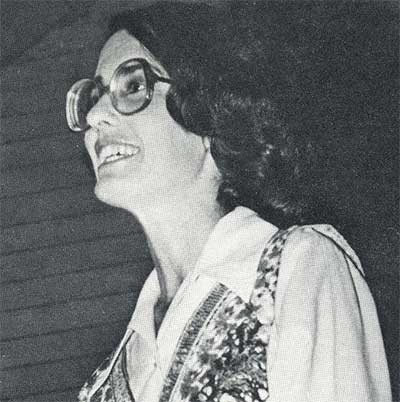
Missionary to the Central African Republic, 1975
This testimony was first published in the November 1981 issue of Today’s World magazine.
Rarely in life does one’s perspective and perception change so abruptly as it did when I was told of my new mission in Africa. As I left the campus and took the bus home under the crisp, starry Cambridge night, the buildings, people, and cars, seemed already removed, distant. Incredible, but true. I just wanted to burst out, to say to everyone, “I’m going to Africa!” … But what is Africa? I had no idea.
In all my studies in high school and college, I had never been attracted to study about Africa. It seemed too big, too vague, too remote from my life. And now, I was going (was it true?) to Africa. As a missionary, as a pioneer, into for me a completely unknown land.
I’d wake in the morning with a fear that I might die of malaria once I got there . . . so many fears, almost overwhelming, but overcome by the even more overwhelming love of our Father. True Father came to Barrytown every other day—it seemed like every day—to lift us up and instill vision and value in our hearts. His words and His love truly sustained me during the long years ahead. I only wish that I’d had the courage to “go on my own” at that time, but what was there was just in the germination stage, with still a long way to go, and True Father’s booster shots of love were still necessary.
Then, so quickly, so quickly man cannot stop time-the day arrived, good-byes at the airport, in the plane, and away. Was there love in my heart for the land where I was headed in the center of the massive African continent? How I longed for that to be, that it could be like two lovers running to embrace each other; but sadly, I could not feel that way. My mind was almost choked by fear because I knew so little about the Central African Republic. On the plane, I made a determination that although all was strange now, I would somehow hang on, somehow survive until love stirred, until love came from which wonderful spiritual sons and daughters would be born.
But I could not have imagined what a long time that would be.
In my life in the Central African Republic, I often felt that I’d been blessed or matched to perhaps the most unlikely candidate possible. A nation picked by Heavenly Father for me, for my growth. But originally, not have much in common between us.
My first year in the Central African Republic, from May 1975 to May 1976, was the longest of all years possible. The month from May to June 1975, was even longer. Why? Because when you are lonely, especially when it is loneliness centered on self, time is eternity. I tried so much to overcome and turn self-centered feelings into feelings to comfort Heavenly Father’s heart. But it was so difficult.
So many days during the first month, I felt that Satan had picked me up like a wet dishrag, wrung me out, and dropped me again. I longed just for the setting of the sun and the cool of night to calm my roving, internally screaming spirit.
Struggle for unity
We were fortunate in one way that our country had a difficult external situation. Exactly as Father said, these externals worked to push us closer together. Unfortunately, during our first year in the mission, I cannot say we brought a victory of unity. I usually pretended that I was too busy and ignored my fellow missionary, deciding that the “mission” was more important than one person’s spiritual state: more important to witness to the Central Africans than to raise someone who already knew the Principle and thus should be strong.
We were all able to endure until the end of the three-year course together, when we received official recognition from the government of Central Africa to work officially and openly as the Unification Church. This was a very blessed moment of victory. Because we’d achieved unity at last, it was the farthest from my mind that this would so quickly change. But the providence of God is much greater than our individual victories, and by the end of August, on only two days’ notice, the German sister was off to London, and we were two missionaries again. For some reason, Elisabeth Klima’s departure was truly a spiritual shock for me. I discovered that two persons are far less stable than three because if there is a disagreement, it is so difficult to create unity again, to rebuild the foundation.
Thus, from September 1978 until September 1979, very little progress was made in our mission work. Externally, Ogura-san and I understood each other better, but the unity was not at a deeper level. I felt much resentment towards him because (I sensed) that he rarely wanted to accept my direction or point of view, perhaps because of my status as a woman, or as a “younger” sister. Yet I did not express this to anyone, because I felt determined to overcome, to win a victory through service. It was a most difficult time of struggle for me, and my energy level, even my desire to continue the mission, seemed to be at the lowest possible level. In addition, the external political situation of the country became very tense. Yet somehow, I had a deep faith and hope that if we could just persevere, no matter what, Heavenly Father could always find a way to work.
And so it was. The political situation changed, and we were joined by a new German missionary, Hanna Reinbold, with a strong Principled view and Abel-like nature. The joy and new hope that flooded both Ogura-san and myself made the dark cloudy days melt away. Not instantly, but surely, the errors are being mended, and the resentments overcome.

Language barrier
For myself, the greatest barrier was that of language. Without a facility in the language, one cannot deeply understand culture, customs, and way of life. The Central African Republic is a French-speaking nation; that is, French is the official language, spoken by the government and by educated people, while Sango is the national language, spoken by nearly all the Central African people. So, when I arrived there, the conversation and atmosphere surrounding us were almost completely unintelligible. From the first day, I tried to speak my broken, high-school French, but rarely could other people understand, and even more rarely could I understand them. I so often felt that I was inside a plastic bag, and although I made sounds that I thought were intelligible, the people on the “outside” only understood these sounds as gibberish. So often I was nearly in tears, as people would ask, “What language are you speaking?” or say, “I’m sorry, but I don’t understand Chinese.”
Such a painful memory of lonely times characterize the first six to eight months of my mission in Central Africa. So many times I reflected on Heavenly Father’s situation, how He had been incomprehensible for so many thousands of years to all the people on the earth, even to those He had directly chosen to lay the foundation for the restoration. It was this realization that my initial experience in trying to communicate at least verbally, not to mention in trying to understand at the level of heart, was but a small part of the heart of God and His efforts, frustrations and loneliness that kept me persevering. But it was not easy, because languages do not come quickly to me. So it was one year, two years, two and a half years, before I could truly feel at ease, truly understand the nuances and sometimes hidden meaning in the way people spoke.
Of course, during all this time, even from the first week, we taught the Divine Principle. At first, I read it nearly word for word from the Study Guide, as some patient friend or contact (patience is certainly one of the paramount virtues of the Central African people) would be my willing object. And what is amazing is a true testimony to the power of Heavenly Father’s love and of the tremendous worldwide victory of True Parents: despite these external handicaps or barriers, some persons did understand, and did accept, and did become faithful members.
African values
Yet, because the language was so difficult for myself and for Ogura-san as well, the changing of our customs and an understanding of the Central African culture came slowly to me. I remained Europeanized and consequently, too aloof and arrogant for too long. We ate the more European-style food at first and tried to discuss with new guests aspects of the American or European way of life, but found that it really had no meaning or relevance to those who had only recently left their village, who had almost no contact with outside countries or persons from outside countries. Looking back, what most likely won our first members was the sincerity of our efforts; they could sense from our lifestyle and our actions that we were trying to pioneer a new way. One friend said once to me, “You know, your Japanese friend, I saw him many times walking along the street, and I thought: very simple natural style; that’s the way a person should be. I wonder where he lives and what he’s doing here in Bangui.”
Still, to come closer and closer to the people and to feel an eternal bond with them, one needs at least to absorb all the good or closer-to-heavenly aspects of the culture, customs and way of life. As we began to have members living in the center with us—the first brother began to live with us in December 1977—we learned the externals of how Central Africans eat and live, and most importantly, about their view of life, of the world, of God.
We realized how close the spirit world and spiritual phenomena are to African life; the belief in the practice of magic is deep, not erased simply by a certain number of years of high school or university education. Heavenly Father is, above all, a judge to be feared (an Old Testament image), as are their own fathers. Frankly speaking, few believe it is possible for a man or a woman to remain chaste or even to live a faithful married life. They have no experience or example of such a way of life or such a marriage, so they conclude that it must not exist on this earth. Seemingly, no feeling of guilt or remorse accompanies such actions.
When I first really comprehended these views of life and values, it was almost more than I knew how to cope with. Sometimes hopelessness would envelop me, a feeling that there is almost no way to begin resurrection if there’s no desire to change, no prick of conscience. But I determined that if we could find even one person who was capable of sacrificing for his other brothers, to follow with dedication the way of True Parents and restoration, then he could be the symbolic offering, until one day, through united effort, all the others may come as well.