[The Limits of Paternal Civilization, The Vision of Maternal Salvation]
By Seong-Jong Seo (Ph.D. in Theology)
This article was originally published in Korean in Segye Ilbo, a major South Korean daily newspaper, under the column series “Epic History of the Korean People.” [Click here to view the original article.]
Read the previous article in this series.
◆ The Obedience of the Holy Mother that Turned the Course of Human History, and the Remaining Task
The essence of the Human Fall lies in the loss of Haewa, the first woman created in the image of God and the ancestor of humanity. Having lost their mother, humanity was forced to write a history of struggle and conquest within a civilization centered on “paternal authority.” Yet, immediately following the tragedy of Eden, Heaven foretold a way of life that would give rebirth to humanity. That is precisely the promise regarding the “seed of the woman”—the most mysterious prophecy in biblical history.
◆ ‘The Seed of the Woman’: A Theological Breakthrough Shaking Patriarchal Linealism
Genesis 3:15 has traditionally been called the Proto-Evangelium (“First Gospel”) and regarded as the first ray of hope for salvation: “And I will put enmity between you (Satan) and the woman, and between your offspring and her seed; he shall bruise your head…”
The crucial point to note here is the declaration that the Savior comes not through male lineage, but through the “offspring of the woman”—that is, the ‘seed of the woman.’ The Hebrew word for offspring or seed, zera (זֶרַע), originally refers to the seed of a plant. Contrasted with how all biblical genealogies are recorded from a male-centered perspective, this is a revolutionary theological breakthrough.
Although history has flowed along a patrilineal axis following male surnames, the blueprint of the providence of salvation was different. By re-establishing the woman, who had become the channel of the Fall, as the primary agent of salvation, it implied that the Messiah would come through God’s supernatural intervention and the pure womb of a woman. To fulfill this promise, Heaven carried out a desperate history of “cleansing the lineage” in the narrow land of Israel over the long period of the four-thousand-year Old Testament Age. It was by no means a coincidence that women such as Tamar, Rahab, Ruth, and Bathsheba risked their lives beyond the standard of Jewish law to preserve the Messianic lineage. This was Heaven’s utmost devotion to prepare the purest womb capable of conceiving the ‘Only Begotten Son’ and the ‘Only Begotten Daughter.’
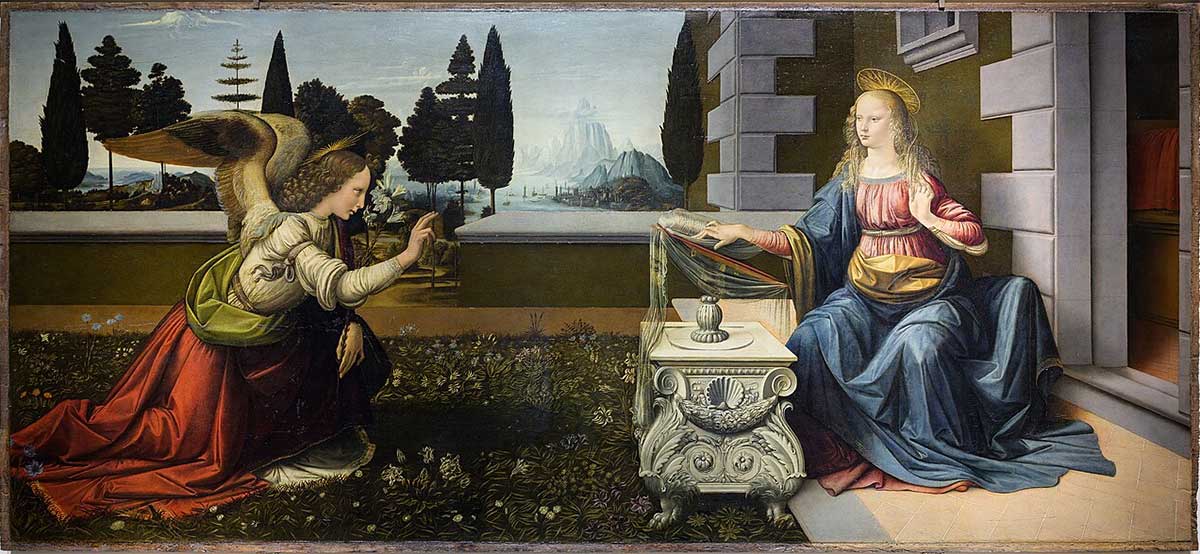
◆ Mary’s “Fiat”: Reversing Eden’s Rejection
The culmination of this long history of purification was the Virgin Mary. If Haewa opened the path to the Fall in Eden through her disbelief and disobedience to God’s word, Mary showed absolute obedience even in the face of the announcement of the “virgin conception”—something impossible to accept through human reason alone.
Mary’s confession before the Angel Gabriel, “I am the servant of the Lord; let it be to me according to your word” (Luke 1:38), is known in Latin as Fiat (“let it be done”). This short response was a cosmic event that turned the tide of human history. By reversing Haewa’s “No” with Mary’s “Yes,” humanity was finally able to welcome the Only Begotten Son, Jesus, who possessed a sinless lineage free from Satan’s accusation. The advent of the Messiah was made possible only through one woman’s life-risking acceptance and maternal victory.
◆ Unfulfilled Task and Two Thousand Years of Waiting
However, Mary’s mission did not stop at giving birth to the Only Begotten Son. Providentially, the ultimate task given to Mary was to find and establish the ‘Only Begotten Daughter’—the partner prepared by Heaven—once Jesus reached adulthood, thereby firmly establishing the ideal of ‘True Parents’ on earth. The reason Jesus referred to himself as the “Bridegroom” and eagerly awaited the “Marriage Supper of the Lamb” was due to the fundamental principle of life: a father cannot give birth to children alone.
Yet, history took an unfortunate course. Amid the disbelief of those around him, Jesus was forced to walk the path of the cross without receiving his Bride. Consequently, while the path of spiritual salvation was opened, the dream of constructing the substantial Kingdom of Heaven in the flesh was postponed to the era of the Second Coming.
This explains why Christianity over the past two thousand years has upheld the “spirituality of the bride,” attending the Holy Spirit as the “Comforter” while awaiting the Bridegroom. It has been a long history of waiting to recover the substantial reality of the lost feminine divinity—the ‘Only Begotten Daughter.’ The narrative of salvation that began with the “seed of the woman” is now advancing toward the point of completion that Mary was unable to achieve. We have reached a critical moment where we earnestly need the ‘substantial manifestation of the Mother’ to wipe away the wounds of Eden and the tears of Mary, healing humanity through the logic of love.
To Be Continued …
◼ Author’s Note
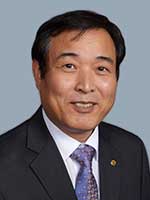
Dr. Seong-Jong Seo received his Master’s degree from the Unification Theological Seminary (UTS) in New York, USA, and his Ph.D. from California Union University (C.U.U.). For 35 years, he has traveled between Korea, the United States, and Latin America, serving as a pastor and world peace activist. He presents insights encompassing religion, humanities, and contemporary issues through numerous books, including “Humanities Encountered During the COVID-19 Pandemic.”