Religious successors and the weight of history: Examples from Korea now and its past of preserving a movement in times of trial
By Jeong Seong-su (정성수 Segye Ilbo)
On 15th June 2026, religion correspondent Jeong Seong-su (정성수) of the South Korean newspaper Segye Ilbo published an opinion column reflecting on the public treatment of religious leaders and believers during periods of controversy. Although the article was prompted by recent court proceedings involving Hak Ja Han (한학자) – also known as Mother Han – the author’s broader concern was not the legal case itself. Rather, he examined how societies talk about religion, how the media frames religious controversies, and what it means to inherit leadership of a religious movement after its founder has passed away.
The column is particularly significant because it appears at a time when the Family Federation for World Peace and Unification is facing intense public scrutiny in South Korea and elsewhere. The movement, in Korea also known as Unificationism (통일교), has become the subject of political, legal, and media debates. Against this backdrop, Jeong argues that criticism of a religion and ridicule of its believers are not the same thing, and that the distinction matters.
The article begins with an observation about the nature of courtrooms. Courts, Jeong writes, are places governed by evidence, testimony, legal arguments, and judgments. Personal conviction, faith, tears, and a sense of divine mission do not carry legal weight. Normally, people appearing in court focus on defending themselves against allegations or challenging the claims of others.
According to the author, however, Hak Ja Han‘s courtroom appearance departed from this pattern. After addressing accusations directed at her, she spoke about her life’s purpose: her efforts to promote peace around the world and her belief that she has a mission connected to what she calls our “Heavenly Parent”, the term she uses to refer to God.
Some commentators viewed this as inappropriate or irrelevant in a legal setting. One online media outlet, OhmyNews (오마이뉴스), characterized her remarks as a “ten-minute solo explanation of doctrine”.
It is here that Jeong introduces his central argument. He does not object to criticism of religion. In fact, he explicitly states that journalists have every right – and indeed a responsibility – to investigate religious organizations, scrutinize religious leaders, and expose wrongdoing when it exists. What troubles him is something different: the use of language that moves beyond criticism into mockery.
For Jeong, phrases such as “solo doctrine lecture” carry a dismissive tone that implicitly treats the faith of believers as absurd. He argues that a journalist could simply describe what happened without adding wording designed to provoke ridicule. In his view, language shapes perception. The choice of words can influence whether readers approach a subject critically yet fairly, or whether they are encouraged to laugh at it before considering the facts.
To reinforce this point, Jeong cites another example from the same media outlet. During an earlier legal dispute involving figures connected with Unificationism, the publication reportedly described the proceedings as a “dogfight”. The columnist acknowledges that legal battles can be harsh and contentious. Nevertheless, he argues that when journalists use highly emotional labels, they stop functioning primarily as observers and begin acting as participants who guide readers toward a particular emotional reaction.
The author’s concern is especially acute because of the current situation facing the Family Federation. The movement is being intensely persecuted, and the left-leaning president of the country, Lee Jae-myung (이재명), has even introduced the idea of dissolving what he perceives as a conservative religious opponent. Yet Jeong reminds readers that behind headlines and controversies are ordinary believers who have organized their lives around sincere religious convictions. One can disagree with those beliefs, he argues, without treating the believers themselves as objects of contempt.
From this discussion of contemporary media and religion, the column shifts to a historical analogy. Jeong introduces Choe Si-hyeong (최시형), better known by his religious title Hae-wol (해월), the second leader of the nineteenth-century Korean religious movement Donghak (동학 – literally “Eastern Learning”) [See editor’s note 1 below]. This comparison forms the emotional and philosophical heart of the article.
Donghak [See editor’s note 1 below] was founded by Choe Je-u (최제우), also known as Su-un (수운), in the mid-nineteenth century. After the founder was executed by the Joseon government in 1864, the movement faced severe persecution. Followers were hunted, the organization seemed likely to disappear, and its future appeared bleak. According to Jeong, Hae-wol inherited leadership under these extraordinarily difficult circumstances.
Unlike the founder, who is remembered for creating a new vision, Hae-wol’s task was simply to keep the movement alive. Forced into hiding, he spent decades moving from village to village carrying only a small bundle of belongings. This earned him the nickname “Choe with the Bundle”. Through years of hardship, he preserved the movement until it survived long enough to develop into what later became known as Cheondogyo (천도교 – Cheondoism, literally “Religion of the Heavenly Way”) [See editor’s note 2 below].
Jeong cites a well-known saying among followers of that tradition: “Su-un founded it; Hae-wol preserved it.” The phrase captures a distinction that he believes applies broadly throughout religious history. Founders often receive admiration because they create something new and inspire people with a compelling vision. Successors, by contrast, inherit problems. They must defend institutions, navigate internal disagreements, withstand external attacks, and maintain continuity during times of crisis.
This leads to the column‘s broader reflection on religious leadership. Jeong suggests that successors are frequently lonelier than founders. While founders are remembered for their charisma, successors bear the burden of sustaining communities after the excitement of creation has passed. Their role is less dramatic but no less important.
Seen through this lens, Mother Han appears in the article not primarily as a defendant in a legal controversy but as a religious successor carrying what the author views as a heavy historical responsibility. When she became emotional in court and spoke of her spiritual mission, Jeong says he was reminded of the many religious figures throughout history who have devoted their lives to preserving communities amid criticism and uncertainty.
The article concludes by emphasizing a principle of civic discourse. People are entitled to disagree about whether a religious mission is valid or misguided. They may criticize doctrines, institutions, and leaders. However, Jeong argues that there is no need to turn a person’s lifelong convictions into an object of ridicule. Public criticism can be rigorous and even severe while still maintaining a basic respect for human dignity and sincere religious belief.
In essence, the column is less a defense of any particular doctrine than an appeal for restraint in public discussion. Jeong asks readers to distinguish between critical examination and mockery, and to remember that behind every religious controversy are real individuals whose identities, values, and sense of purpose are deeply connected to their faith. Whether one agrees with them or not, he argues, that reality deserves recognition.
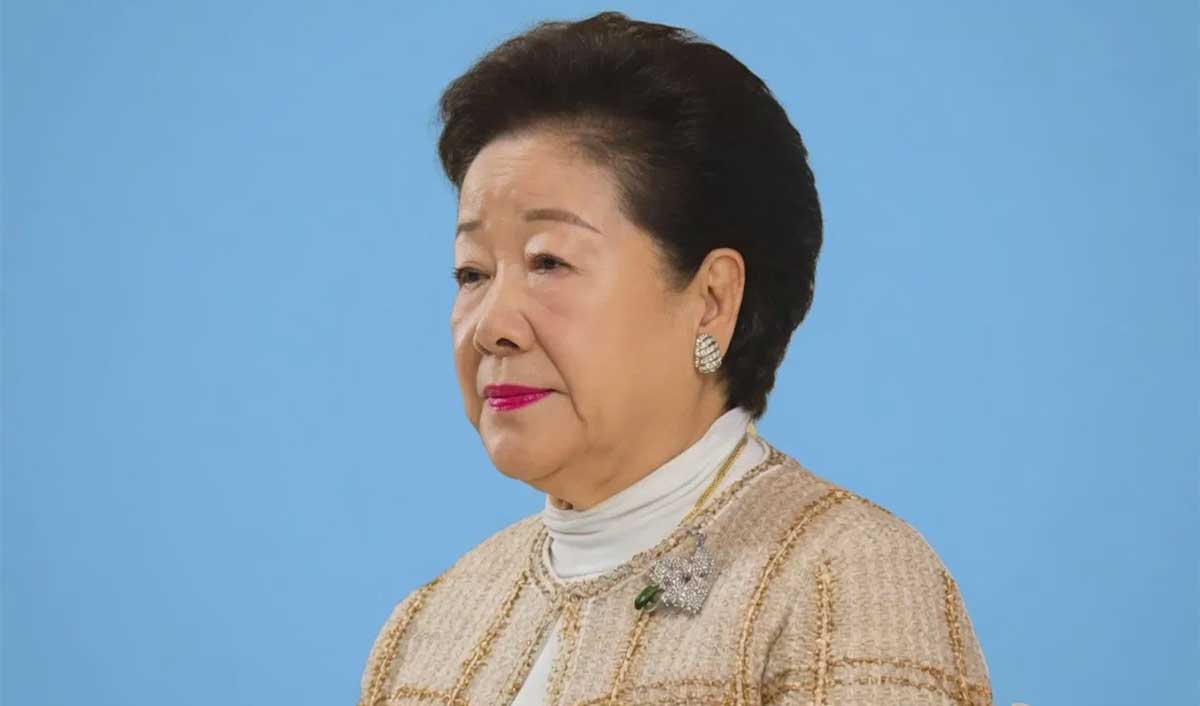
Featured image above: Hak Ja Han, aka. Mother Han in 2023. Photo: FFWPU, improved for higher resolution and sharpness by Grok xAI, 16th June 2026.
[Editor’s note 1: Donghak (동학, “Eastern Learning”) was a Korean religious, philosophical, and social movement founded in 1860 by Choe Je-u ((최제우 – 1824-1864) during the late Joseon Dynasty (1392-1897). It emerged as a response to growing foreign influence, especially Western Christianity (“Western Learning”, Seohak), social inequality, corruption, and political instability.
Donghak combined elements of Korean folk beliefs, Confucian ethics, Buddhism, and Daoism. Its central teaching held that the divine is present within every person (Innaecheon, “humanity is heaven”), emphasizing human dignity, moral self-cultivation, and the spiritual equality of all people. This idea challenged the rigid social hierarchy of Joseon society.
The movement gained a large following among peasants and marginalized groups. In 1894, dissatisfaction with government corruption and economic hardship contributed to the Donghak Peasant Revolution, a major uprising inspired in part by Donghak ideals. Although the revolt was suppressed, it helped trigger broader regional conflicts and reforms.
After persecution, Donghak evolved into Cheondoism (“Religion of the Heavenly Way”), which remains active in Korea today.]
[Editor’s note 2: Cheondogyo or Cheondoism (천도교, “Religion of the Heavenly Way”) is a Korean religion that developed from the earlier Donghak (“Eastern Learning”) movement. In 1905, the movement was reorganized and renamed by Son Byeong-hui (손병희 – 1861-1922) to emphasize its spiritual character and adapt to the changing political conditions of Korea under increasing foreign domination.
The central doctrine of Cheondogyo is Innaecheon (“Humanity is Heaven”), the belief that the divine resides within every human being. As a result, all people possess inherent dignity and should be treated with respect and equality. Cheondogyo stresses moral cultivation, social responsibility, and the improvement of society through ethical action rather than withdrawal from the world.
Unlike many religions that sharply separate the sacred and the secular, Cheondogyo teaches that everyday life is the proper arena for spiritual practice. Historically, its followers played a significant role in Korea’s modernization and independence movement, including participation in the March First Movement against Japanese colonial rule.
Today, Cheondogyo remains one of Korea’s indigenous religions, preserving the humanistic and reformist ideals inherited from Donghak.]
May our Heavenly Parent and True Parents guide our brothers and sisters to understand the vision , mission direction of our True Parents ( True Mother and True Father)