Baptist pastor warns of dangerous precedent and maintains dissolution order is due to Family Federation being “Korean-based religion” and “Japanese money being sent to Korea”
Tokyo, 6th April 2025 – Published as an article in the Japanese newspaper Sekai Nippo. Republished with permission. Translated from Japanese. Original article.
Dissolution Order Against the Family Federation a “Stain on History”
Interview with Pastor Hiroshi Kurose of Tokyo West Baptist Church
by Tsuyoshi Toyoda (豊田 剛)
Prepared by Knut Holdhus
A religious organization must have self-awareness and reflect
The Family Federation for World Peace and Unification (formerly the Unification Church) appealed the Tokyo District Court’s dissolution order issued on 25th March by filing an immediate appeal with the Tokyo High Court on 7th April. We spoke with Pastor Hiroshi Kurose (黒瀬博) of the Tokyo West Baptist Church about the validity of the dissolution order, the outlook of the trial, and the state of religious freedom in Japan.
Interviewed by Tsuyoshi Toyoda (豊田 剛)
– The Family Federation has received a dissolution order.
It is an unjust decision from the standpoint of the Japanese Constitution, international law, and the Religious Corporations Act. If such a ruling is allowed to stand, it will go down in history as a stain on the record of Japanese jurisprudence. The lawyers who forced this order through must be prepared to face judgment by history. What they are doing is no different from the inquisitors of the medieval era.
As a pastor belonging to the Baptist denomination, I must say this: Baptist churches have historically been persecuted by other Christian denominations since their founding. They strongly oppose any government restriction on religious freedom.
– Why is religious freedom not respected in Japan?
One reason is the mistranslation and misuse of the term “religious freedom”. In Japanese legal terminology, the term used is shinkyo no jiyū (信教の自由 – freedom of faith/belief). In English, this would be translated simply as “freedom of religion”.
However, the Meiji government [Editor’s note: 1868-1912] disliked the expression “freedom of religion” (literally translated to Japanese as 宗教の自由 – shūkyō no jiyū) and invented the alternative term shinkyo no jiyū [See editor’s note below]. The continued use of this inaccurate translation even after the war shows that Japanese legal scholars have not seriously understood religious freedom. International law now translates this term as “freedom of religion”, and so domestic Japanese law should also speak in terms of shūkyō no jiyū, not shinkyo no jiyū.
That legal scholars have said nothing about this mistranslation is, in itself, evidence of their negligence. I believe this negligence is one of the underlying causes of the dissolution order against the Family Federation.
– Could this dissolution order set a precedent for dissolving other political or religious groups?
Although some online outlets and a few media reports have already pointed out the injustice of this dissolution order, even the Japanese Communist Party (JCP) is not praising the verdict – rather, they fear it. Although Shimbun Akahata [Editor’s note: the Communist party’s newspaper] has repeatedly criticized the Family Federation, it is cautious in how it discusses the dissolution order. This is because they understand that the logic used here could be directly applied to dissolve the Communist Party itself.
Many religious groups are also hesitant to clearly oppose the dissolution order, fearing backlash from society. But their careful wording reflects a concern that the same logic might one day be turned against them.
– Isn’t the basis of the dissolution order unclear?
Many people already recognize that there are serious legal and practical problems with this dissolution order. That said, we must also acknowledge that the Family Federation itself bears some responsibility. Whether they are unaware of it or simply unwilling to recognize it, the Federation must understand that without self-awareness and reflection, the dissolution order may be inevitable.
As for the courts, although their rulings are officially based on law, in reality, they consider public sentiment when making decisions – even if they can’t explicitly state this in their rulings. You can’t see the judges’ feelings just by reading the judgment, but the conclusions usually align with national sentiment.
Avoiding dissolution through settlement
– Public sentiment toward the Family Federation is quite negative.
In fact, it’s extremely bad. Unlike other religions, the reason public sentiment is so hostile toward the Family Federation is largely because it is a Korean-based religion, and it is believed that donations from Japanese members are being sent to Korea.
We should recall that the Protestant Reformation was also triggered by resentment over German money being sent to the Vatican in Italy through the sale of indulgences. Money-related issues provoke strong public emotions. But just like in the Reformation, where indulgences were not the public focus, but the debate centered around Martin Luther’s doctrine of justification by faith, the true root of the issue wasn’t formally acknowledged.
Behind the dissolution order against the Family Federation is public resentment over Japanese money flowing to Korea – but this will not be mentioned in the court’s ruling. It is essential to realize that past “spiritual sales” tactics or doctrines are not the core of the issue.
– The case seems to be unfolding like a “national policy”. Is there a way to prevent the dissolution order?
It will require compromise on both sides. A possible solution is for the court to refrain from issuing the dissolution order, while the Family Federation agrees to certain conditions. A mutual settlement could postpone or avert the order. This would both align with public sentiment and avoid issuing a legally problematic dissolution order.
Neither the Ministry of Education nor the judges actually want to issue such an order. If this approach is feasible, it could help the court and Japanese government avoid international criticism and soothe public opinion. I believe this is the most realistic way forward.
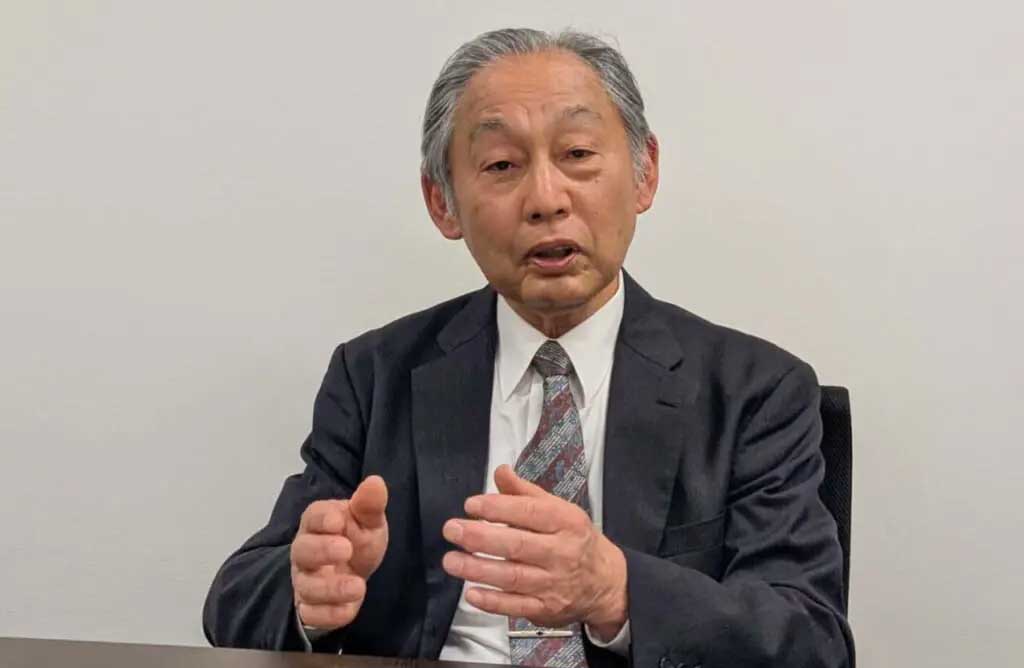
Featured image above: Hiroshi Kurose (黒瀬博): Born in 1951 in Hiroshima Prefecture. Completed a master’s in legal philosophy at Waseda University in 1975. Graduated from Tokyo Theological Seminary in 1978 and the Advanced Theology Program at Seinan Gakuin University in 1979. Completed studies at Zurich Baptist Seminary in 1984. Currently pastor of Tokyo West Baptist Church. Major works include The Development of a New Christianity (Good Time Publishing). Photo: Sekai Nippo
[Editor’s note: The distinction between 信教の自由 (shinkyo no jiyū) and 宗教の自由 (shūkyō no jiyū) that Pastor Hiroshi Kurose raises is nuanced but revealing – both linguistically and politically.
Literally, 信教の自由 (shinkyo no jiyū) means “freedom of belief/faith”. It emphasizes the individual’s inner conviction – the right to believe (or not believe) in a religion or faith of one’s choosing. This is the term used in Japan’s Constitution (Article 20) and legal codes.
宗教の自由 (shūkyō no jiyū) translates more directly to “freedom of religion”. It encompasses not just internal belief but external practice – including public and institutional rights like organizing religious groups, conducting rituals, proselytizing, and maintaining institutions.
Kurose claims that the Meiji government (1868-1912) deliberately avoided shūkyō no jiyū to limit the broader implications of religious liberty (especially concerning public practice or institutional autonomy). The Meiji government maintained strict control over religion, especially fearing Christianity and new religious movements. Religious freedom was nominally granted but heavily constrained by policies that aimed to preserve social order and loyalty to the emperor.
The Meiji authorities also created State Shinto – a system where Shinto shrines were managed by the state and tied to nationalism, while Buddhism and Christianity were regulated or discouraged to varying degrees.
The continued use of shinkyo no jiyū reflects a narrow and possibly outdated understanding of religious freedom. Japan’s legal culture may be overly focused on private belief, while still viewing public religious expression or institutional activity with suspicion – especially when foreign-origin religions like the Family Federation are involved.
If freedom is defined only as belief, the state can more easily regulate action (e.g., missionary work, financial activities, gatherings), claiming it’s not violating constitutional protections.
Japanese society, shaped by historical suspicion of “new religions” (新宗教), may tacitly accept restrictions on practice if “freedom of belief” remains untouched.
Globally, freedom of religion – as per international standards like International Covenant on Civil and Political Rights (ICCPR) and Universal Declaration of Human Rights (UDHR) – includes belief and practice. Pastor Kurose is effectively arguing that Japan falls short of this international norm.
Pastor Kurose sees Japan’s reliance on shinkyo no jiyū as a reflection of legal and cultural reluctance to fully embrace religious pluralism, especially when political sensitivities or foreign religious movements are involved.]