Japan ignoring formal request for a UN visit to investigate the country’s abusive treatment of religious minorities
Prepared by Knut Holdhus
On 25th November 2024, Bitter Winter the leading online magazine on religious freedom and human rights, published an article penned by Dr. Massimo Introvigne titled “Unification Church and Jehovah’s Witnesses: Why Is Japan Not Accepting a UN Visit?”
Introvigne writes, “Something very strange is happening with Japan. After United Nations criticism of its attitude towards the Jehovah’s Witnesses and other religious minorities, it seems that the Japanese government is trying to prevent an official visit to the country by the UN Special Rapporteur on freedom of religion or belief, Nazila Ghanea.”
The UN Special Rapporteur on freedom of religion or belief, Nazila Ghanea, formally requested to visit Japan on 28th March 2024. However, Japan has not accepted the request, which raises questions given its democratic status and history of extending standing invitations to UN Special Rapporteurs.
This hesitation is particularly notable in light of recent international criticism of Japan’s treatment of religious minorities, especially the Jehovah’s Witnesses and the Unification Church (now known as the Family Federation for World Peace and Unification).
Japan’s reluctance is viewed as a diplomatic tactic akin to “fin de non recevoir”, where governments indefinitely delay responses to avoid explicit refusals. Such strategies are often employed by authoritarian regimes rather than democratic nations. For example, China initially resisted UN visits to Xinjiang but eventually allowed one, albeit under international pressure, revealing the reputational costs of prolonged resistance. Japan’s stance risks drawing even greater international criticism, potentially tarnishing its image.
The Special Rapporteur’s insistence on visiting Japan stems from concerns raised in a joint letter on 30th April 2024, co-signed by three other UN Rapporteurs. This letter criticized Japan’s measures against the Family Federation and Jehovah’s Witnesses following the 2022 assassination of former Prime Minister Shinzo Abe. His assassin reportedly targeted him due to his association with the Family Federation, which led to heightened scrutiny of the group.
The Japanese government has since implemented regulations that the UN officials argue may violate principles of neutrality and non-discrimination, while also stigmatizing religious minorities. Critics have pointed out that so-called “anti-cult” activists, known for their hostility toward these groups, were involved in drafting the regulations.
Japan has also pursued legal action to dissolve the Family Federation, a move that experts like French attorney Patricia Duval argue violates international human rights commitments. Dissolution would deprive the organization of its assets and effectively end its operations.
Meanwhile, the Jehovah’s Witnesses and the Family Federation members have faced ongoing discrimination and even physical violence. Critics argue that Japan’s actions have largely relied on testimonies from disaffected former members, ignoring positive accounts and the organizations’ social contributions, such as disaster relief efforts.
The potential UN visit would likely spotlight these issues and examine alleged abuses, including the exclusion of positive testimonies and reports of arbitrary actions by Japanese authorities abroad, such as those targeting a Senegalese school connected to the Family Federation. The visit amplifies existing criticism from NGOs and international scholars while pushing Japan to reconsider its policies.
Japan’s refusal to accept the visit is seen as counterproductive, as it draws more attention to its actions and aligns its behavior with that of countries notorious for human rights violations. Observers argue that allowing the visit would be less damaging than the ongoing refusal, which casts doubt on Japan’s commitment to religious freedom and its international obligations.
The situation underscores broader concerns about Japan’s approach to religious minorities. Critics worry that the government’s actions reflect not only a reaction to Abe’s assassination but also deeper issues of intolerance. They urge Japan to permit the visit to demonstrate transparency and uphold its democratic values. Failure to do so risks aligning the country with regimes that suppress religious freedom, undermining its global standing.
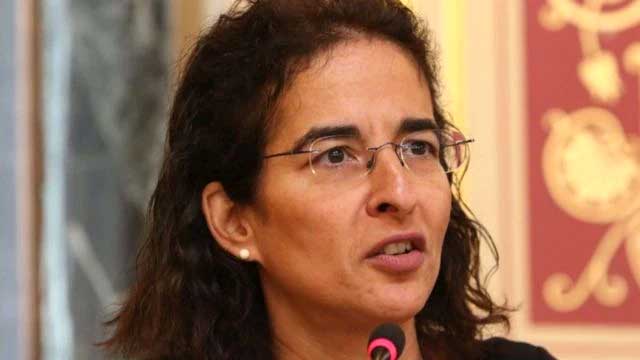
Featured image above: Nazila Ghanea, UN Rapporteur on Religious Freedom since
[Editor’s note: Dr. Massimo Introvigne is a prominent Italian sociologist and scholar of religion, known for his extensive research and writings on new religious movements, religious freedom, and minority religions. He is known for his balanced and nuanced perspective, striving to present the views of both critics and adherents of various religious movements while emphasizing the importance of upholding human rights and freedom of belief.
Introvigne is the founder and managing director of the Center for Studies on New Religions (CESNUR), an internationally recognized organization based in Turin, Italy, that focuses on the study of minority religions and new religious movements.
He has authored and co-authored numerous books and articles on religious movements and the sociology of religion. His work often explores controversial or misunderstood groups, including Scientology, Jehovah’s Witnesses, and the Unification Church.
He is also the editor-in-chief of Bitter Winter, an online magazine focusing on religious freedom and human rights issues, particularly in countries like China and Japan.
Introvigne is highly regarded in academic circles for his objective and well-researched approach to studying controversial religions. He often challenges mainstream narratives and highlights the sociological and legal dimensions of religious freedom.]