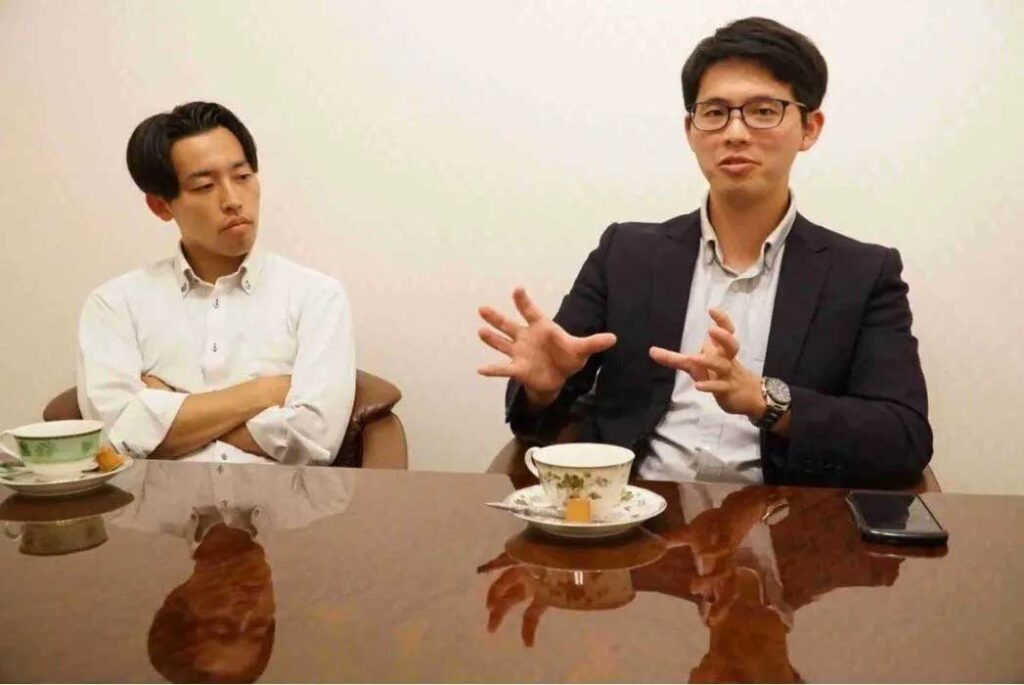
Dehumanizing view sold by hostile activist lawyers to Japanese authorities frightens young members of religious minority
Tokyo, 6th November 2024 – Published as the 38th article in a series in the Japanese newspaper Sekai Nippo. Republished with permission. Translated from Japanese. Original article
Series: Freedom of Religion Under Threat – Part 5: The Distorted Image of the “Second-Generation”
Have Second-Generation Followers of Religions Been Deprived of Their Freedom?
by the Religious Freedom Investigative Team of the editorial department of Sekai Nippo
Prepared by Knut Holdhus
Have second-generation followers of religions been deprived of their freedom?
“The so-called ‘second-generation followers’ of religious organizations have been deprived of freedom to choose their religion, the freedom to date and marry, the freedom to continue their education and find employment. as a result, they have been deprived of their entire personality in all stages of life, including adulthood.”
This paragraph, from a statement issued by the National Network of Lawyers Against Spiritual Sales (Zenkoku Benren) on 21st September 2024, calling for legal measures to aid victims of the former Unification Church, can be said to succinctly capture the image of “second-generation followers” commonly portrayed in the media. But when parents of faith practice their beliefs together with their children, does it necessarily mean they are depriving their children of freedom and taking away their entire personality?
In his paper “The Rights of Children and ‘Second-Generation Followers of Religions’” published in the academic journal Religious Studies (宗教研究 – September 2024), Professor Nobuyuki Kojima (小島伸之) of Joetsu University of Education [Editor’s note: located in Joetsu, Niigata] notes that it would be “excessive if all such struggles, suffering, and hardships are viewed without qualification as ‘human rights issues’ or ‘social issues’.”
He warns that such an approach may “lead to serious conflicts between freedom of religion and parental rights” and “could also disrupt the delicate nuances of parent-child relationships and the process of human development.”
He also touched on the media and political responses to issues related to the Family Federation for World Peace and Unification (formerly the Unification Church). Kojima expresses concern that “fundamental discussions about how to draw the limits of religious freedom and to what extent and how the state should mediate conflicts over religious freedom between parents and children have been obscured by the assumption that there must be a quick response to individual Unification Church issues.”
How do current second-generation followers perceive these issues?
Yasumori Ikeda (池田泰盛), a 26-year-old church staff member living in Saitama Prefecture, dropped out of vocational school six years ago. He says his current work was his own choice, with no one influencing him. He recalls, “I originally liked training, so while I was in vocational school, I thought about becoming a sports trainer to help people with weight loss and fitness.”
It was a career that offered economic stability and respect from clients if one was skilled. However, he shares, “Part of me wanted to live for something bigger, not just for what I personally liked.”
While he also had an interest in politics, he felt his faith could help improve a “distorted society” and serve as a guiding principle for his life. This belief ultimately influenced his choice of career.
There are other perspectives on the issues faced by second-generation believers.
Koji Maki (牧孝治), a 28-year-old second-generation believer and church staff member living in Tokyo, often interacts with various second-generation believers due to his position.
In one case, a second-generation follower resented being pressured into faith by his parents. Although he is already an adult, he continues to rely on his parents financially. The parents, having experienced salvation through their faith, are eager to pass it on to their children. The children, however, even while complaining, end up becoming more and more dependent.
In such cases, Maki encourages parents to allow their children the freedom to decide for themselves whether to attend church, saying, “Faith is not something to be forced. If all they can do is criticize, maybe they should try experiencing freedom first.”
However, he notes that there are cases where someone will threaten the parents, “If I live on my own, I’ll stop going to church.” That way the person makes faith a “weapon” to extract parental support, a situation Maki finds troubling.
In many cases, religious beliefs are passed down from parents to children, but in many cases, they are not. The inner conflicts that arise are part of the parent-child relationship and can vary widely. Viewing second-generation followers purely as victims, as implied by the statement from the National Network of Lawyers Against Spiritual Sales, is an extreme view that is harmful.
Click here to read more on Religious Persecution
Featured image above: Yasumori Ikeda (left) and Koji Maki on 22nd October 2024, in Tokyo. Photo: Takahide Ishii (石 井 孝 秀).