
Blog of Unification Theological Seminary
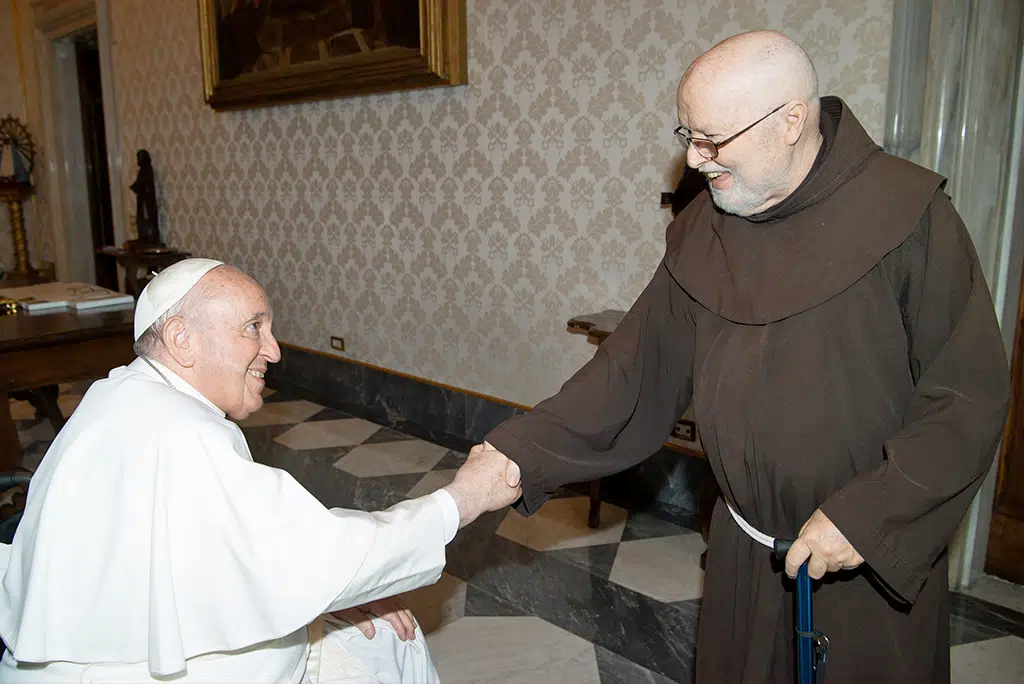
Recently, a significant reconciliation took place between two opposing factions within Roman Catholicism. In light of divisions plaguing the Unification faith community at present, it is instructive to look at how this reconciliation took place.
After watching a video on Franciscan Mysticism by Father Richard Rohr, it occurred to me that there is quite a contrast between traditional Roman Catholic theology, such as found in the Baltimore Catechism I studied as a child in parochial schools, and Franciscan Mysticism.
Here, I examine the possibility — perhaps even probability — that these two traditions contradict each other in various ways. I briefly describe the different theological positions of traditional Roman Catholicism versus Franciscan Mysticism. If these positions do contradict each other, then there might have been, and still may be, tension and conflict within Catholicism at large between these two traditions. I investigate this possibility and discuss any attempts that have been made to deal with and perhaps resolve these intrafaith tensions.
Traditional Roman Catholicism
Roman Catholicism teaches that all human beings since the fall of “our first parents,” Adam and Eve, have been born with original sin, making necessary the coming of Christ for the purpose of redeeming us from sin through his crucifixion.
These teachings are clearly stated in the Baltimore Catechism, an official text used to educate Catholics and prospective converts about the basic doctrine of the Catholic Church. Most Catholics, in the United States at least, studied this text as part of the curriculum of their parochial school education, or by attending Confraternity of Christian Doctrine (CCD) classes usually held on Saturdays. The catechism book is presented in a “question and answer” format, with each question identified by a unique number. It was originally written in 1885; the following questions have been selected from the 1941 revised edition:
47. Q. What is the sin called which we inherit from our first parents?
A. The sin which we inherit from our first parents is called original sin. Because of this sin, it was necessary for Jesus Christ to be born. His purpose was to redeem humankind by dying on the cross.
60. Q. Did God abandon man after he fell into sin?
A. God did not abandon man after he fell into sin, but promised him a Redeemer, who was to satisfy for man’s sin and reopen to him the gates of heaven.
83. Q. Why did Christ suffer and die?
A. Christ suffered and died for our sins
103. Q. What do we mean when we say that Christ sits at the right hand of God, the Father Almighty?
A. When we say that Christ sits at the right hand of God, the Father Almighty, we mean that Our Lord as God is equal to the Father, and that as man He shares above all the saints in the glory of His Father and exercises for all eternity the supreme authority of a king over all creatures.
From these excerpts, it is very clear that the doctrine of original sin, and necessity of the crucifixion of Jesus Christ, which some Catholic theologians refer to as “substitutionary atonement theory,” are central tenets of traditional Catholic faith. Christologically, the catechism implies that Jesus is more than a typical human being. He is God himself, coequal with the Father. From this description, it is difficult to imagine the average Catholic believing that he or she could aspire to become Christ-like, becoming “God’s temple” (1 Cor. 3:16). It certainly never crossed my mind during my upbringing as a student in Catholic schools.
Franciscan Mysticism
Many practitioners of Franciscan Mysticism reject the traditional Catholic teaching of original sin. Father Rohr’s describes the Franciscan view on original sin as being aligned with the writings of ex-Dominican priest Matthew Fox. Fox points out that the term “original sin” never appears in scripture. Instead, scripture says, “God saw everything that he had made, and indeed, it was very good” (Gen. 1:31). Therefore, there is no original sin; human beings are born in what Fox calls “original blessing.”
In this excerpt from his book Eager to Love: The Alternative Way of Francis of Assisi, Rohr himself strongly rebuts the need for “substitutionary atonement”:
Please think about the impossible, shackled, and even petty God that such a theory implies and presents. Christ is not the first idea in the mind of God, as Scotus taught, but a mere problem solver after the sad fact of our radical unworthiness…
We have had enough trouble helping people to love, trust, and like God to begin with, without creating even further obstacles. Except for striking fear in the hearts of those we sought to convert, substitutionary atonement theories did not help our evangelization of the world. It made Christianity seem mercantile and mythological to many sincere people. The eternal God was presented as driving a very hard bargain, as though he were just like many people we don’t like. As if God could need payment, and even a very violent transaction, to be able to love and forgive his own children… (p. 184)
By embracing Matthew Fox’s teachings, Fr. Rohr is aligning himself with one of the most controversial figures in contemporary Catholicism. Fox’s position regarding original sin brought him into direct conflict with the Vatican. Cardinal Joseph Ratzinger, then leader of the Catholic Church’s Congregation for the Doctrine of the Faith, ordered an investigation of Fox’s teachings in 1984. He was ultimately expelled from the Dominican order, left Catholicism, and was welcomed into the Episcopal church. Ratzinger went on to become Pope Benedict XVI. It appears in Ratzinger’s view, the doctrine of original sin was one that from the standpoint of intrafaith or ecumenical dialogue would be described as “non-negotiable.”
In contrast to traditional Roman Catholicism, with its emphasis on sin and sinfulness, Franciscan Mysticism sees the presence of God in human beings and all the things of creation. Father Rohr likes to quote 13th century Franciscan theologian St. Bonaventure who wrote that Christ is “the one whose center is everywhere and whose circumference is nowhere.”
While Roman Catholicism seems to emphasize the divinity of Jesus, Franciscan mysticism emphasizes his humanity. For the Franciscan, Christmas has more attraction than Easter. Saint Francis himself performed the first Christmas live nativity scene that we know of in 1223, with permission from Pope Honorias III. Christmas represents the moment when God revealed himself to us through the birth of a human being, in what Catholics call “the Incarnation.”
Fr. Rohr teaches that Jesus was a man who became Christ, and that we can all aspire to become Christ-like. He presents the concept of Christ differently than traditional Catholicism. Christ is “the first idea in the mind of God.” Where traditional Catholicism implies that Jesus preexisted his own birth, Rohr believes Jesus was born like any other human being and grew into his role as Christ. He points out the fact that calling him Jesus Christ does not mean that Christ was Jesus’ familial last name. Christ consciousness is something we can all aspire to.
Controversy
The contrast between traditional Roman Catholicism and Franciscan Mysticism as described by Fr. Rohr is quite pronounced. Unsurprisingly, this has led to some controversy between the two traditions.
Catholic author and apologist Bryan Mercier refers to Fr. Rohr as an “untrustworthy spiritual guide.” Mercier writes that Rohr’s teachings are filled with “problematic theology,” and “heresy.” He objects to Rohr’s teaching that God is both our Father and our Mother, and what Mercier calls a “New Age” version of Jesus: “… Fr. Rohr goes so far as to say that there’s not just one Christ; that all of us can be divine and that we can all be Christ.”
Douglas Groothius, professor of philosophy at Denver Seminary, an evangelical school, believes Rohr is teaching eastern mysticism rather than biblical Christianity, and subverts the “biblical worldview with most egregious errors.”
Rohr has reported that a group of local Catholics secretly recorded his sermons to have him excommunicated. They delivered the tapes to the late Cardinal Joseph Bernardin, then Archbishop of Cincinnati, who reviewed them and determined they were within the bounds of the Church’s teachings.
Popularity of Franciscan Mysticism within the Catholic population
On the other hand, countless Roman Catholics of a more progressive theological persuasion absolutely love Richard Rohr. The National Catholic Reporter, a newspaper with a progressive Catholic viewpoint, in a July 8, 2022 editorial, commented approvingly on a recent groundbreaking meeting between Pope Francis I and the controversial Franciscan friar under the headline, “Here’s hoping Francis, the pope of surprises, keeps surprising us”:
“…Other examples of Francis’ surprises may not be so dramatic, but they are surely quite symbolic. Take the Vatican’s daily rundown of the pope’s official meetings for June 20. ‘This morning, the Holy Father Francis received in audience Fr. Richard Rohr,’ it said.
The photos of the encounter paint a lovely scene: Rohr, a Franciscan and globally respected spiritual writer long held at arms’ length by church hierarchs for his interreligious and dialogical approach, meeting the very leader of the global church. Rohr, nearly 80, was in his brown habit, carrying a cane; Francis, 85, was in his wheelchair. Both were smiling widely.
In 2013, Rohr wrote a piece for NCR reflecting on Francis’ first major interview as pope.
‘He has forever changed the Catholic conversation,’ the priest said at the time. ‘We can never go completely backward.’
We certainly hope so. May the pope of surprises keep surprising.”
Dialogue and reconciliation
Fr. Rohr made a statement on July 1, 2022 after this historic meeting, posted on the website of his organization, the Center for Action and Contemplation. Here is an excerpt:
“I am full of joy – ecstatic even – reflecting on my meeting with Pope Francis. Our conversation focused on how the rediscovery of the contemplative mind can serve the renewal of Christianity and healing of our world.
Sitting across from each other, I shared with him about what God has done in my life – from my beginning as a charismatic learning the healing power of heart-based devotional prayer, to confronting the social justice issues of our time through my travels around the world, to founding an organization for the teaching of action and contemplation. I consider putting those two back together to be the historic and singular opportunity we have in this moment.
Pope Francis listened to what I shared and seemed genuinely eager to encourage our work. I brought him a copy of The Universal Christ, my end-of-life book, but he said he had already read it!
He shared three times very directly, “I want you to keep doing what you’re doing, keep teaching what you’re teaching.” For this Catholic boy from Kansas, that is a wonderful, hard-to-believe affirmation coming from the Pope himself, for the whole Christian contemplative movement…
The Christian contemplative movement has worked for decades now to renew and reimagine how this ancient wisdom can be taught and shared. Today, it is becoming increasingly accessible to everyone. It is hard to overstate the potential implications for helping heal our church and world…”

Conclusion
The meeting between Pope Francis and Fr. Rohr was historic. It reminds me of the meeting that took place between Saint Francis of Assisi himself and Pope Innocent III in 1210. The papal audience with Rohr represents a powerful endorsement of Franciscan Mysticism, over the objections of its opponents both within and without Catholic circles. It will lead to renewed and significant support for the work of Fr. Rohr in particular, and Franciscan Mysticism in general, positively affecting the work for many years to come.
I cannot think of a more powerful example of a successful intrafaith dialogue and reconciliation than a warm and gracious meeting between one of the most famous members of a dissident faction, in this case Franciscan Mysticism as represented by Fr. Rohr, and the supreme leader of a traditional institutional church, in this case represented by Pope Francis.
On the other hand, I could not have imagined in my wildest dreams a similar meeting between Fr. Rohr and the late Pope Benedict XVI.
A famous saying of the 20th century Anglican priest Father Conrad Noel immediately springs to mind: the “heresy of today is the orthodoxy of tomorrow.”
What I learned from this examination of what initially appeared to me as a serious theological crisis between two factions of the same faith tradition was something I didn’t expect. I underestimated the human factor. We can see here that we arrive at a very different outcome of the situation depending on who the particular personalities involved are. The outcome of a meeting between a representative of Franciscan Mysticism and the late Pope Benedict would have been very different than the warm rapport exhibited in the relationship between Fr. Rohr and Pope Francis.
It appears the success or failure of intrafaith dialogue depends greatly on the mindset of the participants. Are they people who are willing to listen sincerely with an openness to possibly learning something and perhaps changing their position, or are they dogmatics committed to certain “non-negotiable” positions?
Discovering the details surrounding the meeting between Pope Francis and Fr. Rohr leaves me feeling hopeful and inspired. Rohr’s mysticism centers around going beyond teaching people to just believe in God, to actually experiencing God personally and directly. Rohr’s teachings have provided Catholicism with a template for reinvigorating itself in the 21st century, but more than that, they present a Christ who can be understood and embraced universally. In addition, this Christ is accessible to every person.
Perhaps most exciting is that Rohr’s understanding of the Catholic faith brings it to a place where it is no longer a bastion of exclusivism but can harmonize with all faiths. Finally, it provides a pathway for people to not just believe in Jesus, but to truly follow Jesus to the point they can become like Jesus. We can all become “incarnations” of God’s “logos,” the word made flesh (Rev. 1:1-14). We can all become “temples of God” in whom God’s spirit can dwell (1 Cor. 3:16).
Unificationists may see a lot of similarities between Franciscan mysticism and Rev. Sun Myung Moon’s teachings. Rev. Moon rejected the traditional Christian belief system that elevated Jesus to a unique position so high that few could even contemplate emulating him. To the contrary, the Divine Principle teaches that all human beings have the potential — indeed the destiny — to perfect their character (Matt. 5:48) and enter into the direct dominion of God. We will all become living temples in whom God’s spirit can dwell.
Interfaith reconciliation is more likely to take place if the focus is on love more than dogma. It seems that Pope Francis and Father Rohr could accomplish unity because both of them are loving, open-hearted people. They have the humility to listen and learn from one another with patience and respect. We can all learn a lot from their example.♦
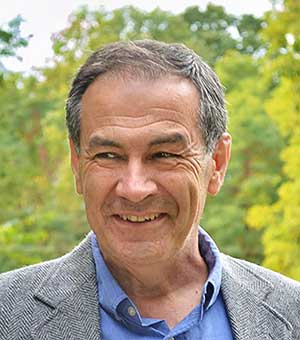
Ron Pappalardo is a student in the D.Min. program at UTS, and author of the recently published What I Learned from the Dead: A Psychic Medium Survives his Son’s Suicide through Spiritualism.
Top photo: Pope Francis meets Father Richard Rohr on June 20, 2022.