
Blog of Unification Theological Seminary
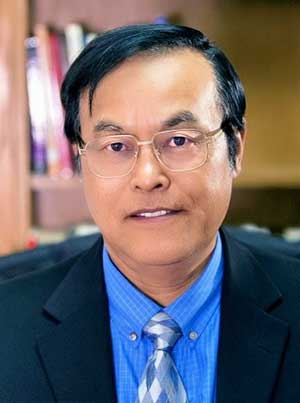
By Keisuke Noda
Conceptual frameworks for interpretation determine the limits, or horizons, of human understanding. This applies to the interpretation of Unificationism, the philosophy of the late Rev. Sun Myung Moon.
Here, I look to Platonic idealism and Aristotelian empiricism as two frameworks to interpret “reality;” and I use these frameworks to explore how we can draw out different aspects of Unificationism. One can certainly use other perspectives to disclose other dimensions of Rev. Moon’s philosophy.
Nevertheless, I use these frameworks to explore how we interpret and relate to Unificationism, and conclude by looking at fishing to highlight the radical realism of Unificationism.
Platonic Idealism: Divine Principle
The most common reading of Rev. Moon’s thought is as a form of Platonic idealism. This aspect of Unificationism is best described in Divine Principle, the core teaching of Unificationism presented in the Exposition of the Divine Principle, the main text of Unificationism. Unificationists, for the most part, understand Unificationism from the way it is presented in this text.
Plato described in his Republic his ideal state as a hierarchical society governed by the Philosopher-King. Likewise, Unificationism presents the Heavenly Kingdom as a society governed by the Second Advent, the “True Parents.” Just as the Philosopher-King, who “knows” the ultimate truth, can tell others what to do, the Kingdom of Heaven is portrayed in the Divine Principle as a hierarchical society where True Parents are the central channel who convey God’s Will and His messages.
Plato viewed the unchangeable and eternal, such as the Ideas of Good, Beauty and others, as reality, and the changeable or temporal as less real, a sort of shadow of eternal Ideas. Hence, the world of Ideas, where souls go after leaving the body in death, is the real world. Accordingly, reality is grounded elsewhere, in another world. Although Unificationism presents the Kingdom of Heaven on Earth as the ideal, the society it envisions is still a Platonic hierarchical idealistic world under the Messianic “True Parents,” and so the center of gravity exists in Ideas that are eternal, absolute and unchanging.
When I joined CARP, a student organization of the Unification Church, in 1970 on the Waseda University campus in Tokyo, a place occupied by communist radicals, I was inspired by this Platonic vision. Idealism, be it Marxism or Unificationism, was appealing to youth in the 1960s and ‘70s. The majority of my classmates joined Marxist movements to build a socialist utopia. A “Grand Narrative,” a one-size-fits-all theory of modernism, was dominant as the spirit of the era. Many approached these theories through the question of which grand narrative was right, rather than questioning whether a grand narrative was the right approach to begin with. Hence, the Unificationist grand narrative appealed to me as a 19-year-old college student, and I joined CARP to build an ideal world.
Aristotelian Empiricism: “Your conscience is greater than God and True Parents”
In the 1990s, Rev. Moon began to teach the moral autonomy of individuals. He called it the “Declaration of Conscience,” and expressed it in such phrases as the “Conscience is greater than parents, greater than teachers, and greater than God.” (Jan. 17, 1995, Sutteri Central Training Center; 水択里中央修練所). He also asked members to pray not “in True Parents name,” but “in your name.” Just as Christians pray in Jesus’s name, Unificationists had been praying “in the name of True Parents.” Rev. Moon instructed all members to pray in their own names. Since then, every Unificationist prays in their own name, or jointly as a family. His message was about the freedom and responsibility of autonomous individuals. Furthermore, Rev. Moon redefined the concept of Messiah. He asked individuals to recognize that they are a Messiah in one’s personal and social contexts.
This idea can be understood by looking to the shift from Plato’s framework to Aristotle’s in how they approached reality. Aristotle, a student of Plato’s, rejected the Platonic view of reality as Ideas/Universals and instead looked to the individual. For Aristotle, each unique individual constitutes reality and universals such as “human,” “animal,” and Platonic Ideas are then abstracted from concrete beings. While Plato saw the Ideas/Universals as the eternal and unchanging reality, Aristotle rejected Plato’s claim, and saw diverse, concrete, unique individual beings as the primal reality. For Aristotle, universals are less real, conceptual, abstract, and linguistic.
Aristotle moved the center of gravity from the world of Ideas (Plato) to the concrete, diverse world we live in. With this insight, Aristotle tried to explain why and how the world is diverse and developed pluralistic ways to approach phenomena. Hence, he developed all types of human, social and natural sciences.
Aristotle further recognized the diversity of phenomena. Each distinct phenomenon requires appropriate methods. From logic to psychology, poetry, ethics, political science, and all sorts of disciplines, Aristotle demarcated the phenomenal differences and established appropriate methods and approaches to each distinct phenomena, thereby establishing academic disciplines. For Aristotle, why and how the phenomenal world is so diverse and different is the primary issue to be explained.
Additionally, for Aristotle, the flourishing of individuals is critical to forming a good society. While Plato emphasized “knowing” the truth as key to flourishing as an individual, Aristotle rejected such Idealism. Aristotle distinguished knowledge into episteme (scientific), techne (skills and crafts), and phronesis (practical), and argued that individuals and societies flourish by developing diverse human capacities. He envisioned society as a mixed political system with checks and balances.
In a Platonic model, members are expected to follow the Philosopher-King. In an Aristotelian model, members are expected to build social ideals by their own innovative works and communal efforts. In the history of philosophy, modern thinkers such as Locke, Rousseau and Kant further elaborated on the autonomy of individuals as the foundation of civil society.
In my personal observations, many Unificationists interpreted this component of Rev. Moon’s philosophy within the framework of Platonic idealism of the Divine Principle, the core teaching of Unificationism. Divine Principle certainly has a concept of Individual Embodiment of Truth that recognizes the reality of individual beings. Consequently, many Unificationists saw this declaration of the conscience as a matter of emphasis rather than a paradigm shift.
If we see Rev. Moon’s thought through the lens of the Plato-Aristotle shift, however, this component of Rev. Moon’s thought is like the radical shift from Platonic idealism to Aristotelian empiricism with the modern concept of the autonomy of the individual.
This turn in Rev. Moon’s philosophy coincided with the rise of postmodernism, which values local truths in each unique context over the one-size-fits-all Grand Narrative approach of modernity. While modernists presupposed the single “reality” of a one-size-fits-all theory, postmodernists pursued pluralistic “realities” in diverse, unique contexts. Although postmodernists rejected classic Aristotelianism itself, it is not surprising that contemporary Aristotelianism, particularly his ethics/political philosophy, appealed to many in the late 20th century. Thinkers such as Alasdair McIntyre, who adopted Aristotelianism in his communitarian political philosophy, were well-received as an alternative/complement to John Rawls’ modernist political theory.
In my view, this component of Rev. Moon’s thought is not a matter of emphasis, but a different conceptual framework akin to Aristotelian empiricism which led to the development of multiple disciplines. Unfortunately, the radical nature of this shift may not have been recognized by Unificationists because of their Platonic conceptual framework.
Rev. Moon might have sensed the rising postmodern spirit of the era, and responded with a radically different conceptual framework. Although some Unificationists developed their unique perspectives, they are the exception rather than the norm.

Radical Realism: Fishing
Rev. Moon loved nature and he had been deeply involved in fishing. “Leadership training” for Rev. Moon was fishing. He would often invite church leaders to the ocean to go fishing as a form of training. As a practical matter, he had a vision of marine industries as the economic foundation for his global activities. From a philosophical perspective, however, what was he trying to convey?
Many Unificationists interpret Rev. Moon’s fishing as nothing more than his personal hobby or a type of “religious” ritualistic devotion, perhaps because of their Platonic conceptual framework. In the Platonic framework, Rev. Moon, the second coming of Christ, appeared as an infallible messenger of God’s messages. In the Aristotelian model, he appeared as a careful observer and experimenter of phenomena like a scientist or an artist. Through fishing, he presented himself as the one who experiments, explores, learns from his mistakes, and challenges at the forefront.
In one instance, Rev. Moon called several Korean leaders to the Pantanal in Brazil for a “workshop” in which he told them to stay there until they each caught 40 fish from four species. It was difficult and Korean leaders had disputes about what was the secret to fishing: was it prayer, religious devotion, luck, or technique? They went to Rev. Moon, who answered, “You have to know the fish!”
Fish are complex and each species behaves differently according to various factors, such as the phase of the moon, the tides, water currents, weather, temperature, and others. Fishermen often develop their “secret” to catching fish through studies and trial and error, and to catch fish, you must be attentive to nature. The more you study, the more you realize how little we know about the interconnectedness of life and nature, and how much human beings are a part of this cosmic world. Those leaders were looking at just themselves. Rev. Moon told them to dive into the real world, study it, and discover it through trial and error. And in the context of nature, reality can be brutal and cruel, as well as mysterious, beautiful and comforting.
I characterize Rev. Moon’s approach to reality as “radical realism.” It is “radical” in the sense of its orientation to the root. It is realism because of its commitment to phenomena as they disclose themselves to us. In this approach, reality is fluid. This is one of the key insights of contemporary deconstructionist thinkers, such as Jacques Derrida, who developed an anti-mainstream philosophy based on the works of Nietzsche and Heidegger. Where Derrida and other deconstructionists primarily thought in social, cultural and linguistic terms, however, Rev. Moon’s realism is different in its orientation to nature.
In the Platonic model, followers worship Rev. Moon. You can never catch fish, however, by worshipping and waiting for Rev. Moon to tell you the secret. You must find your own way and compete with him to catch fish.
The remaining question to be answered is how these distinct approaches are “unified” in Rev. Moon’s philosophy. Just as Kant emerged as one of the greatest thinkers by developing his innovative approach to synthesizing modern rationalism and empiricism, articulating “how” Rev. Moon synthesized his distinct approaches will illuminate the meaning and mechanism of “unification” in Unificationism.♦
Dr. Keisuke Noda is Academic Dean and Professor of Philosophy at UTS. He holds a Diplomate in Logo-philosophy credential from the Viktor Frankl Institute. His books include Even Then I Keep Living (Tokyo, Japan, 2010), and Narrative History of Philosophy (two volumes; Niigata, Japan, 2004).