by David Eaton
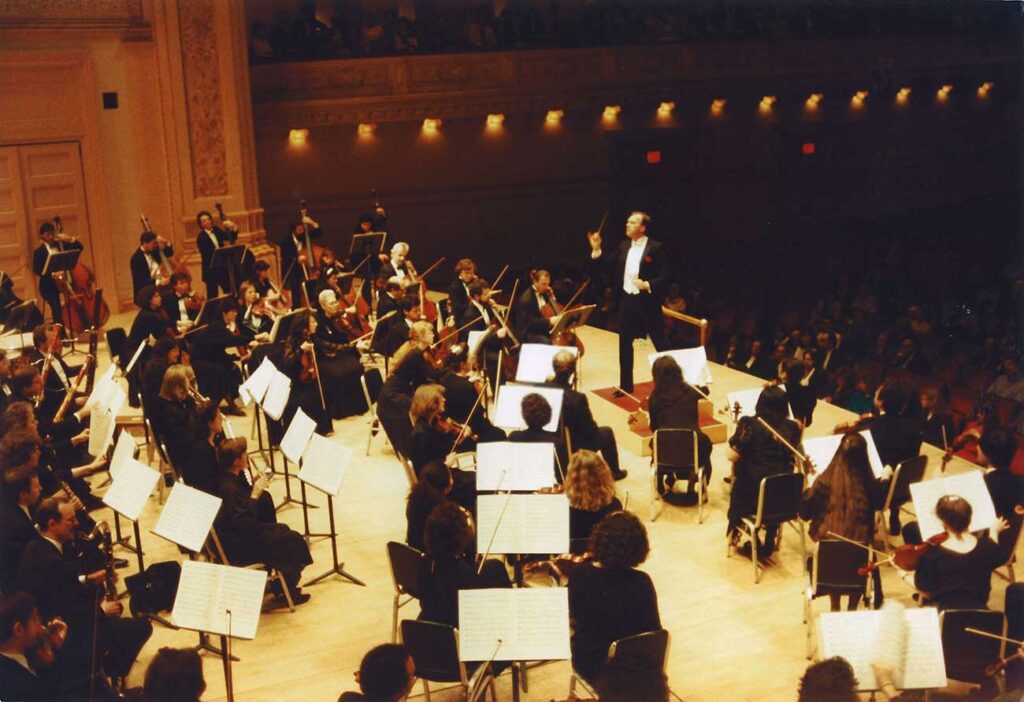
In her keynote address at the Rally of Hope on November 22, 2020, True Mother announced her intention to establish an international artists[MYE1] association. She also shared her view that the artistic expressions of Europe and its classical tradition were the progeny of Christian culture and that this could be a model for art and culture that she would like to see emulated. She alluded to how European artistic culture was a glorious expression based on the expectation of the return of Christ and the dawning of Heavenly Parent’s ideal world. In her speech she said:
In the past, as the Christian cultural realm waited for the Messiah to come again, an ancient, beautiful culture was formed with the European continent at its center. It is still loved today by all peoples of the world. That culture is the culture of longing for the Messiah. What I want to say now is that, although due to the Fall, people have been lacking in filial devotion to our Heavenly Parent, who has endured and waited six thousand years for us, I wish to see their beautiful arts—which express the love, joy and praise they return to their Parent—shining forevermore through the revolution of the culture of heart. The arts are also a swift path by which the world can become one.
Her comments in this regard echoed True Father’s ideas regarding Western classical music. In a meeting with musicians in Cartagena, Colombia in 1983 at the Sixth World Media Conference, Father instructed:
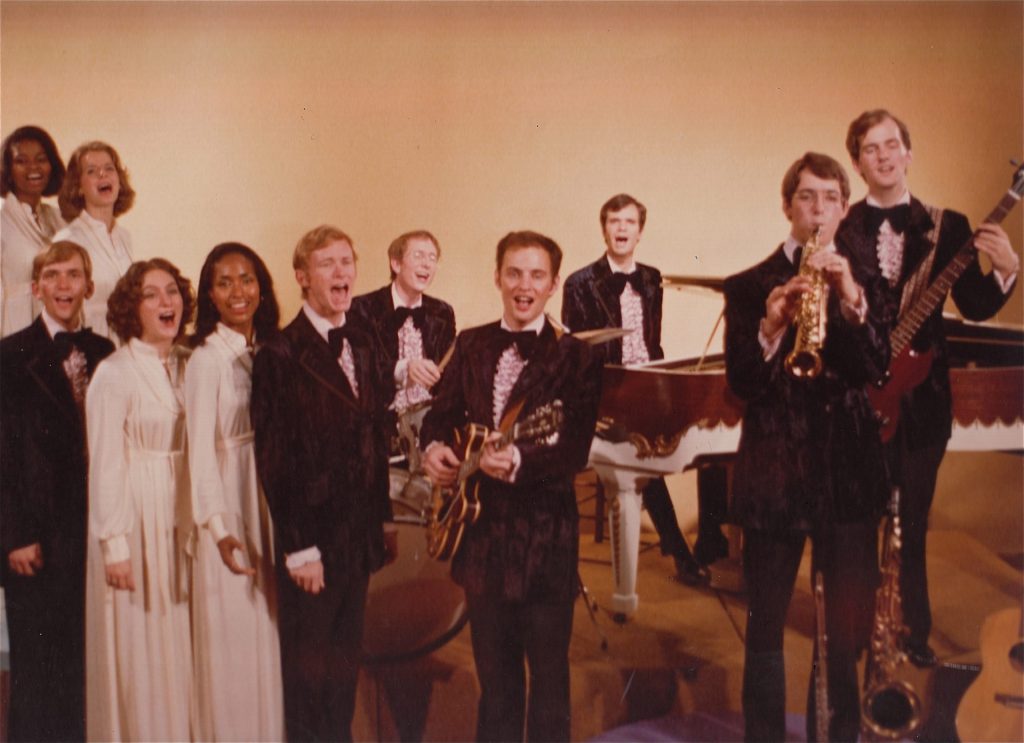
Classical[MYE2] music has the ability to convey the expressions of the heart in very profound ways. Classical music should be your foundation, and you need to study the music of the European composers. With that foundation you should then take the Abel-type elements of other musical styles—jazz, folk, pop—and combine them into one style that transcends those individual styles. That’s New Age music!
True Mother also mentioned in a meeting in May of[MYE3] 2019 that she enjoys Italian classical music because of its connection to the Christian cultural heritage. In a subsequent meeting on May 12, 2020, she stated that music can be a way to unite East and West, and through culture we can create a common bond of heart. Again, she referenced the glorious Christian culture in music. Her desire is for composers in the Hyo Jeong sphere to create new songs that express the heart of Heavenly Parent and contribute to the? creation of a culture of peace. It is clear that she distinctly views the Western classical tradition as being an important source of inspiration in that endeavor.
As True Mother noted, a significant reason for taking this perspective is because the Europeans, in spite of their myriad problems, embraced Christianity and created their culture based on Judeo-Christian beliefs. As the early church in Rome developed up through the Middle Ages, music with liturgical connotations became increasingly important in worship practices. Or à Music with liturgical connotations, for instance, became increasingly important in worship practices, as the early church in Rome developed up through the Middle Ages.
As musicologist Bruno Nettl observes, all religious spheres going back to antiquity utilized music in their rituals. We find in the Analects of Confucius, the ancient texts of the Sumerians and Hebrew teachings that music possessed a certain moral power and played an important role in shaping the dispositions of people in those cultures. Confucius would go so far as to say, “If one should desire to know whether a kingdom is well governed, if its morals are good or bad, the quality of its music will furnish the answer.” In the view of the thirteenth-century kabbalist Rabbi Jacob ha-Kohen, those who were proponents of Jewish mysticism likened musicians to high priests, “who properly direct their fingers over the holes and strings of their instruments…to awaken the Holy Spirit [MYE4] through prayer.”
It’s interesting to note that St. Augustine wasn’t initially enamored with music in the church due to its pagan associations. Augustine’s timorous distrust of music’s pleasurable attributes created a cognitive dissonance for him because of its sensual properties.[MYE5] He would say, “For the senses are not content to take second place.” Yet because he intuited that music could be beneficial in the process of helping “weaker spirits” develop a devotional frame of mind, he eventually became “inclined to approve of the custom of singing in the church.” Rather than being ensnared by his “over-anxiety” with regard to the sensual properties of music, he reasoned that the benefits of music in the church outweighed the dangers, but vigilance and wisdom were always necessary.
True Mother also referenced Martin Luther in her keynote speech, and it was Luther’s contention that music was “a sermon in sound.” Johann Sebastian Bach, a devout Lutheran, believed music’s primary purpose was to praise and glorify God.
Beauty, whether in nature or art, can be sensual and enticing as we all know. However, humankind’s desire for beauty is atavistic—a primal impulse. Emmanuel Kant posited that all people possess the innate desire to experience that which is aesthetically pleasing and stimulating. Though Kant couldn’t rationally explain why this was so, he nevertheless understood that the yearning for beauty is real and universal—all people possess this desire. Beauty can be considered our Heavenly Parent’s expression of love to humankind and the feminine aspect of God’s divinity.
Music’s Sonic Etymology
Though all music is the result of physical phenomena—vibratory energy in motion—the development of the musical grammar and syntax in the Christian Church in Europe evolved in a way that embodied many of the tenets of the Principle of Creation as defined in the Divine Principle[MYE6] . The tenets of polarity, subject-object, give and take action, the triple object purpose, origin-division-union, the three stages of growth and numerology are fundamental to the Western classical musical tradition. As such, this particular music is ontologically in accord with the primary characteristics of our Heavenly Parent.
Accordingly, this music has deep spiritual ramifications[MYE7] that we intuit to be godly. In her book Unification Theology and Christian Thought, Dr. Young Oon Kim offers the following perspective regarding aesthetics and art:
It is in the transmoral dimension of aesthetic experience that beauty approaches God. All the laws from and within God—give and take, polarity, harmony—connect beauty from all cultures. And to the extent that they clearly amplify and substantiate God’s nature they evoke a response of love and appreciation from man. Since God represents absolute love and freedom, beauty is never confined.
Though it was Pythagoras who discovered and codified (mathematically) the sonic properties of pitch production in nature, it was the religious composers in Europe—Italy, Germany, the Netherlands and Austria—who developed the art form from its earliest incarnations of Gregorian chant and plainsong to its most evolved utterances. When J. S. Bach, perhaps the greatest exponent of Christian liturgical music, eventually pioneered the tuning system known as equal temperament in 1722, the final piece of the sonic landscape of Western music was in place. All Western music as we know it—Classical, Jazz, Gospel, Rock, Blues[MYE8] —would not exist without Bach’s systematic codification of pitch production and his ingenious tuning method.
It is my contention that because Christianity was the central religion in the providence of heaven, the revelations about musical production—not to mention science, medicine, astronomy and physics—were revealed [MYE9] to great extents in Christian Europe. I believe this is why True Parents have emphasized this tradition as being especially meaningful.
The Divine Nexus of Music and Mathematics
As the Western tonal syntax evolved from Gregorian chant through the Renaissance and into the 1700s, we can see that it is [MYE10] based on the harmonious relationship between the scientific and mathematical properties of sound production known as the overtone series (Pythagoras’ discovery) and a “principled” syntax (organization) of pitches and intervals.[MYE11]
Not so coincidentally, the tonal properties of the Western musical syntax are predicated on the laws that Dr. Kim alluded to in significant ways: polarity, give and take, subject and object, triple objective purpose and numerology.
For example, Western diatonic music has two basic modalities (major and minor) and divides the octave into 12 equal parts (semitones). The 7-note scale (with the eighth note being a new beginning of a new octave) is the primary intervallic structure of its melodic properties. There are 7 “sharp” key centers and 7 “flat” key centers, and the basic chord structure of harmony is predicated on the triad—a 3-note combination of pitches. The subject-object relationship of what are called the tonic chord and dominant chord in a given modality is what determines an à the? identifiable aural basis of a particular key center.
The technique of harmonic grammar in tonality known as “figured bass” is founded on “4-part” writing, which is based on the four vocal timbres of soprano, alto, tenor and bass. Moreover, as the symphony orchestra evolved as a primary instrumental ensemble over the past three hundred years, we find three families of pitched instruments—woodwinds, brass and strings. Within each of these families there are four basic instruments that correspond to the vocal timbres of the aforementioned soprano, alto, tenor and bass. In the woodwinds we find flutes, oboes, clarinets and bassoons. In the brass section we have trumpets, horns, trombones and tuba. In the string family we find violins, violas, cellos and basses—three distinct groupings, each with four basic instruments.
Sonata form, a primary structural premise in the Western classical tradition, is a manifestation of the three stages of growth and origin-division-union action. In sonata form we find three structural pillars: the exposition (two musical themes are presented), the development (the two themes are expounded upon in various ways), and the recapitulation (the themes are rejoined in a harmonious union). Most of the symphonies and sonatas composed in the eighteenth and nineteenth centuries by Mozart, Haydn, Beethoven, Brahms, Schumann, Schubert, Dvorak and Tchaikovsky are predicated on sonata form.
The concept of polarity is of great significance in the Western classical musical tradition as well. Consider the following polar opposites that are prominent in Western music:
 Consonant intervals/Dissonant intervals
 Major keys/Minor keys
 Tonic chords/Dominant chords
 Diatonicism/Chromaticism
 Adjacent pitches/Non-adjacent pitches
 Parallel motion/Contrary motion
 Loud/Soft
 Fast tempos/Slow tempos
 Long notes/Short notes
 High pitches/Low pitches
 Crescendo/Decrescendo
 Getting faster/Getting slower
There are many other such examples but suffice to say that there is ample evidence to support the idea that Western classical music theory and practice, from an ontological perspective, is strongly aligned with the precepts articulated in the Principle of Creation. Of course, some of these characteristics are found in non-Western music; however, it is in the Western classical musical tradition that these characteristics were used with great efficacy in the presentation of liturgical texts.
The German romantic poet Friedrich Schiller, who studied theology and was Beethoven’s collaborator, famously asserted, “Only through Beauty’s morning-gate dost thou penetrate the land of knowledge.”True Mother’s intuition regarding the beauty of the classical art of Europe is indicative of her affinity for appreciating [MYE12] beauty and her understanding of how the arts can be transformational. Like True Father, she views beauty as the gateway though which humankind can be touched by, and eventually saved by, the truth. In this respect she is the spiritual harbinger of a new artistic paradigm that represents Hyo Jeong culture and expresses the ideals of Godism.
 [MYE1]I think artists or artists’ would work best here. :)
 [MYE2]Just so you know, wherever a quote ran for more than 4 lines here, I went ahead and made them block quotes since that’s the general standard.
 [MYE3]I would drop this “of” but might just be a matter of preference. :)
 [MYE4]Just wanted to point out: I think the “Holy Spirit” is a very Christian idea, so I was surprised to see a rabbi alluding to it. Might be valuable to include the citation/reference of this quote for clarity’s sake.
 [MYE5]A little confusing. Could drop the line or adjust it.
Maybe:
It’s interesting to note that St. Augustine wasn’t initially enamored with music in the church due to its pagan associations, pleasurable attributes, and sensual properties. He would say…
Or:
… pagan associations. Augustine found music’s pleasurable attributes and sensual properties cause for timorous distrust and a source of cognitive dissonance. He would say…
 [MYE6]Just wanted to double check: if referring to the text, DP can be italicized; but are you referring to the text or to the universal DP? If the universal DP, no italics are needed. :)
 [MYE7]Maybe: attributes OR characteristics ?
 [MYE8]I would put these in lowercase, but it might be another question of preference. :)
 [MYE9]Maybe: granted ?
 [MYE10]Maybe:
…we can see that its evolution (?) was based on…
 [MYE11]Maybe:
…as the overtone series, discovered by Pythagoras, and the “principled” syntax (organization) of pitches and intervals, discovered by Bach.
(?)
 [MYE12]Maybe: genuine appreciation of ?