by UPF Portugal
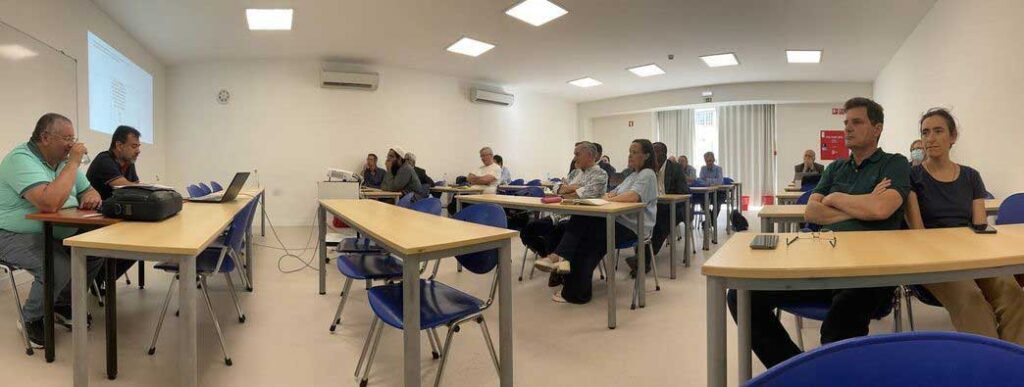
On July 12, 2023, there was another Hub Prosecuw Meeting which means “Protection and Security for Places of Worship project”, at the premises of Lusófona University in Lisbon. This time, UPF Portugal, as a member of the working group, together with representatives of the Islamic faith, Portuguese Evangelical Alliance, Jehovah’s Witnesses, Church of Jesus Christ of the Last Days, Candomblé, Taoism and others not identified joined this meeting.
After a brief introduction by Prof. Paulo Oliveira, the floor was given to Prof. Paulo M. Pinto who presented the Prosecuw Project. Prosecuw is a project adopted by different European countries, given the increasing levels of violence faced by the many new religious communities coming from non-EU countries.
In order to assess safety in places of worship in Portugal, a survey was carried out, consisting of only three questions and aimed exclusively at religious leaders, excluding community members. During the meeting, the result was presented, which allowed the following conclusion:
- Religious freedom is increasingly presented as a relevant topic and raises the question of the significant difference that exists between real religious freedom and the perception that its practitioners and the general population have.
- A study carried out in different evangelical churches highlights a “religious freedom” that is legislated but not practiced.
- In Portugal, the perception that there is no religious persecution does not correspond to reality. This perception is due to the absence of sufficient religious diversity, capable of leading to confrontation.
- Social peace in Portugal, as it is so evident, deserves an attentive and careful analysis. In fact, the absence or low incidence of physical violence masks the growing violence, carried out with impunity, through different social networks. The internet was identified as a space of great religious violence.
- Despite all this, an overwhelming majority of religious leaders feel very secure.
- Good security was recognized in public spaces, with increased emphasis on worship spaces.
- Religious security was not recognized by religious leaders as an issue needing further investment.
After the presentation of the survey results, the debate was opened. Of the various interventions, the awareness stood out that the “mild Portuguese customs” depend on the perception (not real) that the different religious communities present in the national territory are not, yet, a threat. However, the European model warns of a change in the attitude of the population, when the perception is that of a “threat”.
The number of emigrants and the respective mode of emigration are fundamental factors that require careful and growing monitoring. Those present recognized the importance of this “observatory” of security in religious spaces and the importance of mutual knowledge, so that the bonds of friendship and trust can help in the effective prevention of, still little noticeable, but always growing, violence against different religious communities.
The next meeting will be scheduled after the summer vacation period.