The troubled path toward justice for more than 4,000 Japanese victims of coercive faith-breaking ignored by the authorities for over 50 years
A conference entitled “The Vital Role of the Statute of Rome for the Protection of Religious Freedom” was held in the conference center Het Nutshuis in The Hague, Netherlands on the International Day of Peace, 21st September 2026.

Willem Koetsier, representing the host of the conference, mentioned that this day was established by the United Nations in 1981 to commemorate and strengthen the ideals of peace. He commented that, although much has been achieved since then, recently there has been some regression in the quest for world peace.
This was the second event this year organized by the Dutch Family Federation for World Peace and Unification focusing on serious religious freedom violations in Japan, particularly against the Family Federation, formerly known as the Unification Church. The dissolution of the Family Federation, the first of its kind in Japan, is seen as a concerning precedent that could impact religious freedom globally. The conference called attention to the importance of upholding human rights and the rule of law in protecting religious freedom. The event was moderated by Hans Noot, Vice Chair of the Brussels-based Human Rights Without Frontiers.
The keynote speaker from Japan, Toru Goto, described the persecution of religious groups in Japan and South Korea, highlighting the cases of Dr. Hak Ja Han Moon, co-founder of the Family Federation, and Chairman Lee Man-hee, founder of Shincheonji Church of Jesus [See editor’s note 1 below]. Goto emphasized the importance of protecting religious freedom and avoiding the use of theological labels or political disagreements as substitutes for evidence.
Mr. Goto recounted his experience of being confined and subjected to faith-breaking [See editor’s note 2 below] efforts by his family and professional deprogrammers. He was completely isolated, denied basic rights, and subjected to psychological and physical abuse for over a decade. He eventually resorted to a hunger strike in an attempt to persuade his captors to free him, but was unsuccessful, leading to prolonged suffering and near starvation.
After being confined for over 12 years, Mr. Goto was freed in 2008. He subsequently filed a civil lawsuit against his family members and the deprogrammers and won a judgement in 2015. This victory led to a near cessation of kidnapping and deprogramming [See editor’s note 2 below] in Japan. Up until that time, over 4,300 Family Federation members in Japan had been forcibly detained and subjected to deprogramming [See editor’s note 2 below] with 70% having been compelled to renounce their faith.
The case of Mr. Goto is part of a larger pattern of religious persecution. This persecution, involving abduction and coercion to renounce faith, has been ignored by the Japanese government, despite evidence and complaints. The Rome Statute, which Japan ratified in 2007, could provide redress for victims of these crimes, which may constitute crimes against humanity.

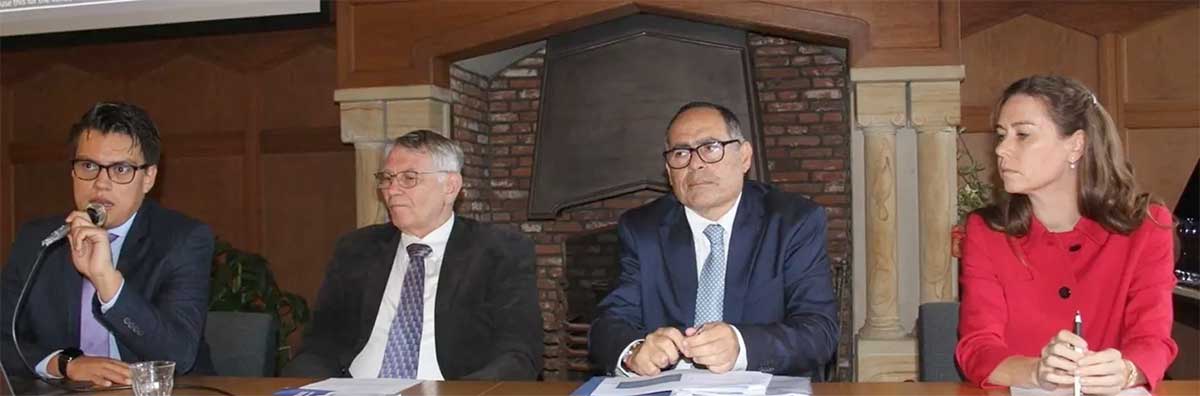
A panel consisting of Mr. Noot and three lawyers specializing in international criminal law, Javier Ruiz, Haydee Dijkstal and Cristian Gonzalez, then discussed the importance of integrating human rights into litigation strategies, particularly in cases involving crimes against humanity. The need for a comprehensive approach that considers the impact on victims, the role of strategic communication, and the potential for policy change was emphasized. The discussion also highlighted the importance of using various legal forums, including international and domestic courts, to address these issues.
The right to a remedy under international human rights law encompasses various forms, including judicial remedies, restitution, compensation and rehabilitation. Participation is crucial, allowing victims to have agency and a meaningful voice in the process, as recognized by institutions like the European Court of Human Rights and the International Criminal Court (ICC) in The Hague.
The ICC and various national courts claiming universal jurisdiction are investigating the case of the Family Federation in Japan, focusing on the practice of confinement and deprogramming [See editor’s note 2 below] and its impact on victims. These cases aim to challenge the narrative surrounding the religious organization and highlight the importance of freedom of religion. While the ICC respects state sovereignty, it also promotes accountability and justice for the victims.
International courts are being considered for these cases in Japan due to a lack of action by Japanese authorities. Their involvement is key to encourage Japan to take responsibility for the abuses.
However, the goal is for the cases to be handled within Japan if possible. The process involves a preliminary examination, a formal investigation, and potential arrest warrants, with victim involvement throughout.
The panel emphasized the importance of human rights, particularly freedom of belief, for all individuals, regardless of their religious affiliation. They highlighted the challenges faced by minority religions, often labeled as “cults”, and the resulting discrimination and societal pressure.
The panel called for greater understanding, respect, and protection of religious freedom for all.
Featured image above: From the panel of speakers at the conference in Het Nutshuis in The Hague, Netherlands on 21st September 2026, from left: Cristian Gonzalez, Hans Noot, Javier Ruiz, Haydee Dijkstal. Photo: FFWPU
[Editor’s note 1: Shincheonji, officially known as Shincheonji Church of Jesus, the Temple of the Tabernacle of the Testimony, is a new religious movement founded in South Korea in 1984 by Lee Man-hee, who claims to be the promised pastor mentioned in the Bible’s Book of Revelation.
Shincheonji teaches that the Book of Revelation is being fulfilled through its church and that Lee Man-hee has received divine revelation to interpret it. He teaches that South Korea is the location where the prophecies of the Book of Revelation are actively playing out in real-time, making it the epicenter of the final harvest. Shincheonji focuses on filling the literal 144,000 slots of the 12 Tribes mentioned in Revelation. Once this number of truly sealed, flawless believers is completed, they believe they will rule as kings and priests over the rest of humanity.]
[Editor’s note 2: Coercive faith-breaking (“deprogramming”) in Japan refers to the practice of coercively attempting to separate individuals from their religious affiliations or beliefs, typically through intervention by family members, professional faith-breakers (deprogrammers) or organizations hostile to new religious movements (NRMs). This phenomenon often targets members of such movements, e.g. relatively large faiths like the Family Federation or Jehovah’s Witnesses, but also smaller groups like Happy Science (Kōfuku no Kagaku) and other newer religious movements.
However, also Soka Gakkai, a Buddhist-based lay organization with more than 8 million Japanese members, and affiliated with Nichiren Buddhism, has occasionally been subject to faith-breaking attempts.
The practice gained attention in the latter half of the 20th century, particularly in the 1980s and 1990s. Parents or concerned family members often hired faith-breakers who taught them how to abduct and forcibly detain believers. Almost all such cases involved confining the individual believer and cutting him or her off from the religious community. During the confinement, the believer was subjected to intense questioning or indoctrination designed to break his or her faith. The aim was to “rescue” the person from what the family often had been tricked by faith-breakers or lawyers to regard as harmful influence from the religious organization.
Critics of forced de-conversion argue that it violates fundamental human rights, including freedom of thought, religion, and association. Reports of psychological trauma and accusations of unlawful detention have sparked debates over its ethical and legal implications. In response, some religious groups, particularly NRMs, have lobbied for greater protections against such practices.
Japanese courts have been inconsistent in addressing cases of coercive faith-breaking. While some verdicts have condemned the practice as illegal detention, others have been more lenient, citing family concerns about “mental health” or alleged “exploitation” as mitigating factors.]