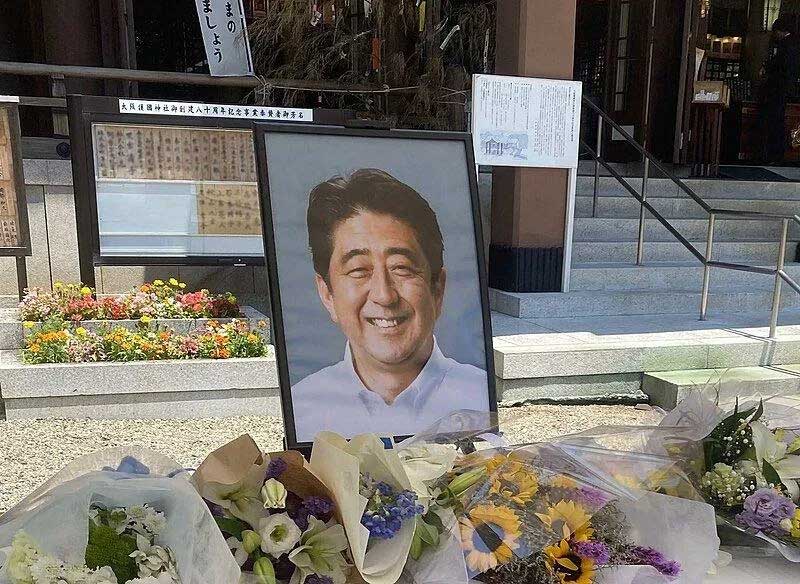
Terrorist’s anti-religious sentiments embraced by media and government just like the intention was
Tokyo, 3rd September 2024 – Published as the 24th article in a series in the Japanese newspaper Sekai Nippo. Republished with permission. Translated from Japanese. Original article
Series: Freedom of Religion Under Threat – Part 4: Media Crossing the Line
Inciting sympathy for terrorists
by the Religious Freedom Investigative Team of the editorial department of Sekai Nippo
prepared by Knut Holdhus
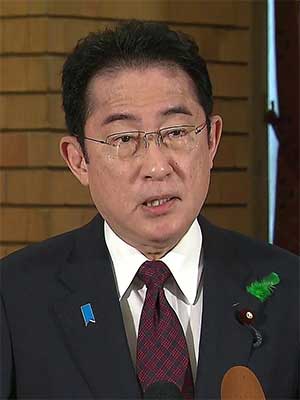
On the morning of 15th April 2023, an incident occurred where something resembling a pipe bomb was thrown at Prime Minister Fumio Kishida, who had come in a hurry to the Saikazaki Fishing Cooperative to support the House of Representatives by-election in Wakayama District 1. The arrested suspect was Ryūji Kimura (木村隆二), who was 24 years old at the time.
Three days after the incident, international political scientist Yuichi Hosoya (細谷雄一) pointed out on Twitter (now X) the following: “In terrorism studies, it is generally understood that the very act of trying to understand the background of a terrorist’s crime helps to achieve the terrorist’s objectives.“
In other words, the key to preventing similar incidents from recurring is for the media to ignore the motives behind the crime.
However, even though the full picture of the assassination of former Prime Minister Shinzo Abe (安倍晋三) remains unclear, the media jumped on the leaked information from the investigative authorities that there was a grudge against a religious organization. The media heated up the reporting based on the premise that this was the motive for the crime.
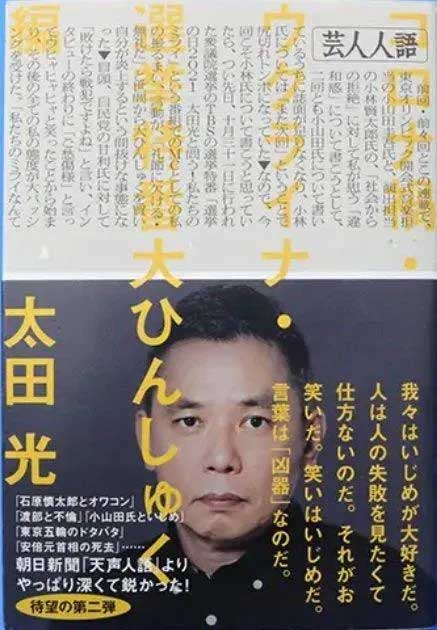
In the afterword of his book “Geinin Ningo: Corona Pandemic, Ukraine, and Election Special – The Great Displeasure Edition”, published before the attack on Prime Minister Kishida, Hikari Ota (太田光) of the comedy duo Bakusho Mondai wrote the following: “If the statements of the accused Yamagami are true, the current actions of television are proceeding exactly as the perpetrator intended. Is it acceptable for murder to be a means of advocating something? […] Television must continue to send the message that ‘resorting to violence achieves nothing’ with the same intensity as it pursues the ‘relationship between politics and religion.’”
Ota expressed his concern that the heated TV coverage of the investigation into the religious organization could lead to the emergence of a second or third Yamagami. He made similar remarks on the show “Sunday Japon” (TBS), where he serves as the MC, but these comments also drew criticism, being perceived as defending the religious organization.
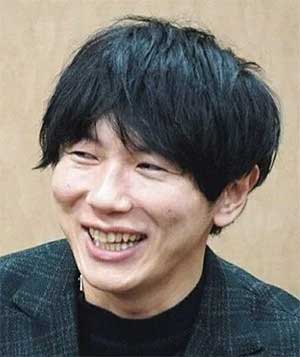
Ota is not the only commentator who has faced backlash for warning that the current situation has effectively allowed Yamagami’s act of terrorism to succeed. Two days after the attack on the Prime Minister, sociologist Noritoshi Furuichi (古市憲寿) shared a similar perspective on the morning show “Mezamashi 8” (Fuji TV).
The two incidents – the assassination of former Prime Minister Abe and the more recent attack that occurred less than a year later – both took place at election campaign events. While many details remain unclear, it is too early to definitively label the accused, Kimura, as a “copycat” of Yamagami. However, it is safe to say that he was likely influenced by Yamagami’s actions.
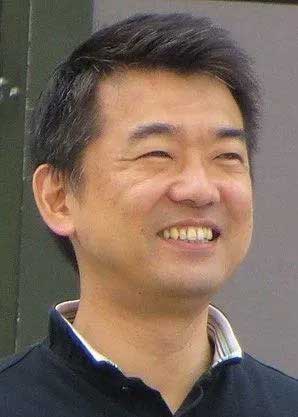
On this program, lawyer Toru Hashimoto (橋下徹) made a statement delving into political implications: “Due to Yamagami’s actions in attacking former Prime Minister Abe, not only did the media react, but the government also took action. They created laws. Of course, it is natural to properly correct and address issues with the former Unification Church if there are problems, but the fact that Yamagami’s actions incited the state to take action is a significant issue.”
The media coverage, overheated with criticism of the religious organization, led the state to act in response to terrorism.
The final piece included in “Geinin Jingo” is an article published in the August 2022 issue of “A Book” (Issatsu no Hon). It appears to have been written a few days after the incident where Shinzo Abe, who held the longest tenure as Prime Minister in the history of Japan’s constitutional government, was assassinated in public. The agitation of Hikari Ota and other television station personnel is conveyed. One passage stands out: “We don’t even know if the perpetrator’s stated motive is genuine. It’s possible that even the perpetrator himself doesn’t know. Whether it’s the Tokyo subway sarin attack or the assassination of President Kennedy, despite the time that has passed, no one can clearly explain what really happened. In fact, the more time passes, the more ‘words’ and ‘information’ accumulate, which might take us further away from the ‘truth’.”
At the end of June this year, nearly two years after the assassination of Shinzo Abe, the defense team that met with the accused Yamagami revealed that he said, regarding the government’s request for a dissolution order against the religious organization, “I never expected this situation to arise” (Nikkei Shimbun). He also stated, “Before the incident, I was cornered and did not foresee what was to come.”
If these words are true, how will the reaction be from television professionals and commentators who have continued to report and comment with such “one-sided intensity” from the early stages of this case?
Featured image above: A floral tribute stand set up at Osaka Gokoku Shrine on 6th July 2024, on the occasion of the second anniversary of the death of former Prime Minister Shinzo Abe. Organized by the Itagaki Taisuke Memorial Association. Photo: Photo memories 1868 / Wikimedia Commons. License: CC Attr 4.0 Int