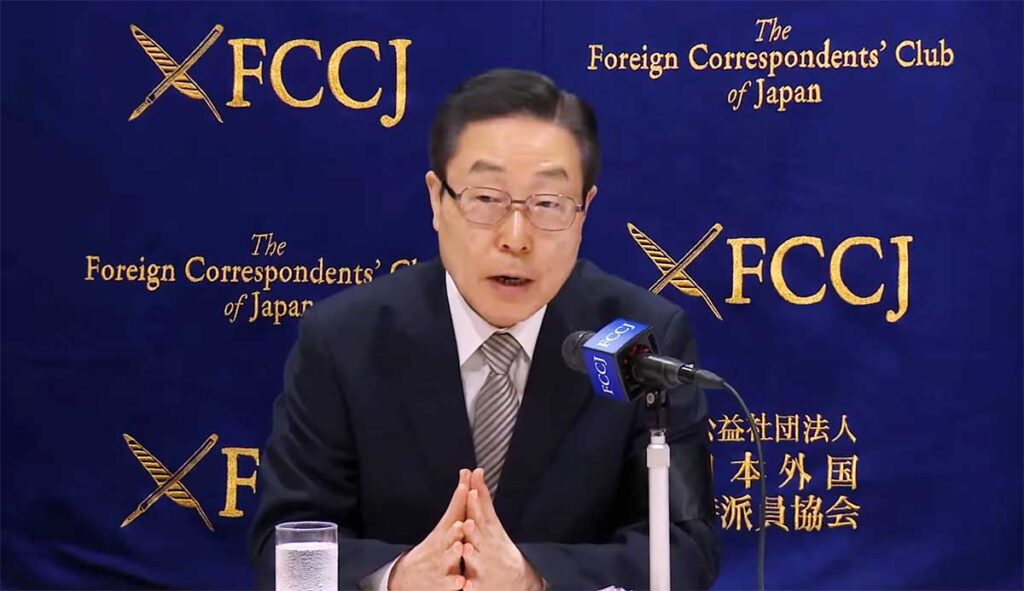
The June 2025 issue of the magazine “Seiron” allows the church leader, Mr. Tomihiro Tanaka, to present his version of the facts. “Bitter Winter” publishes an English translation of extensive excerpts from the interview in two parts (Part 1, Part 2).
Interview by Fumihiro Kato
On March 25, 2025, the Tokyo District Court issued a ruling ordering the dissolution of the Family Federation for World Peace and Unification (formerly the Unification Church) under the Religious Corporations Act. I asked the organization’s president, Tomihiro Tanaka, for his thoughts on the court ruling, the organization’s current state, and the public distrust surrounding it.
1. The Dissolution Verdict
Q.: What are your thoughts on the court’s ruling, President Tanaka?
Tanaka: I was genuinely shocked by the dissolution order. I must say that none of our claims were considered at all. Before the district court’s ruling, we were fined for not responding to government inquiries, and we lost on this “non-penal fine” even at the Supreme Court. However, that case was about fines, whereas this one involves dissolving our legal entity, which I view as an entirely different matter.
When I read the decision document, I was appalled. Instead of specifying what was wrong with our organization to justify its dissolution, the decision relied on an assumption: that because the organization hasn’t changed, it will likely commit the same wrongdoings again. This formed the basis for the ruling.
Imposing a “death sentence” on our legal status based on such reasoning reflects a fervent desire to dismantle the organization. This constitutes a politically motivated trial. I also believe that the verdict was influenced by the Supreme Court’s hostile position, which was evident during the “non-penal fine” case.
There was also no consideration of non-retroactivity. In other words, and I will elaborate on this later, they are applying rules retroactively to past events and using those new rules to judge us. It feels as though people who had already completed their judicial proceedings and returned to everyday life were suddenly told, “Your previous judgment was too lenient,” and given the death penalty all over again.
Q.: Then-Prime Minister Fumio Kishida initiated the dissolution procedure…
Tanaka: The issue with Kishida began on August 31, 2022, when he announced the “severing of ties” with our organization. On that day, he held a press conference at the Prime Minister’s Office, speaking as the president of the Liberal Democratic Party (LDP) and urging its members to avoid associations with “organizations that are pointed out as problematic by society.”
There is a difference between “organizations pointed out as problematic by society” and “organizations that are problematic.” Despite calling for severing ties, Kishida never explained what made us problematic or why we could be labeled a socially problematic organization; he didn’t say a single word in his statement.
He said, “Because someone is saying there is a problem, cut ties with them.”

Then, on October 14, 2022, the Cabinet approved a written government response stating that, since no criminal penalties had been imposed on our executives, our group did not meet the requirements for dissolution under the Religious Corporations Act. Therefore, no dissolution order had been requested. Based on the existing legal interpretation, it was evident that dissolving us was impossible—and the government officially acknowledged that fact.
However, following that, legal interpretations began to deviate and became distorted. On October 17, Kishida unexpectedly announced his intent to exercise the “right to ask questions,” a measure typically utilized when there is already a rationale for considering dissolution. Since the Cabinet had just acknowledged on October 14 that there was no basis for dissolution, exercising this right seemed illogical. Kishida’s statement contradicted the Cabinet’s decision.
Kishida likely did not understand the law and made a hasty statement. It also seemed that he didn’t fully grasp that the right to question is not intended for fishing around to uncover crimes. This became evident in his later remarks. The right to ask questions should be exercised only when there is already a confirmed illegal activity that could justify dissolution, and solely to investigate those facts further. You cannot assert there’s no reason for dissolution on the one hand while exercising the questioning right on the other.
The next day, October 18, during a session of the House Budget Committee, Kishida answered questions from Akira Nagatsuma of the Constitutional Democratic Party (CDP). Nagatsuma highlighted that under the current legal interpretation, dissolution was impossible and argued that civil torts recognized in civil court judgments should be included as grounds for dissolution. His point was, “You can’t dissolve them unless you change the rules.”
But Kishida replied that civil torts would not be included, emphasizing the importance of due process and rejecting the proposal. In response, Nagatsuma criticized the government’s stance, saying it was “unbelievable.”
Then the next day, in the House of Councillors Budget Committee, Kishida completely reversed himself, stating that civil torts could be grounds for dissolution.
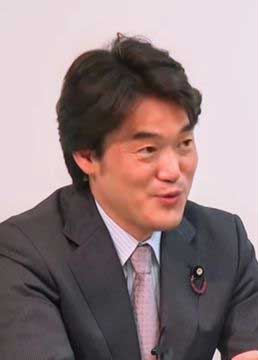
MP Hiroyuki Konishi, who questioned Kishida, expressed disbelief, saying, “This is the very definition of inconsistency.”
From this entire sequence, we can infer that, unable to dissolve us under the existing rules, they were forced to change them and then apply them retroactively to advance the dissolution process. This is a grave error. It is an unacceptable breach of procedure, and allowing such outrageous actions would undermine the rule of law.
At the very least, if the government was going to overturn a Cabinet decision, it should have convened a Cabinet meeting and passed a resolution. But that did not happen. For starters, I doubt there is any precedent in developed nations for using civil torts in civil court as grounds to dissolve a religious corporation.
The words of a nation’s Prime Minister carry significant weight. Bureaucrats have no choice but to comply. What followed was an acceleration of events that brought us to where we are now—this is nothing short of a historic incident. The international community will also take it seriously. We cannot accept this situation at all. We will promptly appeal and fight this thoroughly.
Q.: It is reported that the court recognized 1,559 victims of donation-related harm, for 20,448 billion yen.
Tanaka: However, these were not newly recognized damages, nor were new compensation payments imposed. These cases involved payments that had already been made following the resolution of disputes between private individuals. The government revisited these past cases and compiled the figures, claiming, “There were so many, and they were so terrible, that it warrants dissolution.”
One of the key issues in the court ruling was whether our group displayed “continuity” in its alleged wrongdoings, which was one of the criteria Prime Minister Kishida cited when calling for dissolution, along with organizational nature and maliciousness. Since 2009, we have promoted organizational reform under our “Compliance Declaration.” As a result, there have been only four civil lawsuits over donations since 2009, with none filed since 2016.
We vigorously challenged the government’s use of older civil cases from before 2009. Struggling to demonstrate continuity, the government submitted written statements from 157 individuals involved in 22 lawsuits. To argue that continuity existed, the government also included settled cases, informal agreements, and notices.
We highlighted that some of these written statements contained fabrications.
Yet the court recognized not only lawsuits and settlements but even informal notices as evidence of illegal conduct. Their reasoning was, “It is presumed that illegal acts occurred.” No mention was made of the alleged fabrications in the written statements. Although the court acknowledged the decrease in lawsuits, it ruled that this had no bearing on the continuity issue. They claimed that our Compliance Declaration lacked demonstrable effectiveness and described it as a mere stopgap measure—saying we had not changed in essence, only feigned reform.
They determined facts based on speculation rather than evidence. We intend to contest this injustice vigorously.
2. Deprogramming and Slander
Q.: Media outlets frequently report on alleged harm caused by the church, but we rarely hear about harm suffered by the church.
Tanaka: The media doesn’t report on it at all, but in the context of the dissolution proceedings, I want readers to understand one thing: the issue of abduction, confinement, and forced renunciation of faith.
Since our founding, we have been labeled as heretical by Christian churches, and this continues to this day. Christian pastors have begun abducting our members and pressuring them to abandon our faith. This dates back to 1966, two years after we were recognized as a religious corporation.
When our affiliated organization, the “International Federation for Victory Over Communism,” was established in 1968, left-wing groups and activists, including those linked to the Communist Party, began working together with the Christian pastors on these initiatives.
One tactic we struggled with was having our supporters kidnapped and forcibly confined in psychiatric hospitals purportedly linked to Communist groups, where they were coerced into abandoning their faith. This garnered some media attention, and when we filed habeas corpus petitions, the courts acknowledged them, leading to a decline in such activities due to human rights concerns.
However, the practice did not vanish; it transformed. So-called “deprogrammers,” who claimed to know how to deconvert members, became key figures. Families—parents and siblings—would abduct the believers and confine them in apartments, where pastors collaborated with deprogrammers to pressure them to leave the church.
This type of violent forced deconversion is known as “deprogramming.” It has been recognized as a human rights violation in the United States and has largely disappeared. However, in Japan, it continued until 2015, when civil courts finally ruled it illegal. Although family members carried out the abductions and confinement, deprogrammers guided and supervised the process from beginning to end. Even when police became involved, they argued it was a “family matter,” and authorities would not intervene. No one has ever faced criminal charges for it. This represents a significant, largely unspoken scandal.
The confinement continued until the believers renounced their faith. In some instances, our members feigned deconversion to escape confinement, only to return to the church afterward. Following that, even claiming to deconvert would not lead to release, and the periods of confinement lengthened.
Q.: How does this relate to the dissolution order?
Tanaka: In the December 2023 issue of “Seiron,” Toru Goto shared a harrowing account of his abduction and confinement for 12 years and 5 months. He is not alone—at least 4,300 of our believers are known to be victims of kidnapping and forced renunciation, and 3,000 of them ultimately abandoned their faith.

Many deconverted individuals later collaborated with the National Network of Lawyers Against Spiritual Sales (NNLSS), appearing in media reports and court cases.
Of the 157 written statements submitted by the government in support of the dissolution order, 88% came from victims of abduction and forced deconversion. A sizable portion of the 32 civil lawsuits cited by the government as grounds for dissolution involved plaintiffs who were deprogramming victims.
Most citizens remain entirely unaware of this structure. This “inconvenient truth” has been buried because it undermines the narrative promoted by the NNLSS, which is connected to deprogrammers and has become the primary source for the media. The media continues to spread only negative portrayals of us, and even the Japanese government has proceeded with the dissolution request in collaboration with the NNLSS.
However, behind the scenes, a system that continuously produces “plaintiffs” and “victims” to attack the church is allowed to flourish, leaving most people unaware of it. One must ask: Why are so many former believers suddenly coming forward as “victims”? You cannot understand the situation without acknowledging this context.
However, the government collaborated with only one side and proceeded with the trial. Under these conditions, a fair image of the church could not emerge. Although the court ultimately did not directly use the 32 civil lawsuits as grounds for the dissolution, it still arrived at its conclusion through speculation.
Q.: We’ve heard from devotees nationwide who faced discrimination in their communities, workplaces, and schools. Denial of medical care, loss of business opportunities, and bullying or harassment in schools have become increasingly severe.
Tanaka: The attacks began when Prime Minister Kishida declared the severance of ties. Initially, there was a wave of phone harassment aimed at our headquarters and churches nationwide. After the dissolution order was issued, the harm to our followers escalated. We are concerned this could spread rapidly in the future.
At the Shibuya Church, located across the street from our HQ, the owner asked us to “vacate the building.” There was even a case where church employees couldn’t use their credit cards simply for being associated with the organization. In Shimonoseki, Yamaguchi Prefecture, the facilities we used annually were suddenly denied because we were “antisocial.” Families have been torn apart by divorce or even the suicide of children. We are particularly concerned that forced deprogramming through abduction and confinement might happen again.
Q.: The church has historically maintained political affiliations. What are your thoughts on this and your future political stance?
Tanaka: We’ve always maintained a strong stance against communism. It’s a fundamental, non-negotiable ideal for us. To improve this country, we must never allow communism to take the lead. We are doctrinally committed to this position.
The political party that closely aligned with our values—such as our emphasis on family and anti-communist ideology—was the LDP, making it natural for us to support their lawmakers. However, we have also endorsed certain members of the Constitutional Democratic Party.
Now that our relationship with politics has been officially severed, we can no longer engage politically.
Q.: The Family Federation has been characterized as an anti-Japan religion and a financial conduit to Korea.
Tanaka: The claim that we’re “anti-Japan” was shocking. We are working for Japan’s benefit—being labeled anti-Japan is utterly outrageous.
If you ask our followers across the nation, I doubt that even one would describe the church as anti-Japan. I don’t believe anyone has received anti-Japanese education at church either. Our reality is not anti-Japan; if anything, we are patriotic. In Reverend Sun Myung Moon’s teachings, he explicitly states: “Those who cannot love their country cannot love the world.” Leadership must be nurtured through a love of one’s country. That is our foundation.
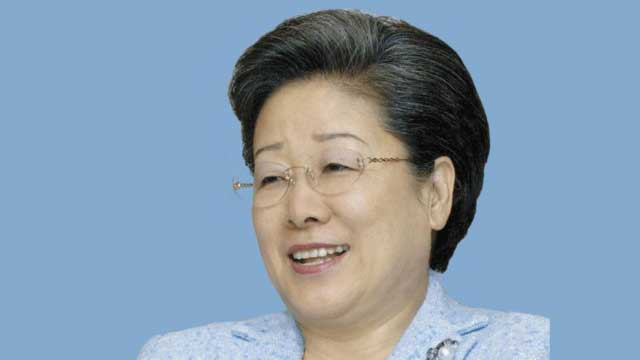
Our connection to Korea is spiritual, linked to our leaders, Hak Ja Han Moon and Sun Myung Moon, whom we regard as messianic figures. Since our religious leaders are based in Korea, we naturally receive guidance from there, strengthening our faith. However, misunderstandings arise regarding money and donations.
Japan sends funds overseas as missionary support—not only to Korea but also to the global headquarters currently located in Korea. From 1977 to 2009, the international headquarters was in the United States, and during that time, donations were directed to the U.S. It was never specifically about Korea. That part of the narrative has been distorted in media coverage, and we genuinely want people to understand this.
For example, they called for worldwide support when the Cheon Won Gung (a sacred temple) was built in Korea. If they say, “We hope Japan can contribute this much,” then we in Japan discuss it in our board meetings and decide how much of our budget can be allocated.
Just as Catholics worldwide are encouraged by the Pope’s words, we draw inspiration from Hak Ja Han Moon’s messages. However, this does not serve as a directive to contribute funds based on our financial capabilities. The distribution of substantial amounts is determined during board meetings, and meticulous records are maintained. We are not blindly following orders.
Q.: Any concluding thoughts?
A.: Our organization is not a perpetrator; we speak from the victims’ perspective. Prime Minister Kishida’s declaration to sever ties marked the beginning of it all. That statement distorted everything and caused us to lose public trust, impacting tens of thousands of followers. We believe Kishida bears grave responsibility, and we want him to apologize.
Today’s events will be remembered in history, and Prime Minister Kishida will bear responsibility. We sincerely hope that people will face the facts and realities of those who are wrongfully judged.
————-
As a writer and photographer, Fumihiro Kato contributes articles and gives lectures in opinion journals and media outlets. He founded the interview magazine IJ. Under the pen name Fumi Kato, he has published works such as “Roving Chef” with Nikkei (a major economic newspaper in Japan) and “Blooming Prosperity” and “The Man of Lightning” with Bungeishunju (a leading publishing house in Japan). Since the Fukushima Daiichi nuclear disaster, he has been actively working to address issues such as harmful rumors and the challenges faced by voluntary evacuees.