Members of religious minority share how they manage to combine an active life of faith and parenting, and how they struggled with it
Tokyo, 5th November 2024 – Published as the 37th article in a series in the Japanese newspaper Sekai Nippo. Republished with permission. Translated from Japanese. Original article
Faith and Parenting, Parents Also Struggle
by the Religious Freedom Investigative Team of the editorial department of Sekai Nippo
Prepared by Knut Holdhus
Just as children born to religious parents struggle, parents of faith also grapple with the challenges of raising their children. Amid recent discussions on the “second-generation” issue within the Family Federation for World Peace and Unification (formerly the Unification Church), this article delves into the inner struggles of parents as they watch their religiously raised children grow up. “It was difficult to raise the second generation.”
Heiji Suzuki (pseudonym), who lives in Tokyo, confides this. He had participated in a wedding ceremony based on faith and assumed that children born would naturally understand God and faith. However, as his children grew, he realized, “That is not the case.”
The family had maintained a routine of praying together before bed, but as the children grew older and became more self-aware, they gradually started to resist it. Heiji began to feel increasingly troubled by the idea of instilling faith in his children. He tells us, “When I looked at various families, their educational approaches were all over the place. But during Sunday services, when I saw children being forced to come to church, I felt that this kind of compulsion only bred resentment towards the parents. So, we decided not to force our faith upon them.”
In fact, his daughter Harune (26, pseudonym) shared that she grew up through elementary school much like any other child, with almost no discussions about religion or faith. “My parents never once told me I had to go to church,” she says.
Harune began attending church after joining a church sports event. In 2020, she participated in a mass wedding ceremony organized by the Family Federation. When she shared this with close friends, she recalls, “They asked, ‘Are you really happy with this? Are you just following your parents’ faith without thinking for yourself?’ Although I tried to explain that it was my own choice, they couldn’t understand. That left me feeling quite shocked,” she says with a cheerless expression.
In Japan, even when parents of faith respect their children’s autonomy, society often suspects that any choice to adopt faith by the child is due to parental pressure. This is the current situation in Japanese society.
On the other hand, Kayo (pseudonym), the mother, talks about seeing many second-generation members leave the church. She points out that the church lacked an attitude of accepting the genuine feelings of second-generation members who did not choose faith. Expressing the inner thoughts of parents with faith, she explains, “Regardless of whether they choose our faith, my child is still my precious child. However, some parents feel that if their child rejects the faith, it’s as if they’ve failed as parents. Accepting the child’s decision to leave can feel like a complete rejection of their parenting efforts. I understand that this makes it difficult for some parents to fully accept.”
Some families have realized that their strong faith and love for their children weren’t in harmony and have since worked to repair those relationships.
About 20 years ago, Katsumi Oshita (pseudonym), a church leader in Gunma Prefecture, was so busy with church duties that he rarely returned home, often staying at the church. Though he thought he was being dedicated in his work, his high-school-aged daughters rebelled, saying they wanted to stop being “second-generation members”. This led him to realize, “I wasn’t fulfilling my responsibility as a parent. I needed to be more attuned to my children’s feelings.”
Reflecting on his actions, Oshita and his wife committed themselves to rebuilding their relationship with their children. Even if he could only stay home for 30 minutes, he would make the one-hour drive without hesitation. Whenever his daughters called, he would answer, regardless of the hour, and would talk with them as long as they needed. As they began focusing on connecting with their children, the dynamic between him and his wife, who had often clashed due to their different personalities, also began to improve.
Today, all his children have embraced faith, and he is now a grandfather. “I’m not exaggerating – my kids are the best in the world,” Oshita says proudly. However, he adds, bowing his head, “But I’m truly sorry for how things were for about 20 years.”
Click here to read more on Religious Persecution
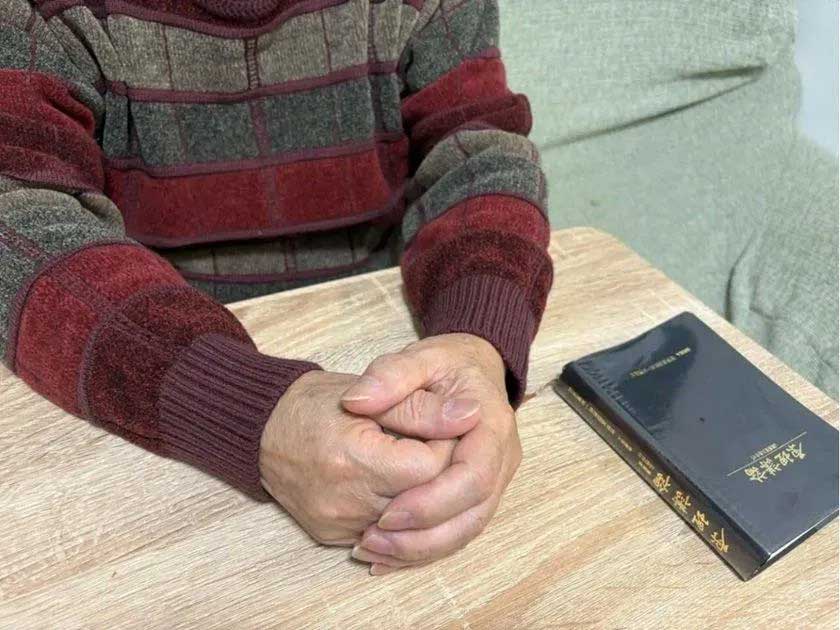
Featured image above: Heiji Suzuki (pseudonym) talks about passing faith on to his children. Photo: Sekai Nippo