Legal experts question the legitimacy of the dissolution order, demands transparency, and point out the danger of secretive proceedings
Tokyo, 25th March 2025 – Published as an article in the Japanese newspaper Sekai Nippo. Republished with permission. Translated from Japanese. Original article.
Doubts Over Fabricated Evidence Cannot Be Dismissed in Closed-Door Ruling
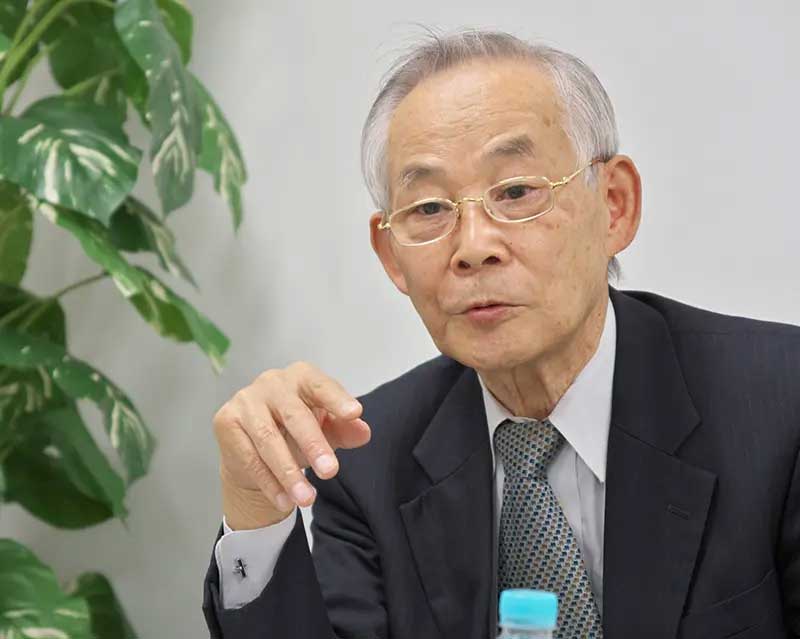
Expert Commentary by Seishiro Sugihara, Professor Emeritus at Musashino Women’s University, on the Dissolution Order Against the Family Federation
by Seishiro Sugihara, Professor Emeritus at Musashino Women’s University
prepared by Knut Holdhus
I find this deeply regrettable. It is the duty of judges to issue rulings that reflect the proper structure of society. They should have given more consideration to freedom of religion and the principle of separation of church and state.
The Religious Corporations Act was established to guarantee the freedom of religious association under the principle of religious freedom. Its primary purpose is to maximize the protection of religious activities. A secondary objective of the law is to ensure that dissolution orders are not issued lightly. This intent can be clearly understood by tracing back the legislative process of this law. Therefore, the procedures leading to the dissolution order in this case do not align with the fundamental principles of the Religious Corporations Act.
Specifically, when it comes to supervising religious corporations, the Ministry of Education, Culture, Sports, Science and Technology (MEXT) cannot act solely on the will of the Minister. Instead, it must go through deliberation by the Religious Corporations Council before requesting a dissolution order from the courts. This multi-step process is designed to make dissolution orders difficult to issue, aligning with the secondary purpose of the law.
Historically, dissolution orders have only been issued when a religious corporation has committed criminal acts. While civil violations are not entirely outside the scope of dissolution orders, they must meet strict conditions: repeated losses in civil lawsuits, continued civil disputes despite guidance from the supervisory authority (MEXT), and approval from both the Religious Corporations Council and the courts. Only under such circumstances should a dissolution order be issued.
The court proceedings regarding dissolution orders fall under non-contentious cases [See editor’s note below], meaning they are a form of administrative action by the court rather than a public trial. Consequently, non-contentious cases are not held in open court, and closed-door deliberations are standard. However, if a religious corporation can be dissolved solely through a non-public administrative procedure, the affected organization – in this case, the former Unification Church – would be deprived of its constitutional right to a public trial under Article 32 of the Constitution, which guarantees the right to access the courts.
Thus, dissolving a religious organization through such a process must be deemed unconstitutional.
Given this, the Tokyo District Court, upon receiving the dissolution request, should have explicitly acknowledged the right to seek judicial review in a proper trial before issuing the dissolution order. Likewise, the former Unification Church, in response to the order, should immediately file a public lawsuit in the same court to challenge the decision.
Finally, regarding the dissolution order in this case, the statements submitted by the Ministry of Education, Culture, Sports, Science and Technology (MEXT) from individuals claiming to be victims are poorly constructed, collected without a clear time frame, and severely lacking in evidentiary value. Therefore, issuing a dissolution order based on these statements raises serious doubts from the perspective of evidentiary reliability. A public trial should be held where these statements submitted by MEXT must be disclosed, and the reasons for dissolution should be examined in a manner that allows the general public to be informed.
[Editor’s note: A non-contentious case refers to a legal matter where there is no dispute between parties. These cases typically involve administrative, procedural, or uncontested legal actions, such as probate (handling a deceased person’s estate), uncontested divorces, adoption, or registering a trademark. Since there are no opposing parties or legal conflicts, these cases usually proceed smoothly through the legal system without litigation.]
Featured image above: Seishiro Sugihara – Born in Hiroshima Prefecture in 1941. Earned a master’s degree from the University of Tokyo’s Graduate School of Education in 1967. Previously served as a professor at Josai University and Musashino Women’s University (now Musashino University). Author of The Ideal Regulation of Church-State Separation and Constitutional Reform (Jiyusha, 2015) and co-author of The Disease Called Shigeru Yoshida (Jiyusha, 2021), among others. Photo: Sekai Nippo