The proposed legislation is a direct challenge to the ICCPR. It would allow the government to destroy the religions it perceives as politically hostile.
by Massimo Introvigne (Bitter Winter)
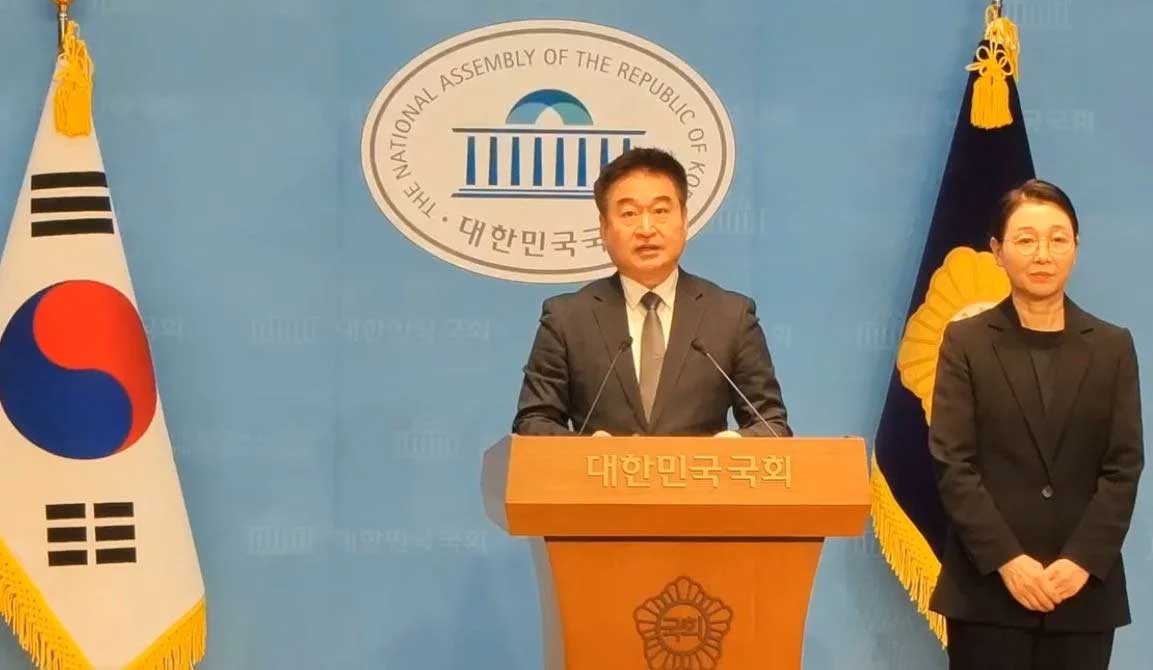
South Korea is approaching a moment that will define the future of religious liberty in the country for decades to come. The government-backed proposal to amend the Civil Code—popularly dubbed the “Church Dissolution Act”—has now reached the decisive stage of parliamentary deliberation. Following directives issued personally by President Lee Jae Myung, on January 9, 2026, Representative Choi Hyuk-jin, acting as the lead sponsor, submitted the Civil Code Amendment Bill No. 2215932 to the National Assembly, together with 11 lawmakers. If enacted, it would grant the state unprecedented authority to audit, suspend, and ultimately dissolve religious corporations, while absorbing their assets into public ownership.
The administration insists that the measure is necessary to curb “political interference” by religious bodies. Yet the bill’s scope is far broader than its stated targets. It applies to all religious organizations, from the largest denominations to the smallest congregations. In effect, it would place the fate of millions of believers under the government’s direct control.
This is not simply another regulatory reform. It is a structural shift in the relationship between the state and religion—one that directly contradicts the International Covenant on Civil and Political Rights (ICCPR), to which South Korea is a party, and which imposes strict limits on when and how governments may restrict religious freedom.
The proposed amendment would authorize the government to conduct compulsory inspections of religious bodies, summon their leaders for questioning, and revoke their legal status on grounds such as “political involvement.” These terms are undefined, elastic, and easily weaponized.
Even more alarming is the provision allowing the state to seize the assets of dissolved organizations. Decades of donations, property built by congregants, and the material infrastructure of religious life could be absorbed by the government with little recourse. For any religious community, this is the equivalent of a civil death sentence.
The rhetoric used to justify the bill is equally troubling. Officials claim they are defending the “separation of church and state,” but their interpretation inverts the principle entirely. The classical meaning—enshrined in democratic constitutions worldwide—is that the state must refrain from interfering in religion. The proposed law, however, empowers the state to supervise, discipline, and extinguish religious bodies at will.
Article 18 of the ICCPR protects freedom of religion and belief. It allows restrictions only when they are precise and foreseeable, prescribed by law, and necessary for public safety, public order, public health, public morals, or the fundamental rights and freedoms of others. Even in these cases, limitations should be proportional to the aim pursued.
The proposed South Korean law fails this test on every point.
First, the grounds for dissolution are so vague that they cannot be considered precise or foreseeable, as required by international human rights law.
Second, the measure is not “necessary.” South Korea already possesses a full arsenal of criminal, civil, and administrative tools to prosecute wrongdoing by religious leaders or organizations. Dissolution is not a last resort; it is an unnecessary escalation.
Third, the bill does not pursue any of the ICCPR’s legitimate aims. “Political involvement” is not a recognized ground for restricting religious freedom. In fact, the ICCPR explicitly protects the right of religious individuals and groups to participate in public life.
Finally, the bill violates the ICCPR’s principle of proportionality, which requires that restrictions on fundamental rights be the least intrusive means available. Dissolving an entire religious corporation—and confiscating its assets—is the most extreme measure imaginable. It is grossly disproportionate to any alleged misconduct by individual members or even to collective political activism that would displease a government.
The political context surrounding the bill makes its dangers even clearer. The proposal was introduced shortly after the president publicly invoked Japan’s first-degree decision to dissolve the Unification Church as a model to emulate, without considering the international criticism of that verdict, including by the United Nations. Besides, the Japanese decision is based on the excessive donations the church allegedly solicited. This problem does not exist in Korea, but some churches are accused of political involvement.
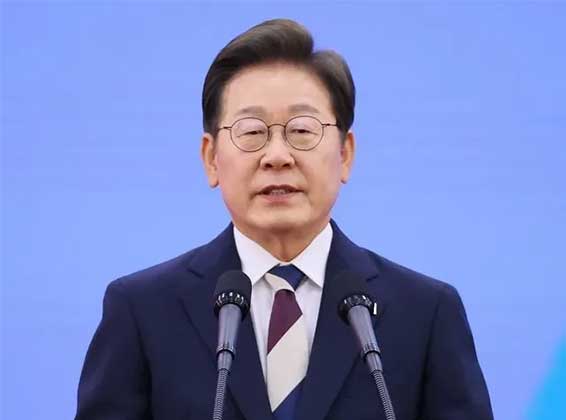
The President explicitly explained he was targeting two “heretical” movements he perceives as enemies of his party and of his religious allies, the Unification Church and Shincheonji, but the law is drafted so broadly that it could be applied to any religious body whose teachings or political views displease the administration.
This is precisely why international human rights law prohibits states from dissolving religious organizations except in the most extreme circumstances. Once the power exists, it is almost impossible to prevent its misuse.
If the law is enacted, a constitutional challenge is inevitable. South Korea’s Constitution guarantees freedom of religion, but the courts will be forced to decide whether that guarantee still has substantive meaning.
The stakes could not be higher. The proposed law, in simple terms, gives the state the authority to decide which religions may continue to exist. It transforms religious liberty from a fundamental right into a conditional privilege.
South Korea has long been admired for its democratic institutions and its commitment to human rights. But democracy is not defined only by elections. It is determined by the limits placed on state power—especially in matters of conscience.
If the “Church Dissolution Act” becomes law, South Korea will join the small group of nations, led by China, that have granted themselves the authority to extinguish religious organizations perceived as not supporting the government. It would mark a profound departure from the ICCPR, from international norms, and from the country’s own constitutional tradition.
The question now is whether South Korea will reaffirm its commitment to religious freedom—or whether it will allow the state to hold the “life or death” of faith in its hands.
The “Church Dissolution Bill,” Civil Code Amendment Bill No. 2215932, submitted by Representative Choi and 11 others to the South Korean National Assembly on January 9th, is a dangerous bill that would undermine the democratic system and should absolutely not be legislated or implemented, not only for all religious people and people around the world who desire world peace and live in democratic countries, but also for the Creator, God.
The South Korean UPF and all Family Federation members worldwide, in their responsibility as representatives of peace-loving people, must resolutely reject this legislation and work to have it scrapped. We should inform religious leaders, clergy, and political leaders around the world about the current situation under the Lee Jae-myung administration in South Korea, and hold an international conference/convention to protect freedom of religion and fundamental human rights in the Seoul metropolitan area in cooperation with the United Nations.
In particular, in order to obtain assistance and cooperation from the US Trump administration, I earnestly request that you maintain close contact with the Washington Times, UPF USA President Jenkins, and Pastor Mike Burns, and take action.
Holy Mother Han, the Mother of Peace, President Hak Ja Han, appealed to Pastor Burns while in detention, saying, “Inform the world about the current situation in South Korea!!” I earnestly request that you take this message deeply to heart and act immediately.
If the “Church Dissolution Bill” is drafted and passed by the National Assembly, all churches will face the threat of dissolution. All the donations that many religious people in Japan and around the world have diligently and painstakingly contributed to South Korea will be wasted.
I earnestly request that you hold an international conference/convention to protect freedom of religion and fundamental human rights as soon as possible.
聖恩感謝申し上げます。私は米国NJ州在住の日本人個団メンバーの土田隆三(73才)と申します。
UPFインターナショナルのホームページ上にあった「教会解散法案」のトピックを見て大変ビックリしました。
1月9日に韓国の国会で崔国会議員ら11人が提出した「教会解散法案」民法改正案第2215932号は、我が家庭連合にとって、いや、創造主、神様、天の父母様、天地人真のご父母様にとって絶体に法律立案、施行させてはならない危険な法案です。
韓国UPFと全世界の家庭連合会員は選民としての責任において断固、法律化を却下、廃案へと追い込むために立ち上がり選民国家の責任において世界の宗教家、聖職者、政治のリーダーなどに、この韓国の李在明政権下の現状を知らせながら、世界的な次元の「信教の自由と基本的な人権を守る国際会議、大会」を国連と共同して韓国首都圏で開催すべきと思います。
特に米国のトランプ政権からの援助、協力を得る為にも米国のワシントンタイムズ社やUPF USAのJenkins会長、Mike Burns牧師と密接に連絡を取り実行して下さる事を切にお願い申し上げます。
ホーリーマザー・ハン、真のお母様は拘束所で、Burns牧師に「韓国の現状を世界に知らせなさい!!」と訴えられました。このみ言の意味を深く重く受け止めて、即実行して下さるように切にお願い申し上げます。
もし「教会解散法案」が立案し国会で成立したら、今まで、多くの日本や世界中のメンバーが一生懸命苦労して捧げた韓国へ投入した献金は全部無駄になってしまいます。
是非是非、早急に信教の自由と基本的人権を守る国際的会議、大会を開催して下さい。心からお願いします。
2026年2月4日
土田隆三