Statements reveal the coordinated efforts of a shady network to force believers out of a religious organization and use “their testimonies” in court
Tokyo, 23rd April 2025 – Published as an article in the Japanese newspaper Sekai Nippo. Republished with permission. Translated from Japanese. Original article.
Statements Revealing Criminal Technique of Coercive Faith-Breaking
The Dark World of Deprogramming Spreading Amid the Move to Dissolve the Family Federation (1)
by the Religious Freedom Investigative Team of the editorial department of Sekai Nippo
prepared by Knut Holdhus
Tokyo District Court used former court cases (including settlements) as a basis for its court order to dissolve the Family Federation for World Peace and Unification (formerly the Unification Church). It has become clear that among the individuals who filed victim claims in such cases, many were actually victims of “deprogramming” involving abduction, confinement, and coercion to break their faith.
Sequence of confinement, faith-breaking, and lawyer introduction
The statements submitted by the Ministry of Education, Culture, Sports, Science and Technology (MEXT) to the district court include several that vividly depict the inhumane conditions of abduction, confinement, and coercive faith-breaking [See editor’s note 1 below].
Recently, this newspaper obtained detailed information about three statements from current members who wrote rebuttals to the statements made by former members who had been abducted and confined, and their families. The reports reveal that a process has been established in which former members, professional faith-breakers, Christian pastors, and lawyers work together to make people renounce their faith and then sue the religious organization, like a modern version of the “fumi-e” (forced renunciation test) [See editor’s note 2 below].
In one case, a former believer using the pseudonym Yukie Funabashi, from Nagano Prefecture returned to her family home at the end of 2010. While helping clean a storehouse at her family’s request, she was locked inside from the outside and made to leave the religious organization while confined.
Although the statement says, “the living conditions such as meals were not poor,” the storehouse was a storage building far from the house, not intended for living. There, she was forced to read books criticizing the religious organization.
Her abduction and confinement began after her younger sister contacted someone who had already left the church. This led to an introduction to a professional “deprogrammer” (faith-breaker) referred to as a “supporter” in the statement.
According to a current believer from Nagano who wrote the rebuttal, Funabashi had been joyfully attending church and even invited three coworkers to join. The current believer strongly asserts that “it’s undeniable she was forcibly persuaded to leave the religious organization.”
It is suspected that the “House of Life” (いのちの家) in Komoro City, Nagano was involved – an organization for a long time directed by the late pastor Noriko Kawasaki (川崎経子), who allegedly forced hundreds of believers to leave the Unification Church. The testimony says the younger sister even “quit her job” to help her sibling leave the church, a common tactic used by deprogrammers (faith-breakers) to make it harder for family members to back out once the process had begun.
After deciding to leave the church, Funabashi was introduced to lawyer Hiroshi Yamaguchi (山口広) in Tokyo by the “supporter”. There, she negotiated a refund with the former Unification Church and had a “notice of quitting the religious organization” sent on her behalf. The refutation also states that afterward, Funabashi helped the same “supporter” de-convert the three people she had previously introduced to the church.
Another testimony: Parents de-convert daughter through confinement
Another statement describes how parents abducted and confined their daughter, a believer, to force her to leave the church. According to this couple who lived in Tokyo, they first learned of their daughter’s involvement with the church in 1988 after being contacted by Pastor Noriko Kawasaki (川崎経子), based on information from a former believer.
The parents had multiple people watch over their daughter to make sure she did not escape from a hotel room in Tokyo and then forced her to leave the church. The pastor had told them, “You can’t undo the brainwashing just by talking, so proceed carefully.” The father sacrificed his job to “make sure he had enough time.” He was told, “This is the parents’ responsibility.” He even spent over half a year attending church-related events to get his daughter to leave the church.
A year after she left the religious organization, the daughter was encouraged by the pastor to “provide advice to people who want to get their family members who have joined the Unification Church to leave and consult with people who try to leave the church.” She came to play a “significant role” in such activities.
Testimony of a man who de-converted his mother
Included among the documents is a written statement from a man who abducted and confined his own mother in an attempt to make her leave the religious organization. With the help of relatives, he forcibly took his mother – who was a devoted follower – and confined her in a hotel for three months in an effort to get her to leave the organization.
However, before this coercive “faith-breaking” attempt, the mother had actually encouraged her daughter as well – the man’s younger sister – to join the religious organization. The sister eventually did join, following her mother’s recommendation.
Upset by his wife’s involvement in the group, the sister’s husband sought help. Through a relative in Kobe, he was introduced to a pastor who conducted “exit counseling”, and he succeeded in getting his wife to leave the organization.
Soon after, under the pretext of reuniting the now-unreachable sister with her mother, the man forcibly brought his resistant mother from Tokyo to Osaka. There, she was confined in a business hotel and supervised by multiple people for about two weeks to prevent her from escaping. After returning to Tokyo, she underwent “counseling”, left the religious organization, and was later baptized as a Christian.
In all these cases, after leaving the Unification Church, the individuals either became believers in the pastor’s church or turned into “apostates” who began to participate in activities to force active members to leave the religious organization.
Apostate testimonies used as a basis for dissolution
The statements of such apostates – who were turned against the church through “deprogramming” – have become the basis for the dissolution order. However, religious scholar Toshihiro Ota pointed out in an interview with this paper that globally, such statements are widely considered unreliable and inadmissible in court because they come from individuals coerced into apostasy and harboring hostility toward their former religion.
A staff member of the Family Federation lamented, “It’s outrageous that MEXT staff did not see abduction and confinement as violations of our religious freedom but instead treated them as evidence for dissolution.”
Deprogramming (Definition)
The term refers to “removing the mental programming instilled in believers by cults.” Professional deprogrammers argue that since “cult members are brainwashed,” they must be “de-brainwashed”.
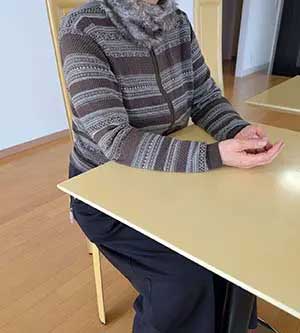
Featured image above: A current believer living in Nagano Prefecture who wrote a rebuttal to the testimonies. Photo: Sekai Nippo
[Editor’s note: Coercive faith-breaking (“deprogramming”) in Japan refers to the practice of coercively attempting to separate individuals from their religious affiliations or beliefs, typically through intervention by family members, professional faith-breakers (deprogrammers) or organizations hostile to new religious movements (NRMs). This phenomenon often targets members of such movements, e.g., relatively large faiths like the Family Federation or Jehovah’s Witnesses, but also smaller groups like Happy Science (Kōfuku no Kagaku) and other newer religious movements. However, Soka Gakkai, a Buddhist-based lay organization with more than 8 million Japanese members and affiliated with Nichiren Buddhism, has occasionally been subject to faith-breaking attempts.
Practice gained attention in the latter half of the 20th century, particularly in the 1980s and 1990s. Parents or concerned family members often hired faith-breakers who taught them how to abduct and forcibly detain believers. Almost all such cases involved confining the individual believer and cutting him or her off from the religious community. During the confinement, the believer was subjected to intense questioning or indoctrination designed to break his or her faith. The aim was to “rescue” the person from what the family often had been tricked by faith-breakers or lawyers to regard as a harmful influence from the religious organization.
Critics of forced de-conversion argue that it violates fundamental human rights, including freedom of thought, religion, and association. Reports of psychological trauma and accusations of unlawful detention have sparked debates over its ethical and legal implications. In response, some religious groups, particularly NRMs, have lobbied for greater protections against such practices.
Japanese courts have been inconsistent in addressing cases of coercive faith-breaking. While some verdicts have condemned the practice as illegal detention, others have been more lenient, citing family concerns about “mental health” or alleged “exploitation” as mitigating factors.]