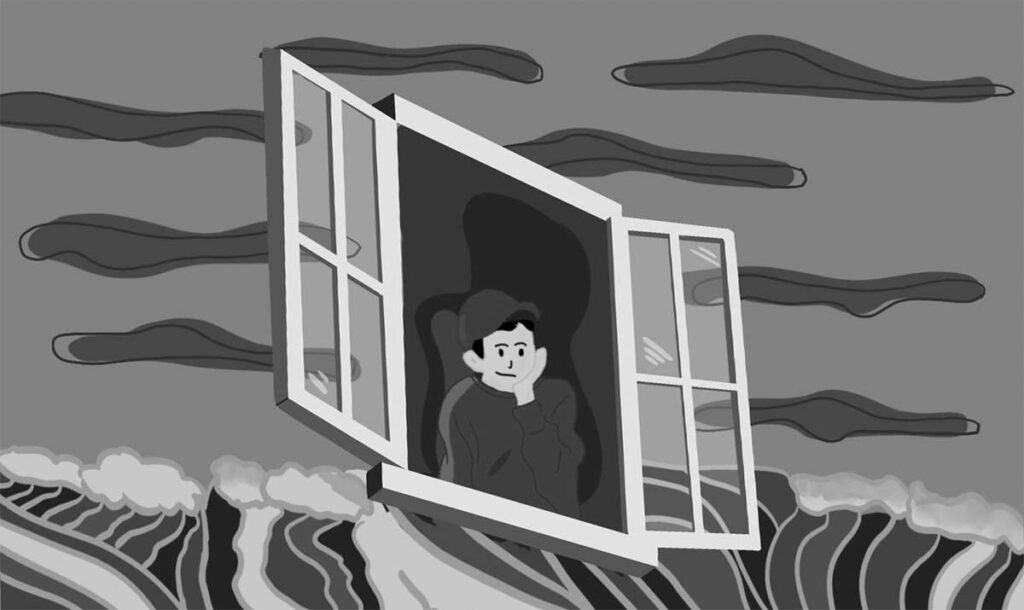
Challenging negative media narrative on 2nd-generation faith: A young Japanese lady tells her story, how she of her own free will chose her faith.
Tokyo, 1st October 2024 – Published as the 29th article in a series in the Japanese newspaper Sekai Nippo. Republished with permission. Translated from Japanese. Original article
Reconciliation with Parents and the Path of Faith
by the Religious Freedom Investigative Team of the editorial department of Sekai Nippo
Prepared by Knut Holdhus

When parents are devout believers of the Family Federation for World Peace and Unification (formerly the Unification Church), society often perceives their children as being in a miserable situation. While the media has widely covered the experiences of second-generation members who have left the church, such as Sayuri Ogawa (a pseudonym), whose father was a local church leader, the existence of second-generation members who have chosen faith of their own free will has been ignored.
“The very relationship with my parents was what determined whether I stayed in the church or left.”
So says Mieko Ōshita (a pseudonym), a woman in her 30s living in Chiba Prefecture. As a child, she lived in Gunma Prefecture, where her father, a church leader, was so busy with his work that he only came home once every one to two months. Despite his hard work, his pay was low, and her mother supported the family. She couldn’t buy the clothes she wanted, and they used second-hand furniture. Her mother, who single-handedly supported the family, sometimes became hysterically angry.
Oshita says with a wry smile, “Up until elementary school, I thought that life was normal, but as I reached adolescence, I started comparing my home with those of my school friends and realized how different my family was.”
Feeling uncomfortable due to the lack of a relaxing space at home, Ms. Oshita gradually immersed herself in club activities and socializing with school friends. She began coming home late, and sometimes she even sneaked out at night, causing her parents to worry. However, she couldn’t understand why staying out late was such a problem.

The teachings of the religious organization required both men and women to maintain “purity” in their relationships in preparation for future marriage. However, the strict guidance on chastity made her feel like she had no freedom, and this stirred feelings of rebellion in her. She said, “At home, I often clashed with my parents, and there were even times when I threw away food right in front of them.”
This led to constant conflicts. Not knowing how to deal with her pent-up emotions, she began planning to “stop being a second-generation believer and run away from home” after graduating high school. She packed her favorite clothes into a bag and confided in her friends about her family’s faith, asking them for help.
A turning point came just before graduation. While talking on the phone with her sister, who was living away from home, her sister revealed that she too had struggled with their parents and faith during high school, to the point where she became so stressed that she lost the ability to speak and even considered suicide.
When Mieko Oshita confided her own feelings, her sister revealed that she too had once thought about leaving the church. She recalled, “My sister told me, ‘How can you deny the faith our parents have dedicated their lives to without even understanding it?’ That made me decide to learn about the church properly before making a choice.”
While attending a workshop to study the teachings, Ōshita had the chance to talk with an instructor who was an old acquaintance of her parents. The instructor shared stories about how her parents had been in the past. Hearing about her parents’ lives from a third-party perspective, she gradually understood her true, hidden feelings: “I wanted to be loved by my parents, and I rebelled against them because I was lonely.”
Later, when Ōshita had the opportunity to talk things over with her parents, she expressed everything she had been feeling. Her parents apologized, saying, “We are truly sorry.”
Although there were times when she felt emotionally unstable, each time, her parents were there to listen and understand her feelings. She says with a smile, “Not only did I change and grow, but my parents did too.”
Regarding the second-generation believers who have left the Family Federation and appeared in the media, Ōshita shows understanding, saying, “There are probably second-generation members who have felt forced into the faith without genuine feelings, and their anger is completely justified.” However, she also offers her perspective:
“It’s painful to resent the parents who raised you. That’s why, like me, some might question the church rather than blame their parents. Perhaps there’s a desire to turn what is really a parent-child issue into a political or religious issue. Shouldn’t we take such complicated feelings into consideration?”
Click here to read more on Religious Persecution