
Japanese media rapidly made terrorist Yamagami a protagonist in their narrative
Tokyo, 9th September 2024 – Published as the 27th article in a series in the Japanese newspaper Sekai Nippo. Republished with permission. Translated from Japanese. Original article
Making Yamagami into a Protagonist Before His Trial
by the Religious Freedom Investigative Team of the editorial department of Sekai Nippo
prepared by Knut Holdhus
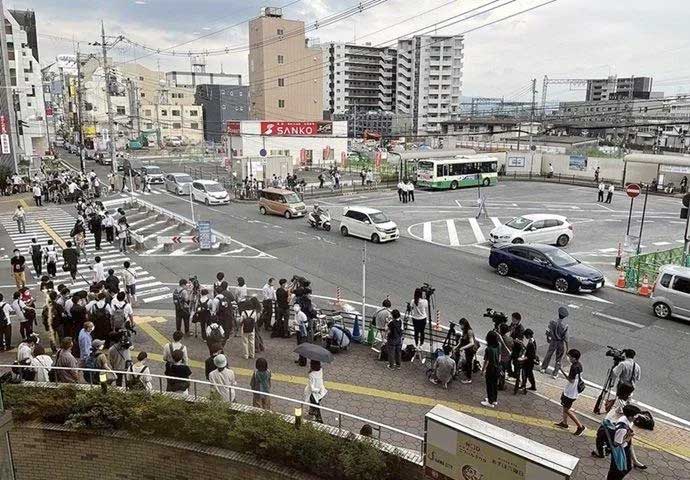
It has been two years since the incident that occurred at the north exit roundabout of Yamato-Saidaiji Station in Nara Prefecture at 11:36 AM on 8th July 2022. During the Obon holiday on 13th August this year, Nippon TV aired a dramatization of the “Shinzo Abe Shooting Incident” in a two-hour special titled “The World’s Astonishing News”.
The narration began: “When did the man begin preparing for the attack? Why was former Prime Minister Abe targeted? We will recreate the events based on the police report, statements that have come to light, and interviews with those involved.”
The main character in this dramatization is “the man” – namely, the suspect Tetsuya Yamagami (山上徹也), who was arrested at the scene. An actor who closely resembles him plays the role, including scenes of interrogation by the police.
The narration mentions “statements that have come to light”, but there is nothing new. The suspect stated, “My mother became deeply involved with a religious organization and donated large sums of money. That ruined our family life. I initially thought about targeting members of the religious organization, but that seemed difficult, so I targeted former Prime Minister Abe instead.”
The main character speaks this way during police interrogation, and the drama unfolds with the narrator revealing, “It later became known that this religious organization is the Family Federation for World Peace and Unification, commonly known as the Unification Church.”
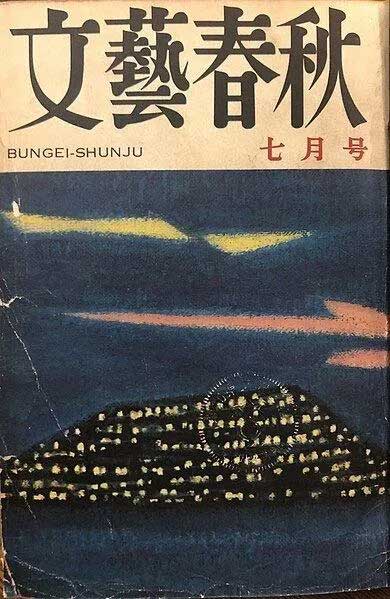
Amid the intense media coverage following the incident, print media such as the monthly general magazine Bungei Shunju (文藝春秋), extensively covered the defendant’s life story. While adapting this into a television drama may seem like a new experiment, it poses a significant problem.
This is because, as mentioned at the end of the drama, “Yamagami has been indicted on charges including murder, and while the details of the incident and the core motive behind the crime will be clarified in court, there is currently no prospect of when the trial will begin.”
Since the details have not yet been made clear, the drama risks manipulating public perception before the trial has even taken place.
Based on a court case where former members won a lawsuit against the religious organization, the program also dramatized the case of a woman who had become a member at the age of 17. The drama depicted her experiences: attending retreats to study the teachings, participating in “spiritual sales”, being matched with a Korean partner for a mass wedding, and eventually leaving the organization because of being “persuaded by her family”. Through the experiences of this former member, the program criticized the religious organization.
Meanwhile, the reenactment of the incident reaches a climax with dramatic sound effects reminiscent of a morality tale of good triumphing over evil, interpreting the defendant’s words posted on the bulletin board of a reporter’s blog, “I will risk my life to become the liberator of all those associated with the Unification Church,” and “Strangely enough, I too want a gun so badly I would give anything for it.” These words were interpreted as a declaration of his resolve to carry out the shooting.
In the drama, Abe’s cause of death was explained by the Nara Prefectural Police as “a fatal injury caused by damage to an artery under his left collarbone from a bullet that entered through his left shoulder.” However, the content of a press conference held by Nara Medical University Hospital, where Abe received emergency treatment, was ignored. The hospital had stated that “a bullet that entered from the right front side of the neck damaged the heart and major blood vessels, leading to death from blood loss.”
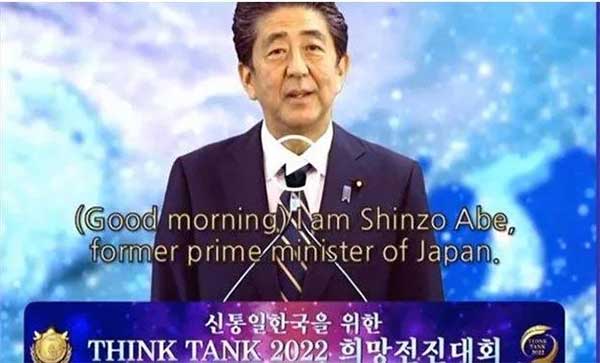
Regarding the question why former Prime Minister Abe was targeted, the drama portrayed a scene where the main character watches on his computer a video message from Abe. This message was sent to an event held by the Universal Peace Federation, a group related to the religious organization. The drama also suggested that the crime was committed because the suspect believed Abe’s grandfather, former Prime Minister Nobusuke Kishi (岸信介元), had invited the religious organization to Japan, and that Abe himself was also connected to it.
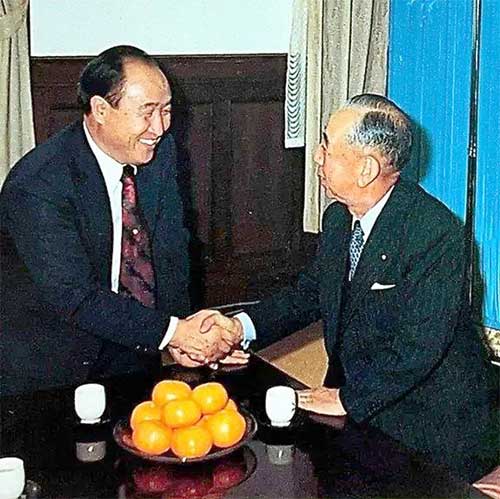
The program also showed a photo of Unification Church founder Sun Myung Moon meeting with Kishi and touched on the “ties” between the Liberal Democratic Party (LDP) and the religious organization. As criticism of the religious organization and the LDP grew, the government requested a court order to dissolve the organization.
This drama does not evoke strong anger toward the suspect who killed former Prime Minister Abe. When the defendant is made the protagonist, his background, circumstances, and feelings are expressed in a way that evokes sympathy for him as a person.
In contrast, the followers of the religious organization were depicted in a dehumanized way – portrayed as being brainwashed with doctrines during retreats and being pushed to split with their boyfriend or girlfriend. The defendant is portrayed more humanely. The way the media has created the “Yamagami Story” and portrayed the suspect and the followers differently may have led to a case of misrepresentation of some kind.
Click here to read more on Religious Persecution
Featured image above: Shiodome NTV Tower (Nippon TV Tower) in Higashi-Shinbashi, Minato-ku, Tokyo. Photo (2020): Suicasmo / Wikimedia Commons. License: CC ASA 4.0 Int