
Sympathy for terrorists created by media’s generous coverage of motive and background of assassins and would-be assassins
Tokyo, 5th September 2024 – Published as the 26th article in a series in the Japanese newspaper Sekai Nippo. Republished with permission. Translated from Japanese. Original article
Classic impression manipulation without remorse
by the Religious Freedom Investigative Team of the editorial department of Sekai Nippo
Prepared by Knut Holdhus
On 15th April 2023, an explosive device was thrown near Prime Minister Fumio Kishida as he was giving a campaign speech for a House of Representatives by-election. This led to an unexpected debate regarding reporting about terrorism.
As previously reported, international political scientist Yuichi Hosoya (細谷雄一) pointed out on Twitter (now X) that the “general understanding in terrorism research” is that “the very attitude of trying to understand the background of terrorist crimes aids and abets terrorists in achieving their goals.” However, this understanding is not common in Japan.
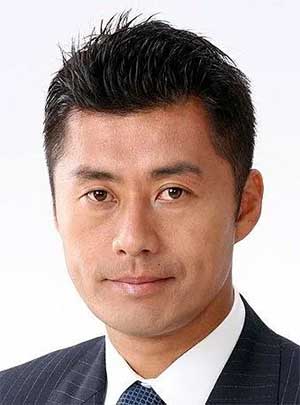
After the incident, Goshi Hosono (細野豪志), a member of the House of Representatives from the Liberal Democratic Party, stated, “Once someone commits terrorism, I don’t give any consideration to their claims or background. From such things we can deduce no general way to deal with terror.”
As the content of the perpetrator’s tweets and other details began to be reported, Hosono argued, “The media has begun a race to report on the man who attacked Prime Minister Kishida and his motives for the terror. I see no value in this reporting other than that they ‘sell’.”
Similar opinions also spread online. In response, the Tokyo Shimbun‘s special report section published an article titled “What’s the Logic Behind ‘Don’t Report the Perpetrator’s Motive’?” (posted online on 22nd April), where journalist Satoru Aoki (青木理) countered, saying, “When politicians, regardless of party affiliation, start telling the media ‘not to report on this’, the very foundation of democracy collapses.”
The Asahi Shimbun printing pure activismAsahi Shimbun Digital also addressed the issue in an article titled “The Debate on Restricting Reporting in Terror Incidents and the ‘View of the Ignorant Public’” (published on 16th May), where former Hosei University professor Gen Inuzuka (犬塚元) argued, “Such discussions are based on a ‘view of the ignorant public’ and could lead to the collapse of liberal democracy.” Many other rebuttals were posted online.
Of course, in reporting on terrorist crimes, the motives and background are key themes. However, if this reporting is not handled with the utmost care, it could end up aiding the perpetrator’s objectives. What is being called into question is how the media handled reporting on the bomb terrorist attack targeting a sitting prime minister, which could lead to the serious situation of inspiring copycat crimes. It is the media’s responsibility to verify the reporting related to the assassin of former Prime Minister Shinzo Abe (安倍晋三).
On 18th July 2022, during the broadcast of Yomiuri TV’s program “Information Live Miyane-ya”, they not only displayed the full text of a letter sent by suspect Tetsuya Yamagami (山上徹也) – now a defendant – to journalist Kazuhiro Yonemoto (米本和弘) just before the crime, but also had a female announcer read it aloud without omitting a single word.
The letter contained self-defense statements such as, “Since my mother joined [the Unification Church], my teenage years passed amid the waste of more than a billion yen, the collapse of my family, and bankruptcy. These experiences have distorted my entire life […]”
It also included clear expressions of his grudge against the family of the founder of the Unification Church and Yamagami’s clear intention to commit murder.
Seiji Miyane (宮根誠司), the host of the show, followed up on this letter, saying, “Of course, there are believers who suffer, but there are also many second-generation believers who endure great pain.” The discussion progressed on the assumption that many followers of the religious organization and second-generation believers suffer, and that this leads to the breakdown of their families.
In the process, three times Miyane showed excerpts from postings believed to be Yamagami’s on Yonemoto’s blog (from December 2020), and also four times excerpts from Yamagami’s tweets and other postings (from May 2021, October 2019, August 2020, and June 2022), Each time the text was projected on the screen and read out by a female announcer.
This is a classic method of manipulation that simultaneously stimulates both the visual and the auditory senses. Reporting the perpetrator’s claims so thoroughly on public airwaves just ten days after former Prime Minister Abe was shot and killed, cannot be considered proper journalism. The motives and background behind Yamagami’s act of terror were reported over and over again. This is reminiscent of some forms of indoctrination.
Despite this, to date there has been no proper investigation, reflection, or disciplinary action related to the coverage.
Click here to read more on Religious Persecution