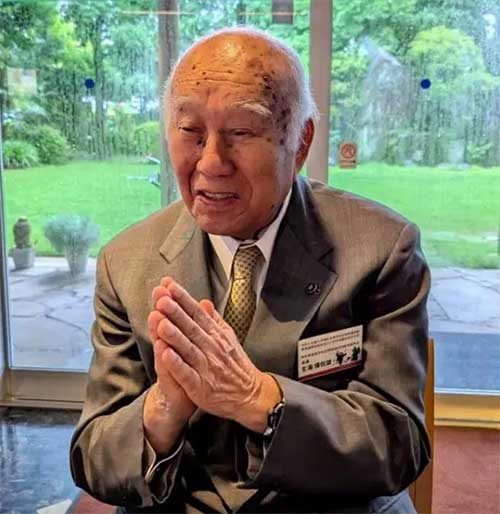
Japanese politician points out how the Kishida administration all of a sudden jumped on anti-religious bandwagon
Tokyo, 17th July 2024 – Published as the 11th article in a series in the Japanese newspaper Sekai Nippo. Republished with permission. Translated from Japanese. Original article
A sense of crisis in Japan where faith is declining
by the Religious Freedom Investigative Team of the editorial department of Sekai Nippo
prepared by Knut Holdhus
See the first article, second article, third article, fourth article, fifth article, sixth article, seventh article, eighth article, ninth article, tenth article, 12th article
“The very basic principle of protecting religious freedom is not being upheld. What is religion? When human beings encounter situations beyond their control, they naturally put their hands together and pray to God.”
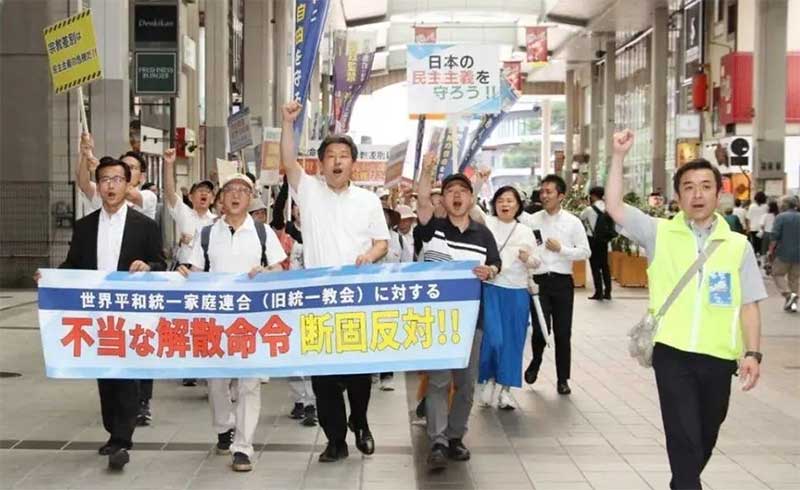
On 16th June, the followers of the Family Federation for World Peace and Unification (formerly the Unification Church) held a conference and a street demonstration in Kumamoto City on the theme of religious freedom. In his opening remarks, Isao Tonomi (主海偉佐雄), a former chairman of the Kumamoto City Council, spoke about the importance of having faith. He used the example of prison chaplains (often monks or pastors) who guide criminals in detention centers to atone for their sins and reform themselves. Tonomi emphasized,
“Having faith and being able to guide others is extremely important for human beings.”
Following the shooting incident involving former Prime Minister Shinzo Abe, criticism was directed at the Family Federation. Lawmakers with “ties” to the Family Federation or related organizations, such as attending gatherings and events, became the focus of media attention. In Kumamoto Prefecture, Tonomi was the first “former politician with ties” to become a media target.
In an interview with this paper, Tonomi laughed it off, saying, “Perhaps because I said what needed to be said outright, I haven’t been interviewed by anyone since.” Nevertheless, he lamented that people who had previously participated together in gatherings and events of related organizations, or sent congratulatory messages, “all suddenly distanced themselves”.
For Tonomi, who has an unwavering belief in the importance of protecting religious freedom, it was easy to accept the request to become a representative leader of a related organization and the request to become the chairman of the “Kumamoto Citizens’ Association for the Protection of Basic Human Rights and Religious Freedom”, which was established in conjunction with the conference.
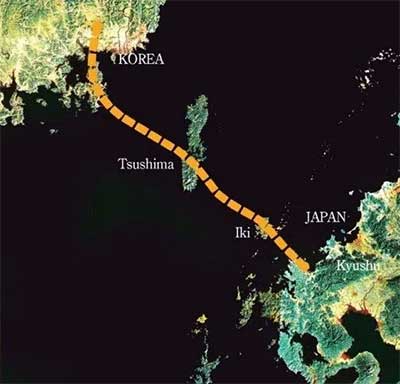
During his time as a city council member, Tonomi was inspired by the Japan-Korea Tunnel Project, which envisioned a tunnel connecting Karatsu City in Saga Prefecture with Korea. He also became sympathetic to activities promoting world peace, such as young people riding bicycles to advocate for the peaceful unification of the Korean Peninsula. He not only joined the board of related organizations but also deepened his friendships with the believers.
“Even though we do good things and work hard, people who don’t know anything are making a fuss about dissolving the religious organization, and Prime Minister Kishida jumps on that bandwagon. It’s ridiculous to raise one’s voice without knowing the truth. It makes me think, what a pathetic state Japan is in. I feel that Japanese politics has truly become pitiful.”
Lamenting this, Tonomi advises the members of the Family Federation, “The believers should more boldly say what needs to be said.” He believes that the Ministry of Education, Culture, Sports, Science and Technology‘s request for a court order to dissolve the Family Federation was influenced by leftist ideas held by politicians and the media, who lack religious values. Tonomi asserts,
“All the wonderful aspects of the Japanese heart come from religion. If they destroy religious organizations like this, what will become of Japan and the Japanese people?”
Tonomi himself practices Jodo Buddhism and serves as a responsible officer of the Kumamoto Prefecture Gokoku Shrine. Among the twelve officers of the Kumamoto Prefecture Association of Shinto Shrines, he is the only one who is not a Shinto priest. “Religion is important for humanity, but households without Buddhist altars or Shinto shrines are increasing. The number of shrines without priests is also on the rise,” he said, expressing his concern about the diminishing presence of religion in communities and homes.
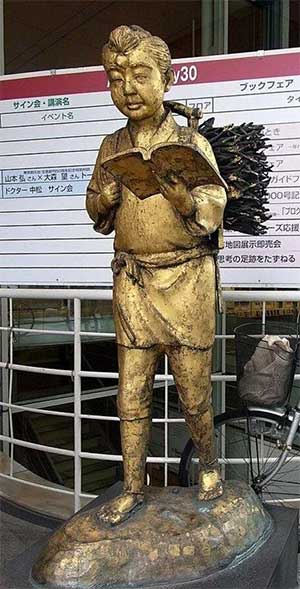
Japan has traditionally been a religious country centered around the Imperial family. Tonomi recalls, “Before the war, there was something called ‘moral education’. The Imperial Rescript on Education was taught, and there were statues of Kinjiro Ninomiya (二宮金次郎).” [Editor’s note: Japanese sage and agrarian reformer, also called Sontoku Ninomiya (1787-1856).]
In light of the loss of the Japanese spirit, Tonomi reflects on the case of Tetsuya Yamagami, who killed former Prime Minister Abe: “We’re creating heinous criminals who easily kill people they hate.”
Click here to read more on Religious Persecution
Featured image above: Isao Tonomi, born in 1935 in Aso City, Kumamoto Prefecture. After graduating from Kumamoto Technical High School, he joined Shukai Construction. He served as a member of the Kumamoto City Council for 28 years over seven terms. He is a former chairman of the Kumamoto City Council and a former chairman of the Kumamoto Prefecture City Council. He is also an advisor to the National Association of Volunteer Probation Officers. Photo (2024): Sekai Nippo