Japan’s largest Buddhist Order claims dissolution case sets dangerous precedent and could be illegal.
by Matthias Stephan
In a turn of events surprising to many, the Soto Zen order, the largest Buddhist organization in Japan with over eleven million followers, has raised concerns over the Japanese government’s move to dissolve the Family Federation for World Peace and Unification (formerly the Unification Church) as a religious corporation.
Bitter Winter, the online magazine for human rights and religious freedom, reported on 14th March 2024 on the important decision by the large group within Japanese Zen Buddhism. See the Bitter Winter article.

In the report written by Dr. Massimo Introvigne, it is pointed out that despite Soto Zen’s historical differences with the Unification Church, the Zen order has questioned the legality of the dissolution case. Soto Zen argues that Japanese law traditionally mandates dissolution of a religious organization only in cases of criminal convictions, not civil disputes. This stance has drawn attention to potential constitutional violations regarding freedom of religion and could set a dangerous precedent for religious organizations across Japan.
The controversy arose following Prime Minister Fumio Kishida’s abrupt shift in interpreting the Religious Corporations Act, suggesting that religious bodies could face dissolution based on civil cases alone. This sudden change has sparked widespread debate within religious circles and among legal experts.
At its 143rd Ordinary Session, the Soto Zen General Assembly faced internal pressure to reconsider its stance on the dissolution case. However, the head of the religious group, Hattori Shusei, affirmed that there are no plans to revise its position.

Introvigne writes that the dissenting viewpoint of Soto Zen has reverberated through religious communities, challenging the consensus among the members of the Council of Religious Corporations, which initially endorsed the dissolution request. Critics argue that targeting religious organizations based solely on civil disputes could infringe upon constitutional rights and undermine religious freedom in Japan.
While some individuals, such as Councillor Tetsuzu Jinno, have criticized Soto Zen’s stance, accusing it of tacitly supporting the Unification Church, it’s essential to clarify that the large Buddhist group has not expressed approval of the organization now called the Family Federation for World Peace and Unification. Rather, it has voiced concerns about potential violations of human rights and constitutional principles.
As the case unfolds, the broader implications for religious freedom in Japan remain uncertain. The outcome of this legal battle will not only shape the fate of the Family Federation but will also set a precedent for how religious organizations are treated under the law, underscoring the delicate balance between state intervention and religious autonomy.
“Large Zen Group: ‘Dangerous Precedent Set’” – text: Matthias Stephan
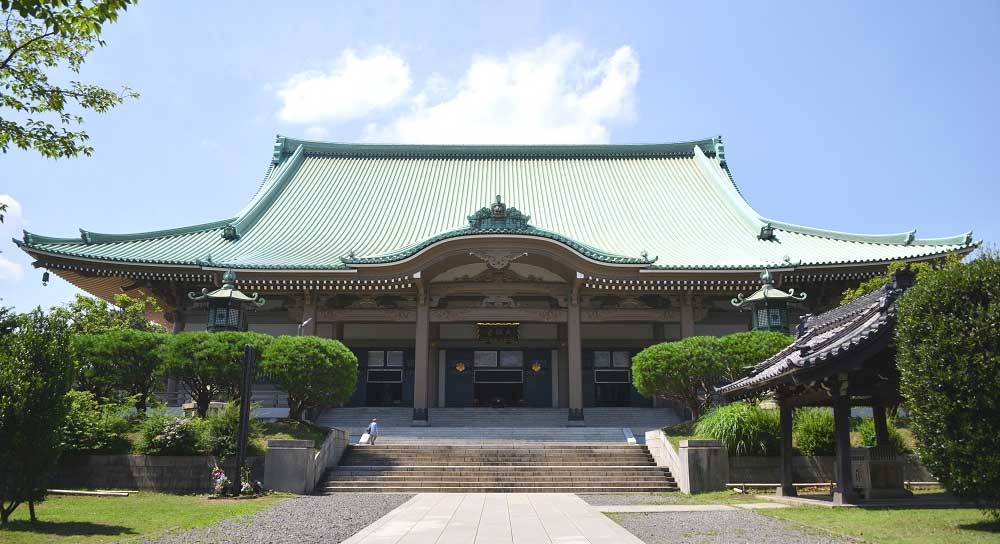
Featured image above: Soto Zen Buddhism Sojiji Head Monastery in Yokohama, Japan. Photo (2009): Wiiii / Wikimedia Commons. License: CC ASA 3.0 Unp. Cropped.