Politician describes how Japanese communists have been at war with a faith since 1978 election defeat that halted their progress.
Prepared by Knut Holdhus
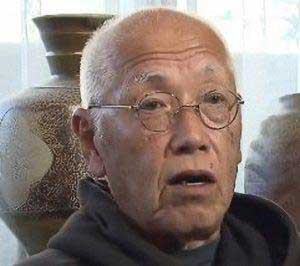
In a series of three articles, Bitter Winter, the online magazine for human rights and religious freedom, published a report titled “The Unification Church Case in Japan: A Politician Speaks Up.” It was written by a member of the Liberal Democratic Party (LDP), Toshikazu Masubuchi, who served as speaker of Tochigi Prefectural Assembly 1991-2011.
On 27th February 2024, Bitter Winter published the 1st of its 3 articles. It was headlined “It Is All About Anti-Communism”.
In it, Masubuchi tells his story, how he came to work together with the Unification Church and why he thinks it is being unjustly persecuted fiercely.
He was born in a deeply religious Buddhist family in Utsunomiya (宇都宮市), the main city of Tochigi Prefecture (栃木県), about 100 km north of Tokyo. He worked in his father’s large construction company before entering politics at the age of 26, in 1972. Three years later, he was elected to the prefectural assembly and served there for nine terms until 2011.
Masubuchi describes his political fundamentals, “For me, the essence of conservative politics lies in patriotism and religious faith. Masashige Kusunoki [楠木 正成 – 1294–1338, the epitome of the loyal samurai in Japanese history] advocated “Hirihōkenten” as his emblem. This means that one should act in accordance with the will of Heaven. Without a sense of reverence towards Heaven, people would act as they please, and justice would not prevail. Following the will of Heaven is essential for politics that lead people to happiness.
Although Japan is often described as non-religious, religious sentiments are actually ingrained within the people, as seen in the incorporation of religious rituals into annual events. I believe that the Japanese people’s reputation for moral integrity is largely due to the deep-rooted religious faith that has been traditionally passed down from one generation to the next.”
The experienced politician holds the belief that despite the diversity of religions worldwide, akin to the various climbing routes up Mount Fuji, different religious denominations may vary in approach but ultimately aspire toward the same goal. Therefore, he holds respect for religions beyond Buddhism.
Masubuchi’s conservative political ideology stands in stark opposition to communism. He fundamentally rejects communism for its denial of the existence of God and its willingness to employ any means to achieve its objectives, regardless of the human cost. He cites instances from history where hundreds of millions of lives were lost in countries like the former Soviet Union, the People’s Republic of China (PRC), and Cambodia due to communist regimes’ indifference towards human rights violations. The Tochigi politician is strongly opposed to the concentration of power in the hands of a few based on the concept that a Communist paradise can be created by a one-party dictatorship.
He recounts an incident he experienced when left-leaning media falsely accused a school principal of obstructing free speech when he called the police to handle a disturbance at a junior high school in Utsunomiya City. This incident led Masubuchi to publicly express his belief that the school board, rather than the principal, should handle media relations in such situations. However, his statement was twisted by media outlets like the “Asahi Shimbun” and exploited by the Communist Party, showcasing their tendency to distort facts and propagate falsehoods to suit their narrative.
Following his unsuccessful bid in the July 1974 by-election for the Tochigi Prefectural Assembly, Masubuchi was introduced to the International Coalition for Victory Over Communism (IFVOC), a conservative political organization founded by Sun Myung Moon. That was during the Cold War era when Japan and South Korea faced the threat of communist expansionism. Inspired by IFVOC’s stance against communism, Masubuchi engaged in discussions criticizing communism with the members of the anti-communist organization.
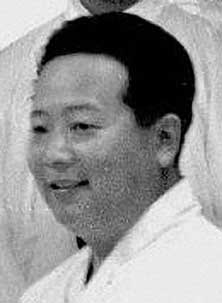
Masubuchi recalls attending the Tochigi Prefectural Convention of IFVOC around 1976, where its chairman Osami Kuboki (1931-1998) delivered a speech titled “A Cry for the Salvation of the Country”. He addressed the threat of communism from a conservative perspective. Impressed by the speech, Masubuchi felt a sense of solidarity with IFVOC’s values, “As someone proud to be a conservative politician, it felt as if I had gained a million allies and found a leader in political philosophy. At that time, the religious affiliations of those leading IFVOC were an entirely different dimension of the issue.”
The politician recalls how IFVOC from the late 1970s and into the 1990s, played a significant role in supporting conservative candidates in local elections, contributing to the decline of left-wing administrations in many municipalities, “In 1978, the Kyoto Prefectural Governor election took place. The left-wing administration of Torazo Ninagawa (蜷川虎三 – 1897-1981) had lasted for 28 years in Kyoto, and to overthrow it, young members of IFVOC fought on the front lines through street speeches and more. They even faced fierce interference from the Communist Party at times. After such life-threatening battles, conservative candidate Yukio Hayashida (林田 悠紀夫 – 1915-2007) won the election.
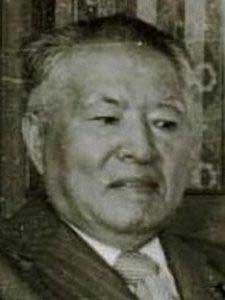
In response, Kenji Miyamoto (宮本 顕治 – 1908-2007), the Communist Party chairman at the time, was furious and called for the destruction of IFVOC and FFWPU (‘Red Flag’ (Shimbun Akahata – the newspaper of the Japanese Communist Party), 8th June 1978).”
And IFVOC continued to engage in frontline battles in various local elections, “Left-wing local governments, such as Ryokichi Minobe (美濃部 亮吉 – 1904-1984) in Tokyo (1967–1979), Ryoichi Kuroda (1911-2003) in Osaka (1971–1979), and Yawara Hata (畑和 – 1910-1996) in Saitama (1972–1992), disappeared one after another, leading to the decline of once-thriving leftist municipalities.”
As a result, the 1990s witnessed a period of conservative dominance in Japan, with IFVOC being viewed as a staunch adversary by the Japanese Communist Party and its sympathizers.
Around 1980, IFVOC expanded its presence nationwide, establishing branch organizations composed mainly of politicians. In Tochigi Prefecture, Masubuchi assumed the role of secretary-general in the Tochigi Prefecture General Branch, working alongside former senator Noboru Yano to further IFVOC’s mission of combating left-leaning tendencies and promoting conservative values in Japan.
To be continued….
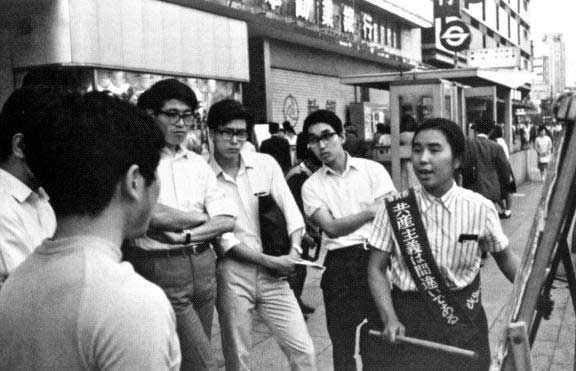
Featured image above: From a Victory over Communism campaign in Japan in 1969, supported by the Unification Church. Photo: IFVOC