
Blog of Unification Theological Seminary
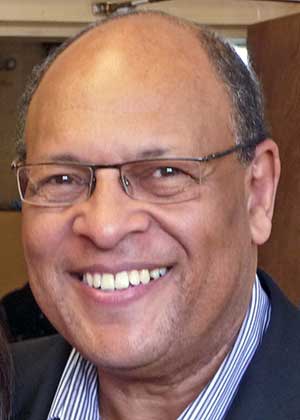
By Lorman Lykes
My interest in spiritual psychotherapy stems from over 40 years as a student of Rev. Sun Myung Moon and the Divine Principle. This was a life changing event for me filled with the hope of transforming myself into a spiritually conscious individual embodying love for all and ill for no one.
When my wife, Laura, departed the earth plane in 2006, I had an epiphany that it was imperative for me to take responsibility for my own spiritual development beyond the level of the Divine Principle.
Today, my journey has brought me to conclude that the Divine Principle is a religious philosophy that can transform the way we understand the original world as created by God, including the historical processes that will bring it to fruition, but is not a transformative principle to change the individual.
Spiritual transformation, enlightenment, or whatever name you give it is an individual responsibility that requires each person to seek help in his or her self-discovery process. I believe the practice of spiritual psychotherapy is one of the ways to the next level of spiritual development after religious training in Unificationism.
“In the beginning God created the Heaven and the Earth” (Gen. 1:1). This quote postulates that the initial idea of God’s Creation was for the existence of a spiritual and material realm as described by Moses. Thus, one can extrapolate today that humanity’s existence between Heaven and Earth is a mysterious connection between these two realms that is still being explored.
As we search for the meaning of our existence between Heaven and Earth, it can serve as a metaphor for our search to understand a much more basic connection — that between the human spirit and mind. Their function as a harmonious, integrated system of processes and energies has been the domain of both scientific research and religious faith.
The discipline of spiritual psychotherapy has endeavored to unlock the mysterious connection between the spirit and the mind as a means of solving a problem that dates back to the Fall of Man and the accompanying social problems associated with it. Many of these social problems are aligned with mental health issues. Let me address how well spiritual psychotherapy has been able to increase our understanding of the intricacies in the spirit/mind system that would enable the development of procedures and techniques to eliminate human mental and spiritual suffering.
What is Spiritual Psychotherapy?
The word “psychology” comes from the Greek: Psyche is the word for “mind” or “soul” and logos means study. In other words, psychology is the study of the mind or the soul. Spiritual psychotherapy represents the practice of reducing and/or eliminating the disconnect between an individual or patient’s sense of reality versus illusion and the discomforts associated with it.
With proper diagnosis, a spiritual psychologist will recommend a practice or technique to illuminate false perceptions that are the source of the patient’s departure from reality concerning themselves, others, and their life experiences. This is based on the theory that a person’s mental state is a construct of their self-image that enables positive thoughts and behaviors versus a false self that produces negative thoughts and behaviors.
Inherent in spiritual psychotherapy theory, there is a spiritual dimension to the human psyche that coincides with the three areas of a human being: mind, body and emotion. This spiritual dimension has been acknowledged based on ancient wisdom as far back as Pythagoras, who held that the soul was of divine origin. However, modern science in general and psychology specifically has been of the opinion that the realm of spirit, soul or other worldly phenomena were unscientific, and thus discounted from consideration for serious scientific study.
This major contention in the way spirituality was viewed is part of the reason psychology abandoned the investigation of spirit as a legitimate subject for scientific inquiry. This was based on the belief in the early 20th century that empirical evidence could not be obtained to validate spirit’s existence. Modern psychology has maintained this trajectory until recently, when new discoveries in quantum physics pointed to the existence of new states of energy and consciousness previously unknown. This fact combined with the recent research into the benefits of meditation and yoga as a therapeutic aid have opened the door for acceptance of spiritual psychotherapy study.
What is the Theory Behind Spiritual Psychotherapy?
In spiritual psychotherapy the conditions for mental disturbance are attributed not just to the disorientation or disruption of the mind-body-emotion characteristic but also the separation from an individual’s true self. The true self is an important element in understanding how individuals should think about the cause of their mental health. A layman’s view of its importance is best explained by comparing it to the soul. Your soul is who you are in God and who God is in you. As a human being, you inherently have a soul that is the embodiment of your being — a conscious being that knows the existence of itself.

Self-knowledge is not immediately revealed; it is learned or discovered through the process of life. Herein lies one of the convergences of spirituality with psychology: in their processes of acquiring self-knowledge they expose the vulnerability of the soul to identify with things other than the self. In psychology, the self is a product of the ego which identifies “I” as itself. One of the most basic mind structures through which the ego comes into existence is identification. One of the most basic levels of identification is with things. “I” identify with the sports car I drive, as a college graduate, with the female gender, as an American, etc. The identification accumulates until an individual is consumed with concepts, ideas and thoughts that are coded on to their personality and clouding their true self-reality.
This illusion created by the ego is self-perpetuating and self-protective of its created self-image. These perceptions can become a neurosis if negative thoughts and emotions become the dominate perception and create phobias, addictions, PTSD, suicide, or other mental health issues. Spiritual psychotherapy recognizes that perceptions create a false identity which is called the false self. The difference is how spiritual wisdom explains the cause of the false self and illuminates a treatment.
To be clear, the ego is not an error in human development. It serves a purpose. An individual’s ego concepts are created in response to difficulty, such as a feeling of vulnerability to gain safety and control, i.e., “I shouldn’t let anyone in” after a bad break up. Also, ego concepts help to minimize our cognitive efforts when a brand-new situation doesn’t require weighing all the options then the ego predetermines the rules for action to be taken. The problem arises when biases and shortcuts control the person and overwhelm their true self from emerging.
Understanding the true self as the essence or core of the conscious being is a process where psychology and spirituality agree in their diagnosis. However, this is the area where spirituality is more confident in its analysis of the human condition than science. In the last 100 years, science has, through technology and research into the subatomic world, proclaimed what mystics and gurus have known going back to the Vedic scriptures — humans are sentient beings that transcend time and space.
Science and Spirituality: Liberate the True Self
The concept of transcendence in psychology has its roots in the writings of Maslow, who explained “Transcendence is the sense of loss of self-consciousness, of self-awareness, and of self-observing of the adolescent depersonalization type. It is the same kind of self-forgetfulness which comes from getting absorbed, fascinated, concentrated.” However, spiritual psychotherapy has a more Eastern philosophical approach to understanding transcendence. A reference to transcendence in the Old Testament could be Isaiah 55:8-9:
‘For my thoughts are not your thoughts, nor are your ways my ways,’ ” declares the LORD. “ ‘For as the heavens are higher than the earth, so are my ways higher than your ways and my thoughts than your thoughts.’
In essence, the human activity of transcendence endeavors to escape the limits of human thought and embrace that which is beyond human comprehension: divine thoughts, feelings, and emotions. This would lead to a divine personality in the true self. Awakening, mindfulness, enlightenment, and cosmic consciousness are all terms that describe the modern-day approach to going beyond the physical mind and body experiences.

Transcending the physical is necessary to explain the act of comprehending one’s true self since it is not tangible, observable or measurable. In this reality, one must take a leap of faith to approach the concept without any empirical evidence. The proof comes in the form of the effects, not the substance of the reality of self. Consciousness is the effect that makes the self evident. The process of self-discovery can be explained when you contemplate the nature of self; meditation is used to do this. That is why meditation is a higher state for spiritual growth. It is the return to the root of your being, the simple awareness of being aware. Once you become conscious of the consciousness itself, you attain a totally different state. I have practiced meditation for the last five years and have progressively benefited from its enlightenment and awareness in my total being.
What are Spiritual Psychotherapy’s Practices, Techniques and Methods?
Spiritual psychotherapy works with the subconscious. The technique of meditation is the tool most often used to open a channel to this parameter of the mind. Meditation is often associated with Eastern religious traditions. The Yogic sciences use a meditative practice to separate the mind from the physical body, thus allowing the observation of the self which is neither. In this process of altering the state of consciousness by quieting the mind, transcendence is possible once the separation occurs. Spiritual psychotherapy through teaching individuals to meditate, provides them a way of looking at themselves and their issues from a new perspective. This self-examination allows the individual to understand the nature of their issues once they are uncovered from the subconscious. Then a process of eliminating negative thoughts, emotions, habits, etc., begins using different self-help techniques.
These techniques vary from spiritual psychotherapy theories and practices. Their aim is to change or eliminate the negative thought patterns. Studies of physical changes to the brain, known as neuroplasticity, have been associated with positive changes in an individual’s personal behavior. Experimental tests have been conducted on meditative subjects that have verified the changes in their brain as a result of meditation. Meditation has been shown to have an effect on an area called the amygdala, located at the base of the brain, which participates in processing emotions. The pursuit of self-knowledge is laudable for its discovery of past trauma or pains that cloud a person’s true perception of themselves.
Conclusion
Judeo-Christian and Islamic religions were not meant to be processes that affect the mental constructs of sinful life. Scriptural corrective lessons starting with the Ten Commandments were a law-based ethic to regulate behavior. The Torah, the Bible, and the Koran are instructional scriptures in which faith is the crucible through which transformation is stimulated through the guilt, fear, and punishment of the believer. The consequences of sin are reenforced on earth in the institutional hierarchy by the threat of damnation.
Of course, love, compassion and charity are just some of the positive aspects in these scriptural texts but the path to manifesting them in an individual’s life is not presented in applicable steps for believers to obtain sufficient transformation. The proof of this is prayer, discipleship and a devotion to reading the sacred scriptures have had only moderate success in maintaining our civilization for the past 4,000 years, since war, violence, corruption, and greed still exist. What is the justification for continuing these spiritual traditions if the current trajectory of inhumanity to humankind is still being perpetrated by religions’ adherents?
Eastern religions are intended to be self-motivating, self-directing, and self-correcting. A guru or master advises as a guide in these practices. There are many Eastern religious texts, but I am mostly speaking of the Yogic Sciences, which have been at the center of today’s mindfulness revival around the world. The independent study nature of yoga, meditation, and other Eastern methodologies that have entered Western culture make them ideal for the “seeker” generation that is looking to find a transformative alternative to mainline churches’ methodology.
This trend could lead to a greater acceptance of meditation as a part of mainline church teachings and or liturgy. This could be the beginning of spiritual psychotherapy in religious institutions. The phrase “necessity is the mother of invention” could ring true as the loss of membership in churches today opens a new paradigm to what religion’s mission is. If the religious institutions today seek to survive, they should give people what is useful to reach their spiritual potential and not just follow past traditions.
Rev. Moon reportedly said, according to his eldest son, that if Jesus had not been crucified, he would have taken his Israelite followers East to begin their education and transformation into a Heavenly Kingdom community.” After Jesus’ crucifixion, Christianity spread westward into Europe and beyond, rather than to the East. I infer from Rev. Moon’s comment that the reason Jesus was to lead the Israelites East was to bring them under the influence of Eastern teachings developed by Buddha and Eastern Yogis. These teachings would have been necessary to detoxify the mindset of these formerly enslaved people and transform the false perceptions they had of themselves. There may exist evidence that Jesus’ spent some time during his 12 “lost years” in India learning from Eastern masters.
The trajectory of individuals towards fulfilling their human potential has been limited, despite so-called civilized societies that have developed around faith traditions. This is due to our inability to overcome the initial flaw in our spiritual development: the failure to take individual responsibility for one’s spiritual development. As we continue through the 21st century, we will find new and creative ways to manipulate scientifically the atomic structures that make possible our physical prosperity.
However, the fulfillment of our spiritual gratification still remains a mystery. It will remain so as long as people ignore their birthright to the divinity within. The divine ember is not purchased, bequeathed, or rewarded. It is discovered by seeking after what God has already promised in Matthew 7:7: “Ask, and it will be given to you; seek, and you will find; knock, and it will be opened to you.”
The failure to believe in this promise is a flaw of faith. It distracts from our true potential to inherit God’s greatest blessing. This flaw in our perception of “Self” still exists. However, spiritual psychotherapy has a methodology to revive the true self that wants to be liberated. The opportunity is there for each soul to learn the lesson of life and take responsibility for his or her own soul. The time has come for individuals to be their own messiah.♦
Rev. Lorman Lykes (UTS Class of 1981) was born in Detroit, MI, in 1949. He graduated from Wayne State University with a B.A. degree in history and joined the religious movement of Sun Myung Moon in 1973. He served as a missionary, pastor and teacher of the Divine Principle for over 40 years. He has traveled extensively in search of the true meaning of life, love and death. After the transition of his wife, Laura, in 2006, he has taken a special interest in researching and studying neuroscience, metaphysics and the evolution of sentient beings.