Blog of Unification Theological Seminary
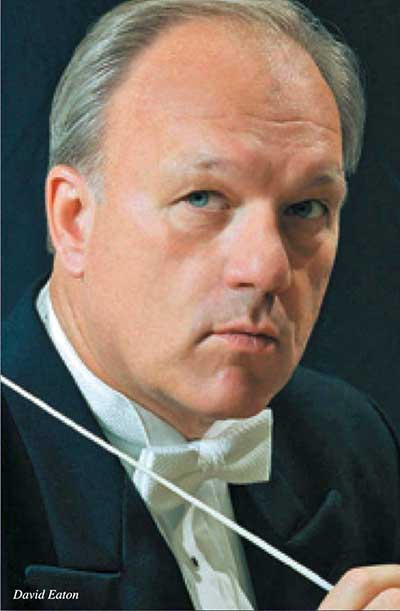
By David Eaton
The 19th century French novelist, Gustave Flaubert, asserted that “the art of writing is the art of discovering what you believe.”
In the process of writing my book, What Music Tells Me: Beauty, Truth and Goodness and Our Cultural Inheritance, I realized Flaubert’s assertion was quite apt.
The chapters in the book span several decades and were written for various publications, including The World & I magazine, the Journal of Unification Studies, the Peace Music Community blog, and the Applied Unificationism blog.
They draw upon many of my experiences as a musician, as well as my interest in music in relation to politics, philosophy, commerce, education, and religion. The influence of music on self and society is a central narrative of my book.

What Music Tells Us
One of my favorite composers is Gustav Mahler (1860-1911). Mahler is generally considered to be the last of the great symphonists of the European symphonic tradition. He composed nine symphonies and his third symphony, written between 1893 and 1896, has six movements. He ascribes the following titles to each movement:
- Pan Awakes, Summer Marches In
- What the Flowers in the Meadow Tell Me
- What the Animals in the Forest Tell Me
- What Man Tells Me
- What the Angels Tell Me
- What Love Tells Me
For Mahler, nature, angels, humankind, and love all had something to say to him — presumably something imbued with beauty, truth and goodness. He would say that it was through the art of music that he could find answers to many of his questions regarding life, love and the pursuit of happiness.
Mahler intuited, as did those in ancient cultures, that music wasn’t solely about pleasure or aesthetics. Like the philosophers of ancient China and Greece, Mahler believed music possessed moral and ethical implications and could be a gateway to higher truths and deeper understandings of the human condition.
Hebrew and Christian philosophers also shared this perspective and wrote treatises regarding the effects of music on self and society — psycho-acoustics in modern parlance. Any examination of our cultural patrimony reveals that the metaphysical, spiritual and axiological aspects of music, and its potential as a change agent in the spheres of politics and public ethics, has been a constant refrain from antiquity to Mahler, and remains so today.
The Unification movement’s founders, Rev. Sun Myung Moon and Mrs. Hak Ja Han Moon, often alluded to the importance of art and culture in establishing a culture of peace. In their respective memoirs, they each aver that it’s not politics that changes the world, but art and culture that can move people’s hearts and raise consciousness and thereby foster conditions for socio-cultural betterment.
American composer and conductor, Leonard Bernstein, echoed that sentiment in a 1972 interview with the Los Angeles Times:
“…Art cannot change events. But it can change people. It can affect people so that they are changed. Because people are changed by art — enriched, ennobled, encouraged — they can act in a way that may affect the course of events by the way they vote, the way they behave, the way they think.”
Rev. and Mrs. Moon believed that any particular genre of music could have beneficial aspects if lyrics expressed godly virtues and values and if the musical components of melody, harmony, rhythm, and structure were in accord with universal archetypes (Carl Jung’s concept), and embodied the laws and principles that are reflective of the nature of God.
As former UTS professor Dr. Young Oon Kim observed, the aesthetic experience of art is predicated in large part on the degree to which the principles and laws that emanate from and within God — give and take, polarity, harmony — are embodied in a particular artwork. The more an artwork amplifies or substantiates God’s nature, the greater the response of love and appreciation will be from the aesthetic experience.
Dr. Kim’s perspective speaks to the Unification Thought (UT) concept of “Joy and Creation in Resemblance.” From the view of the Divine Principle (DP), we understand that experiencing joy is the purpose of life. In the hope of realizing joy, God, as the Heavenly Parent, created humankind and all things to be objects of joy. God, in the subject position, attains joy from the stimulation coming from human beings in the object position when their internal form and external character nature resemble those of God. As UT posits:
“God created people in such a way that they resemble the image the dual characteristics of God and created all things in such a way that they resemble Him symbolically. Applied to the theory of art, this means that an artist produces works of art in resemblance to his or her internal character and external form. Also, it means that the appreciator feels joy by sensing his or her internal and external through the artwork.”
Accordingly, we experience joy from aesthetic beauty in art when it is ontologically similar to our Creator’s image and likeness. For instance, in music, when the polar opposites of consonant and dissonant intervals, or major and minor harmonies are well harmonized in a given work, there is a realization of the laws from and within God, and we are moved emotionally as a result.

Like Mahler, certain European philosophers, including Friedrich Schiller, Johann Wolfgang von Goethe and Emmanuel Kant, maintained that art wasn’t merely a mode of entertainment, but could be a repository of moral knowledge that could provide what Schiller termed “aesthetic education,” and thus could be a gateway to moral and ethical insights due to its transcendental aspects. As Schiller professed, “Only through Beauty’s morning-gate, dost thou penetrate the land of knowledge.”
The Wisdom of the Ancients
In his treatise on music, Le Institutioni Harmoniche, the Italian Renaissance music theorist, Gioseffo Zarlino (1517-90), speculated that hearing was the most valuable of the five physical senses because it allowed for a full “comprehension of science by intellect.” Taking his cue from Pythagoras, Zarlino believed nature was the source of the harmony of the spheres and that everything was dependent on godly principles, therefore the order of things ordained by God resulted in “a silent harmony of the universe.” This understanding is the cosmological antecedent of the beliefs of Martin Luther and Johann Sebastian Bach who believed music was the most efficacious way to offer praise and gratitude to the Almighty, and to “re-create the mind.”
The cultures of antiquity, particularly Chinese and Greek cultures, also placed a great deal of importance on the axiological aspects of music. Their writings regarding the moral and ethical power of music are well-documented and elucidate how they emphasized the need for artists to use that power with a sense of moral responsibility. As Confucius writes in The Analects: “If a person be without the virtues proper to goodness what has he to do with the rites of propriety? If a person be without the virtues proper to goodness, what has he to do with music?”
Chinese politician, Le Bu Wei (291-235 BCE), also alludes to the effects of music on the human psyche and society in his Spring and Summer Annals. He makes the point that the values, morals and ethics of a particular cultural sphere could be known by the music it enjoys.
Similar views about music were expressed by Plato, Aristotle and Socrates. In The Republic, Plato cites the cautionary utterances of Damon of Athens, one of the first Greeks to expound on the effects of music on the human psyche. Damon went as far as to suggest that altering the songs of a country would result in altering the laws of a country. He warned that the changes might appear innocent at first, but over time, music born of questionable motives and aesthetics could have deleterious socio-cultural consequences.
In recent decades, we have witnessed in our contemporary culture the toxic effects of music that has morally questionable lyrics. There has been a normalization of depravity offering proof that Damon of Athens was quite prescient in his concerns regarding the effects of music to debase a particular culture.
A significant aspect of our cultural inheritance vis-à-vis the attitudes and outlooks of the cultural spheres of the past is that the goodness feature in the beauty, truth and goodness paradigm (axiology) remains a salient factor. Western music is the progeny of the Judeo-Christian ethos that evolved over the past 2,000 years. The religious underpinnings of that tradition should not fall prey to the secular, materialist, nihilistic, or politically correct conceits that have had the effect of diminishing the Judeo-Christian moral principles and virtues that might allow us to fashion a culture of peace.
In I Cor. 10:23, we read that all things are permissible, but not all things are beneficial. Our artistic choices, whether we are artists or appreciators, ought to be predicated on ideals that are rooted in Godism. Rev. Moon often said that “religion and music go hand in hand.” Religion and music in their best iterations can assist in the “re-binding” of humankind to our Heavenly Parent. Mother Moon reiterated that sentiment in her Rally of Hope address on November 22, 2020, when she cited her admiration for the art of the Christian cultural sphere:
“In the past, as the Christian cultural realm waited for the Messiah to come again, an ancient, beautiful culture was formed with the European continent at its center. It is still loved today by all peoples of the world. That culture is the culture of longing for the Messiah. What I want to say now is that although due to the Fall, people have been lacking in filial devotion to our Heavenly Parent, who has endured and waited six thousand years for us, I wish to see their beautiful arts — which express the love, joy and praise they return to their Parent — shining forevermore through the revolution of the culture of heart. The arts are also a swift path by which the world can become one.”
Artists have a considerable role to play in that endeavor, therefore our understanding of what we might inherit from past cultures regarding the beauty, truth and goodness paradigm when it comports with the ideals of Godism remains an essential factor.
As Mother Moon noted, the aesthetic of beautiful music and art can be a profound unifying force when it resembles God’s divine nature in image, and then amplifies and substantiates the laws and principles of which God is the chief author and propagator. When that occurs, art can assist in our quest for truth and love in deeply meaningful ways.♦
David Eaton has been the music director of the New York City Symphony since 1985 and is currently an artist-in-residence in Korea serving as the Director of Music at the Hyo Jeong Cultural Foundation and conductor of the newly-formed Hyo Jeong Youth Orchestra. He received an honorary doctorate from Unification Theological Seminary in 2016. His book on which this article is based is available here.