Victim of horrendous ordeal – more than 12 years long faith-breaking – suffered hellish existence of mental and physical torture
Tokyo, February 15 and 17, and 18 2025 – Published as 3 articles in the Japanese newspaper Sekai Nippo. Republished with permission. Translated from Japanese. Original Article 1, article 2, and Article 3.
The 10km Path He Walked After His Release
Goto’s Autobiography Dubbed “Japan’s Version of ‘Man’s Search for Meaning’”
by the Religious Freedom Investigative Team of the editorial department of Sekai Nippo
Prepared by Knut Holdhus
More than 4,300 persons have been victims of abduction and confinement aimed at forcing them to leave the Family Federation for World Peace and Unification (formerly the Unification Church). These victims were held captive for long periods in apartments and other locations, deprived of their freedom, and subjected to coercive faith breaking. The method has been described as a “modern-day zashiki-ro (座敷牢 – prison cell)”. [See editor’s note 1 below]
One of the most harrowing cases is that of Toru Goto (後藤徹) – now 61 – who was confined for an astonishing 12 years and 5 months.
On 10th February, marking the 17th anniversary of his release, Goto published his autobiography, Deadly Struggle: Surviving 4,536 Days of Confinement (published by Sogeisha). Goto continues to speak out against the issue of abduction, confinement, and coercive faith-breaking, which has been called “the worst human rights violation in postwar Japan”.
On the anniversary of his release, Goto gave a lecture in Suginami Ward, Tokyo, to mark the publication of his book.
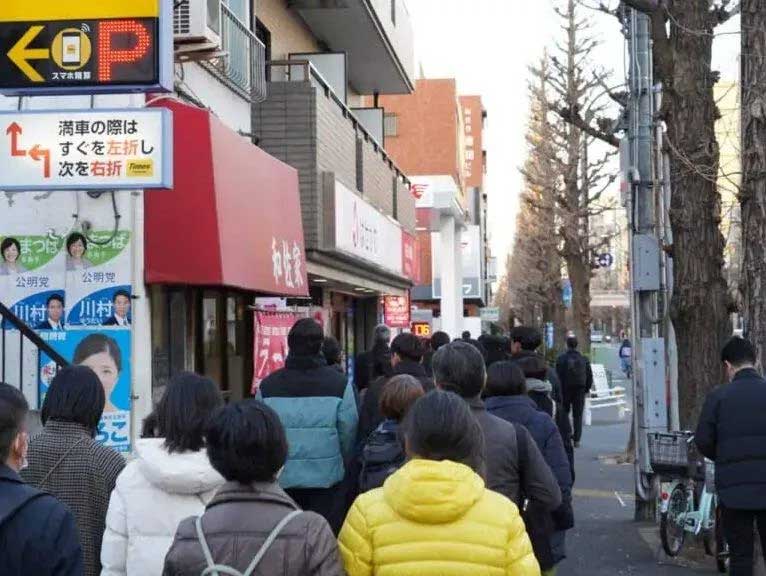
After the event, he and about 20 supporters walked a 10-kilometer route toward the Family Federation’s headquarters in Shoto, Shibuya Ward – the same path he had taken after being freed.
During his confinement, Goto was malnourished, and his weight dropped from 65kg to 50kg. Seventeen years ago, he was thrown out of the apartment with nothing – penniless, no possessions. In his weakened state, he had no choice but to walk the long distance to the church headquarters. The purpose of this commemorative walk was for others to relive that journey.
The group first headed to Ogikubo, where the apartment he had been confined in was located. As they approached, Goto paused and pointed to the corner unit on the eighth floor, saying, “That is the room where I was locked up for over 10 years.” He added, “Many believers suffered abduction and confinement in places like this.” The apartment, located in a quiet residential area, had an eighth floor that was difficult to see from the ground, making escape nearly impossible. It was within this very room that the “worst postwar human rights violation”, as Goto calls it, took place.
For 12 years and 5 months, Goto was locked in an apartment where the door and windows were sealed, leaving no way to escape. As the years passed, his physical strength deteriorated, making the possibility of escape even more impossible. His freedom of religion – the most precious thing to him – was taken away, and his very personality (人格) was denied [See editor’s note below]. Yet, he never gave up his faith. Enduring the mental and physical torture of coercive faith-breaking, he finally regained his freedom on 10th February 2008, when his family, exhausted from their own struggle, abandoned their attempts and released him.
Just two to three minutes from the apartment was a police box (koban). At the time of his release, Goto hoped the police would intervene, believing that if they acted quickly, they could collect evidence. He approached the police, pleading desperately for help, but was completely ignored.
Realizing that no help would come, he decided to walk all the way to the church headquarters in Shoto, Shibuya, even though he knew it was an extremely long journey.
As the group retraced his steps, they moved eastward along Oume Kaido Avenue toward Shoto. The bustling main road was lined with stores, including gyudon (beef bowl) restaurants, ramen shops, and convenience stores.
Back then, Goto had no money and was starving, yet he couldn’t even enter these shops to buy food. He couldn’t rely on passersby either. The isolation he felt at the time must have been unbearable. Yet, he recalled, “I was desperate to get to the church headquarters, no matter what.”
When he passed Yoyogi-Hachiman Station on the Odakyu Line, he reached a point more than halfway through the journey. However, a pedestrian bridge stood in his way. There was no pedestrian crossing – the only way forward was to climb the bridge. His weakened body was near its limit, making even walking a struggle. Somehow, he forced himself up and down the bridge, step by step.
Finally, he reached the Shoto 2-chome intersection – a place he calls “the climax of the journey”. Seventeen years ago, at this very spot, the pain in his knees had reached its limit. Exhausted, he crouched down. Desperate, he asked a random woman for help. Miraculously, she turned out to be a member of the Family Federation. “It was truly a miracle,” he recalled with excitement.
That woman handed him two 500-yen coins (about $6–$7 USD), which he used to hail a taxi. He finally arrived at the church headquarters – but even then, he was faced with one final obstacle.
The entrance was just five meters away, yet it felt impossibly distant. At last, he reached the guard at the entrance, who contacted church staff to take him in.
Severely malnourished and physically exhausted, Goto was given a plate of katsu curry, a red bean bun, and a meat bun by the church guard. “I was so happy I could cry.”
His eyes sparkled as he spoke, and his words conveyed everything. “This case has shed light on the grave human rights violations of abduction and confinement.”
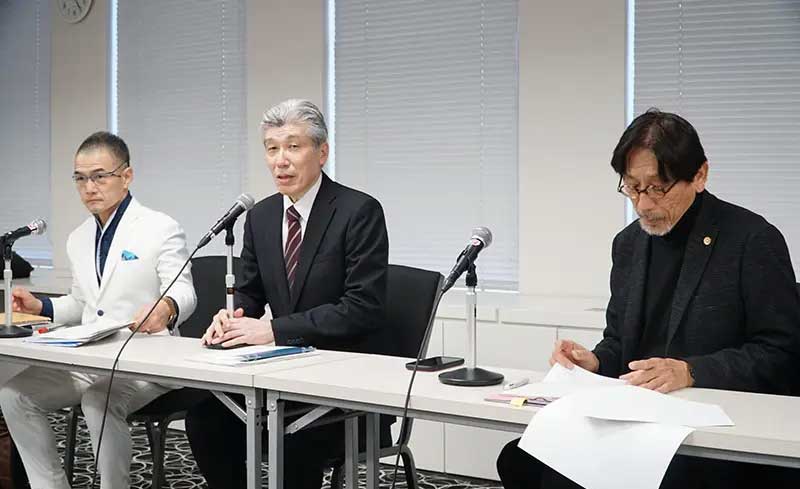
On 31st January, Toru Goto (後藤徹) – now 61 – representing the National Association of Victims of Abduction, Confinement, and Forced Conversion, shared his legal victory with supporters, who responded with applause.
This triumph came approximately one year and four months after Goto filed a defamation lawsuit against journalist Eito Suzuki (鈴木エイト) at the Tokyo District Court in October 2023. Suzuki had previously ridiculed Goto’s past abduction and confinement experience by dismissing him as a mere “hikikomori” (recluse) [See editor’s note 2 below].
Background of the Case
Suzuki and attorneys from the National Network of Lawyers Against Spiritual Sales (Zenkoku Benren) do not recognize abduction and confinement for the purpose of coercive faith-breaking as religious persecution. Instead, they argue that it is a form of “protective persuasion” by family members aimed at rescuing believers. They claim that lawsuits alleging human rights violations are merely desperate attempts by religious organizations to avoid dissolution.
Lawyer Shinichi Tokunaga (徳永信一), representing Goto, criticized the media for only presenting anti-religious organization perspectives and failing to report on the truth regarding coercive faith-breaking. He stressed that this verdict could be a pivotal step in overturning Japan’s discourse, which he described as “built on lies”.
Goto was held in captivity for 12 years and 5 months. In January 2011, he filed a civil lawsuit against his relatives, a Christian pastor, and an “anti-cult” activist involved in his confinement. In September 2015, the Supreme Court finalized the ruling, ordering the defendants to pay 22 million yen in damages.
However, Suzuki, in an online article published on 13th March 2013, in Yaya Nikkan Cult Newspaper, downplayed Goto’s ordeal, stating: “After persuading his family, he simply stayed in the apartment, became complacent, and ended up as a mere ‘hikikomori’ (recluse).” [See editor’s note 3 below]
Even after the Supreme Court ruling, this article remained online. In a post on X (formerly Twitter) 1st August 2023, Goto expressed his frustration: “Does he not understand the suffering of being forcibly coerced into renouncing one’s faith?”
Despite the court ruling, Suzuki continued to call Goto a “hikikomori” in articles and television appearances. In an 15th October 2015, article in Yaya Nikkan Cult Newspaper, he wrote: “After 12 years of being a hikikomori, he won 20 million yen in court.”
On 12th August 2022, during an appearance on Miyane-ya (a news program on Nippon TV), Suzuki described Goto’s lawsuit as a case where “the court was swayed by an unusual fervor.” He also claimed that Goto had been “practically in a hikikomori state, always free to leave if he wanted.”
Ongoing Defamation and Court Ruling
The defamation against Goto continued. In July 2023, Suzuki attended a symposium hosted by second-generation members of the Family Federation for World Peace and Unification (formerly the Unification Church). When asked by nonfiction writer Masumi Fukuda (福田ますみ) why he insisted on calling Goto a “hikikomori”, Suzuki replied dismissively: “It doesn’t matter. Take it however you like.”
A few days later, he posted on X: “There is no value in covering the ‘victim narratives’ of anti-social groups. It’s all irrelevant.”
The Tokyo District Court ruled that Suzuki’s statements in the 15th October 2015 Yaya Nikkan Cult Newspaper article and his August 2022 Miyaneya appearance constituted defamation. However, other statements, including his 2013 article, his comments at the 2023 symposium, and his X post, were not considered legally defamatory.
Goto’s legal team had also argued that Suzuki’s repeated use of “hikikomori” implied that Goto was a “liar and conman who is pretending to be a victim of confinement”, but this claim was not accepted by the court.
Appeal and Future Battles
Lawyer Tokunaga expressed his determination to appeal, vowing to challenge all dismissed claims in the higher court. As public sentiment remains strongly against the Family Federation, Goto fears that abduction and confinement cases may resurge. For him, this fight that cannot be lost continues.
“All of my freedoms were completely taken away.”
On 10th February 2025, Toru Goto (後藤徹), representing the “National Association of Victims of Abduction, Confinement, and Forced Deconversion”, held a lecture in Suginami Ward, Tokyo, on the occasion of the publication of his autobiography “Deadly Struggle: Surviving 4,536 Days of Confinement” (published by Sogeisha). The event drew approximately 300 attendees, including major media outlets. Goto repeatedly emphasized the torment of isolation, stating, “During those painful and lonely times, I had no choice but to pray earnestly.” Alongside recounting his harrowing 12 years and 5 months of confinement, he strongly condemned the grave injustice of coercive faith-breaking, which disregards religious freedom.
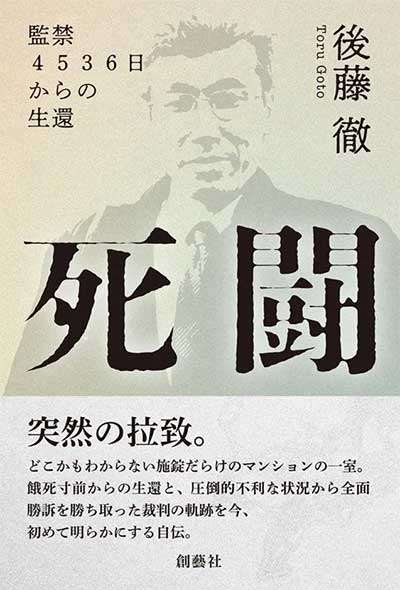
Goto’s autobiography is structured into four main parts:
- Chapter 1 details his memories with his family and his encounter with the Family Federation for World Peace and Unification (formerly the Unification Church), while also touching on his first confinement at the hands of his own family in an attempt to force him to abandon his faith.
- Chapters 2 and 3 document the more than 12 years of confinement leading up to his eventual release.
- Chapter 4 covers his legal battle against his family, the Christian pastor who orchestrated his confinement, and the professional faith-breaking activists involved.
Goto vividly recalls the horrors of his forcible detention. In one passage, he describes how hearing the distant melody of the children’s song “Yuyake Koyake” over the disaster prevention radio brought him a fleeting sense of comfort: “That brief one-minute melody from my childhood gave me solace.” (p.102)
On another occasion, he tried to scream for help through a bathroom vent, only to be violently restrained by Takashi Miyamura (宮村峻), a faith-breaking activist: “He grabbed me by the collar, dragged me out of the bathroom, and I desperately grabbed anything I could reach to resist.” (p.113)
During the event, attorney Shinichi Tokunaga (徳永信一) compared Goto’s book to Viktor Frankl’s “Man’s Search for Meaning”, a world-renowned account of survival in Nazi concentration camps. Tokunaga stated: “Inside Nazi concentration camps, even the smallest aspects of daily life gave people a reason to keep going. While we cannot fully grasp Goto’s suffering, his autobiography carries his heartfelt cries.”
At its peak, more than 370 cases of abduction and forced confinement for religious deconversion were reported annually. Goto’s legal battle played a significant role in reducing such incidents, but they have not been completely eradicated. According to “Deadly Struggle”, in January 2021, a young believer in his 20s was confined at home for a month and managed to escape through a bathroom window. In 2024, another believer in Tokyo, also in his 20s, was reportedly abducted and forcibly de-converted.
Goto’s book warns: “If the [Family Federation] is forcibly dissolved, the wave of abductions and confinements may once again spread across Japan.” (p.236)
Among those most concerned about this resurgence is undoubtedly Goto himself.
At the lecture, Tomihiro Tanaka (田中富広), president of the Family Federation in Japan, also spoke. He condemned how parents, influenced by “anti-cult” pastors and activists, have used their parental bonds to justify abduction and confinement. He further revealed that such cases have led to tragic consequences, including suicides and sexual assaults. Tanaka made a heartfelt plea: “If parents truly want their son or daughter back (to leave the church), I will personally persuade them. But please, just stop the abductions.”
Independent YouTuber and pastor Tatsuhiro Iwamoto (岩本龍弘) also took the stage, emphasizing that while Christianity teaches “love your enemies”, the Family Federation must take a firm stand against those responsible for these abductions. He declared: “Until the honor of the victims is restored, and their suffering is properly compensated, this issue cannot be considered resolved.”
It is estimated that over 4,300 individuals have been victims of coercive faith-breaking through abduction and confinement. Even Goto’s case is believed to be just the tip of the iceberg, suggesting that many untold tragedies remain hidden. This issue must not be allowed to fade into obscurity.
[Editor’s note 1: A zashiki-rō (座敷牢) is a traditional Japanese confinement room used historically for restraining individuals, typically within a private household. Zashiki (座敷) refers to a Japanese-style tatami-matted room. Rō (牢) means a jail or cell.
Historically, these rooms were used for confining family members who were mentally ill, violent, or otherwise considered disruptive or dangerous to the household or community. The practice was more common in the Edo (1603–1868) and Meiji (1868–1912) periods, before modern mental health care systems were established.
A Zashiki-rō was typically equipped with sturdy sliding doors reinforced with bars or locks, ensuring the person inside could not escape. It was located within a family home or a secluded part of the property, ensuring privacy. The confined individual was often left alone in this small, sparse room with minimal furnishings, and their basic needs were provided through a small opening or at designated times.
The term “zashiki-rō” today is often used metaphorically to describe situations of coercive confinement or control, as it evokes the idea of being trapped in a restrictive, oppressive environment. Such imagery is sometimes applied to cases of forced detainment or isolation, like in the more than 4,300 instances of members of the Family Federation being abducted and confined.]
[Editor’s note 2: The phrase “denial of one’s (legal) personality” refers to an infringement on a person’s fundamental (legal) rights and status as an individual under the law. Legal personality is the recognition by the law that an individual has certain rights and responsibilities and can exercise these rights within a legal framework. When someone is abducted or confined against their will, their basic autonomy and capacity to make legal decisions – such as freedom of movement, freedom of association, and the ability to express religious beliefs – are severely restricted or completely denied.
In this context, Toru Goto emphasizes that his experience of abduction and confinement stripped him of these legal capacities, as he was deprived of the freedom to act as an autonomous legal subject. By calling it a “denial of one’s (legal) personality”, he underscores the severity of these actions, framing them as violations not just of personal freedom, but of the foundational rights guaranteed to individuals within a democratic society.]
[Editor’s note 3: The Japanese term “hikikomori” (引きこもり) refers to people who completely withdraw from social life, often isolating themselves at home for extended periods – sometimes years. It describes both the phenomenon and the individuals affected by it.
Hikikomori typically avoid school, work, and social interactions, often due to anxiety, social pressure, or mental health struggles such as depression. The term is sometimes used in a derogatory way but is also recognized as a serious social issue in Japan and other countries.]
Featured image above: A press conference held after the verdict. From right: Lawyer Shinichi Tokunaga (徳永信一), Toru Goto (後藤徹), representative of the National Association of Victims of Abduction, Confinement, and Forced Conversion; and Lawyer Tatsuki Nakayama (中山達樹) – 31st January 2025, Chiyoda Ward, Tokyo. Photo: Takahide Ishii (石井孝秀).