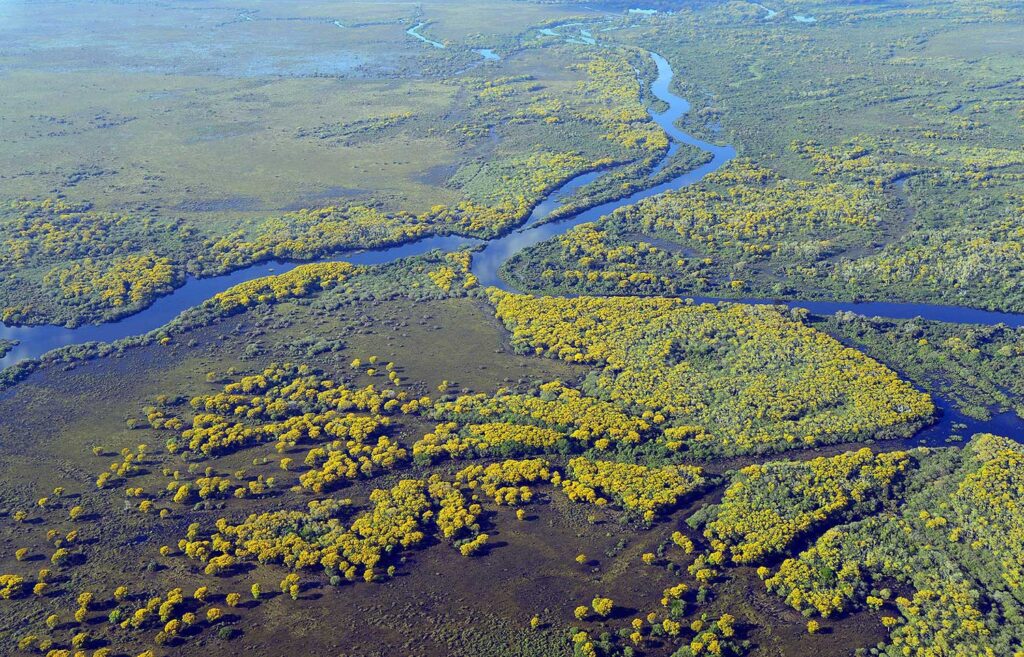
Special 40-day fishing workshop for national messiahs in the Pantanal
February to April 2000
By Michael Kiely
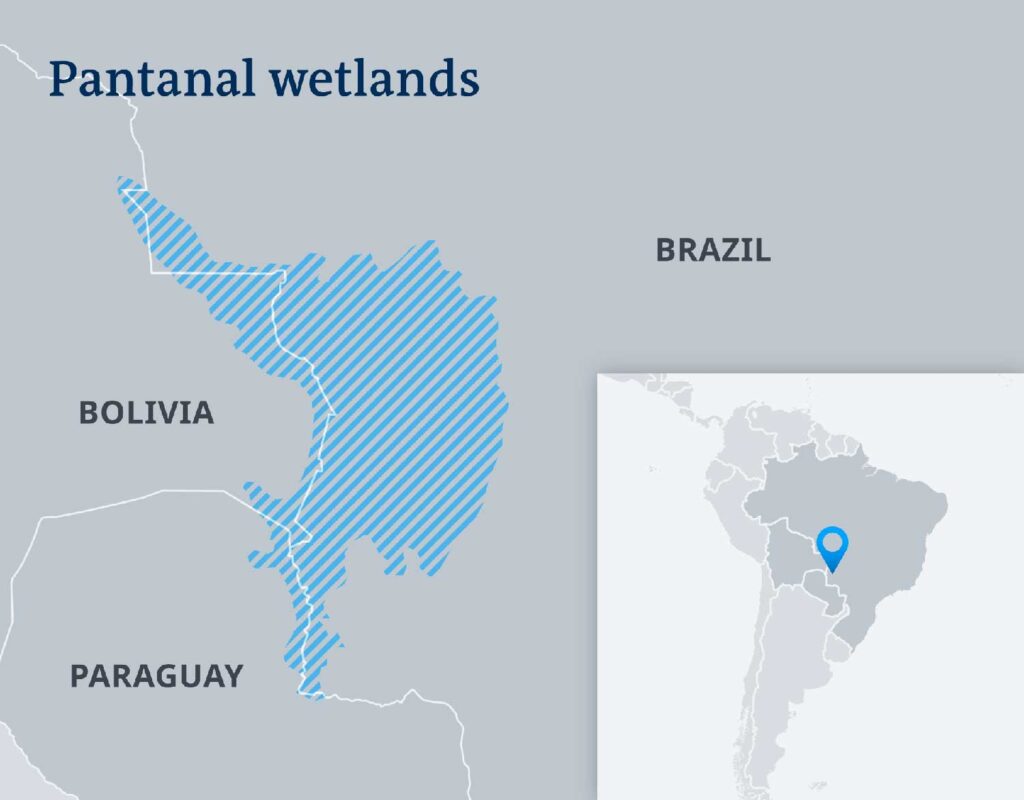
In January this year True Father called national messiahs to a forty-day workshop at Olimpo, Paraguay, from February 20 through April 1, 2000, to fulfill this condition. By attending the workshop, he said, national messiahs would inherit his foundation and tradition.
Most Western participants were unprepared for the challenges that awaited them. The bite of the Pantanal mosquito proved intensely irritating. They attacked in unrelenting swarms that ignored repellent and penetrated clothing, even denim trousers and mosquito masks.
Because there were few boats available for the western group, most participants fished from the shore. They were left early in the morning at a fishing site, then picked up in the evening. So, there was often no escape from the mosquitoes. The fledgling fishermen swatted and flagellated themselves with branches of abundant riverside vegetation and endured as best they could.
The mosquitoes had a keen sense of timing. It was precisely at the moment a fish struck and when one had to focus on identifying what species was biting in order to set the hook properly that mosquitoes drilled an elbow, a knuckle or a nose. That was a compelling distraction at a critical moment. Many fish were reportedly lost to such incidents.
The noonday Pantanal sun, which chased most mosquitoes into hiding, however, was a mixed blessing. While it did give some relief from the biting insects, by noon it was sweltering. It made fishing or any activity difficult or impossible, and a number of participants suffered from heat exhaustion. Often there weren’t any trees nearby for shade, so unless one could construct a shelter, the wilting heat had simply to be endured until it lost its edge in the late afternoon—and then the swarms of mosquitoes returned!
As we struggled with mosquitoes and sun and learned the limits of our mind-body unity, boat captains who had piloted for True Father told us how he coped with them. The captains said that Father did not swat the mosquitoes when they attacked nor even brush them off, but simply bore them and continued to fish, speak, do hoondokhae or pursue whatever he was in the process of doing. He simply ignored the mosquitoes. Reportedly, he did not even scratch the bites afterwards.
Hearing this, a number of participants attempted to follow Father’s example, but the itching caused by the mosquitoes was simply too intense for most to bear—particularly from bites in sensitive areas like the nose and knuckles. Within a few moments most participants were swatting, swishing and scratching again to relieve the irritation.
One captain testified that in the mid-day heat when companions attempted to provide a shade umbrella for Father, he waved them away. He would not accept any escape from the sweltering heat of the Pantanal midday sun.
In this way we understood from powerful personal experience that Father had greater mind-body unity than we did. Also, we only had to deal with these challenges for 40 days, but Father put up with them many months a year, year after year. It was clear for us that Father continually bore crosses for humanity that we were incapable of bearing—yet. We had to ask ourselves if we were unable to bear the burdens the Messiah bears, then were we yet qualified to bear the title of “national messiah”? The answer was humbling.
This realization was also the beginning of our course of inheritance. In coming to understand our lack and Father’s greatness, we understood that we need what Father has and that the Pantanal offers us a means to inherit it. This is not at all about mosquitoes and sun but about self-dominion in attendance. True Father set the standard of attending God without distraction in the midst of what were, for us, major distractions. In Olimpo, he sought to bequeath that standard to us. That meant the mosquitoes and sun were not our enemies, but our teachers of attendance. Their mission was to teach us to attend without distraction. Could we be anything but grateful to our teachers?
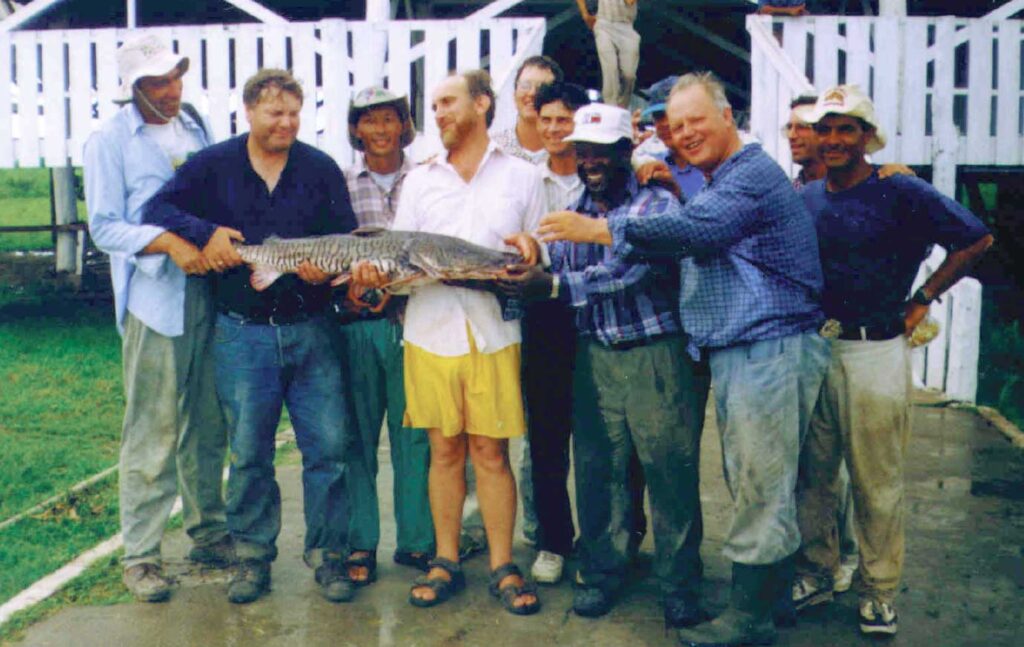
In Olimpo the greatest challenge, however, was not the distractions, but the fishing itself. We caught thousands of piranhas, the aggressive predator fish with such powerful jaws that a school of them can rip all the flesh off a victim’s bones in seconds. We also hooked hundreds of “quack-quacks,” so named because of the distinct duck-like sound they make when they are caught. Other fish we brought in included numerous cousins of catfish, a smattering of eels, rayfish and even snakes.
The fish Father had asked us to catch were elusive. Dorado liked deep running water toward the middle of the river away from the shore, so those of us on shore rarely caught them. Bakus liked the round, yellow fruit of the “baku tree,” and surubis and pintados preferred whole eels (expensive!), which only lasted until the piranhas came—usually in response to blood in the water. Because surubis and other so-called “providential” fish were most likely to bite in the early morning and late afternoon, we were out on the river by sunrise and returned to our Olimpo workshop center after sunset. To accomplish that we rose at 4:30 a.m.—then 3:30 a.m. after clocks in Paraguay were set forward seasonally. We prayed at 5:00 a.m. (4:00 a.m. after the time change), then ate breakfast, collected our quota of bait, usually ten slippery eels, and were ready to go fishing in little more than an hour after waking.
As we waited for our boats to take us to sometimes-distant fishing spots or walked to fishing spots close to Olimpo, we watched the dawn spread in the east across the Paraguay River. The morning was pregnant with the sounds of abundant life. After a full night’s chorus, the frogs in wet ditches and marshes still chirped like crickets. Others sang distinctly “weep!” or “weep bird!” The ever-present mosquitoes whined, and a bird here and there claimed its territory as local roosters crowed. It was still too early for the myriad donkeys and pigs, which freely roamed the dirt roads of the village, to bray and grunt.
Within minutes, however, those sounds were drowned out by the drone of a Good-Go boat’s powerful diesel engine starting up, the put-put of an arriving old green fishing boat we had rented from the local police chief, and the sputter and whine of gasoline outboard motors on small boats as the powerful arms of pilots jerked them into life.
We boarded the large boats in teams of six or seven people and the small boats in half-teams of three and were shuttled to our fishing spots. As we went out, the cool morning air blew strong in our faces, and dawn gradually filled the eastern sky with myriad shades of rose and orange. If we were in a late boat, after a crescendo of colors had flooded the broad horizon from edge to edge with growing light, the sun would pop up, dazzling still sleepy eyes and making the white caps of the wake of our boat sparkle out behind us in a fireworks-like spectacle of effervescent spray.
In the evening after a full day of fishing, we returned bitten and bone weary to a shower—what a luxury!—and a gourmet dinner prepared with love and culinary skill by a team of smiling Japanese missionaries to Brazil. After a personal hour for washing clothes and replacing fishing tackle lost on logs and weeds that day, we gathered for hoondokhae, anecdotes about fishing from the day, such as, “How I caught my first surubi,” and personal testimonies.
One evening Rev. Kang, a Korean national messiah, told us that unlike hunting, the target in fishing is invisible. In this sense fishing is a spiritual exercise because we cannot see the fish we are trying to catch. That is why it is excellent training in developing our spiritual sense, he said. “You are not really fishing,” he said, “until your sensitivity moves from your mind down through your pole and line into your hook.” We need to become aware of what kind of fish is nibbling at our hook and from what side he has come, he said. When we develop this sensitivity, then we can really begin to fish.
Other Korean national messiahs testified that we are fishing symbolically for the leaders of our nations, that catching the hundred and sixty fish Father told us to catch was an important condition not only for us personally but for our nations. In our struggle to fulfill this condition we will develop the knowledge and skills of expert fishermen, they said. This capability will be helpful in our developing the hobby industry in our nations.
Evenings of entertainment and meals together were the only opportunities to bridge east and west. We did not fish together, and most of the Koreans could not speak English, nor could most of us speak Korean. Nonetheless there were special moments of exchanging gifts and other non-lingual give and take, particularly among national messiah team members of the same nation.
That give-and-take ended abruptly when Father urgently called all Korean national messiahs back to Korea for a special project there. After they left, we inherited their boats. That meant that for the last week of the workshop we all could fish from boats as Father does and were thus able to fish in the center of the river instead of from the shore.
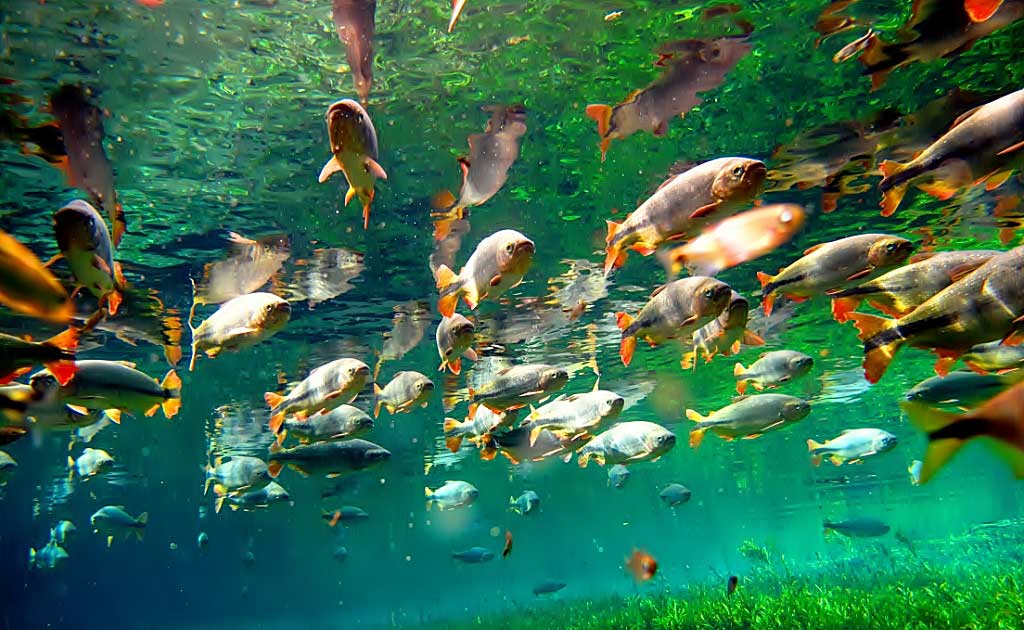
As a result, during that last week we caught about three-fourths of all the fish we caught during the whole workshop. The difference was dramatic. Before we had had boats, we had spent each day at one fishing spot on shore. Usually there were few or no fish in that spot and we often came home without any catch. With the boats we could search for fish until we found them, then pull in five or even ten in one spot.
During that week we traveled up small rivers and were awe struck by the abundance of wildlife we saw: black and white storks, beaver-like capibaras, alligators that sometimes slid up to within a few feet of our boat watching us fish, sometimes with wide-open jaws. There were anacondas, which we sometimes caught, tarantulas and droning swarms of bees that flew ominously overhead but never showed interest in us—thankfully.
The Olimpo workshop was a tough yet rich experience for all of us. We discovered and confronted our limits and were stretched to go beyond many of them. By sharing in the ordeals of his conditions for the world, we also discovered a bit more about what a giant of a man Father is—and where we have yet to go.