Religious freedom and backchannel diplomacy: How a spiritual advisor helped broker surprise meeting linking faith and foreign policy
Prepared by Knut Holdhus
The South Korean report also connects White’s earlier remarks to a more recent political development. She has reportedly played a role in facilitating a meeting between Kim Min-seok (김민석), the Prime Minister of South Korea, and President Trump. According to Kim’s explanation, the meeting was not originally scheduled but occurred after he first met with White in her capacity as head of the White House Faith Office.
An article published on 16th March by the South Korean newspaper Segye Ilbo sheds light on an unusual diplomatic moment involving Donald Trump, South Korean Prime Minister Kim Min-seok (김민석), and a key intermediary: Paula White. The report focuses not only on a “surprise meeting” between the two political leaders but also on the broader theme of religious freedom, which played a central role in the encounter.
At the heart of the story is Paula White, a prominent American pastor and long-time spiritual advisor to Trump. She currently serves in a role connected to the White House’s faith outreach efforts and has been known for her close personal relationship with the president, spanning nearly three decades. Because of this relationship, she is widely described as one of Trump’s most trusted religious confidants – someone who can offer both personal and spiritual counsel.
According to the article by religious affairs reporter Jeong Seong-su, White was instrumental in arranging an unexpected, informal meeting between Prime Minister Kim and Trump during Kim’s recent visit to the United States. The meeting reportedly took place immediately after Trump concluded another engagement in the Oval Office. White confirmed Trump’s willingness to meet and quickly facilitated the encounter, which lasted about 20 minutes and was conducted without an interpreter. This detail is notable, as it suggests a level of direct communication and urgency that is not typical of carefully choreographed diplomatic meetings.
The South Korean paper describes how Prime Minister Kim later explained why he sought out Paula White in the first place. He emphasized that her long-standing and close relationship with Trump made her a uniquely valuable bridge for establishing both direct and indirect connections with the former president. Kim also noted that White remains one of the few individuals who can maintain ongoing personal and spiritual dialogue with Trump, making her influence particularly significant.
However, the meeting was not solely about building personal rapport. Kim indicated that he also had a strategic objective: addressing what he described as misunderstandings in the United States regarding religious freedom in South Korea. In recent years, some conservative American political and religious groups have raised concerns about whether religious communities – especially conservative ones – face discrimination or suppression in Korea. Kim sought to counter these perceptions and reassure U.S. audiences that South Korea upholds the principle of separating religion and state while protecting religious rights.
This concern had already surfaced in earlier diplomatic discussions. During a January meeting, U.S. Vice President JD Vance reportedly mentioned that certain figures in the United States viewed a specific case involving Son Hyun-bo (손현보), pastor of the Segyero Church in the port city of Busan, as a potential violation of religious freedom. He urged careful handling of the situation to prevent tensions or misunderstandings between the two countries. In response, Kim reiterated that South Korea maintains a strict separation between church and state and clarified that ongoing investigations into religious organizations were based on alleged unlawful activities, not on religious beliefs themselves.
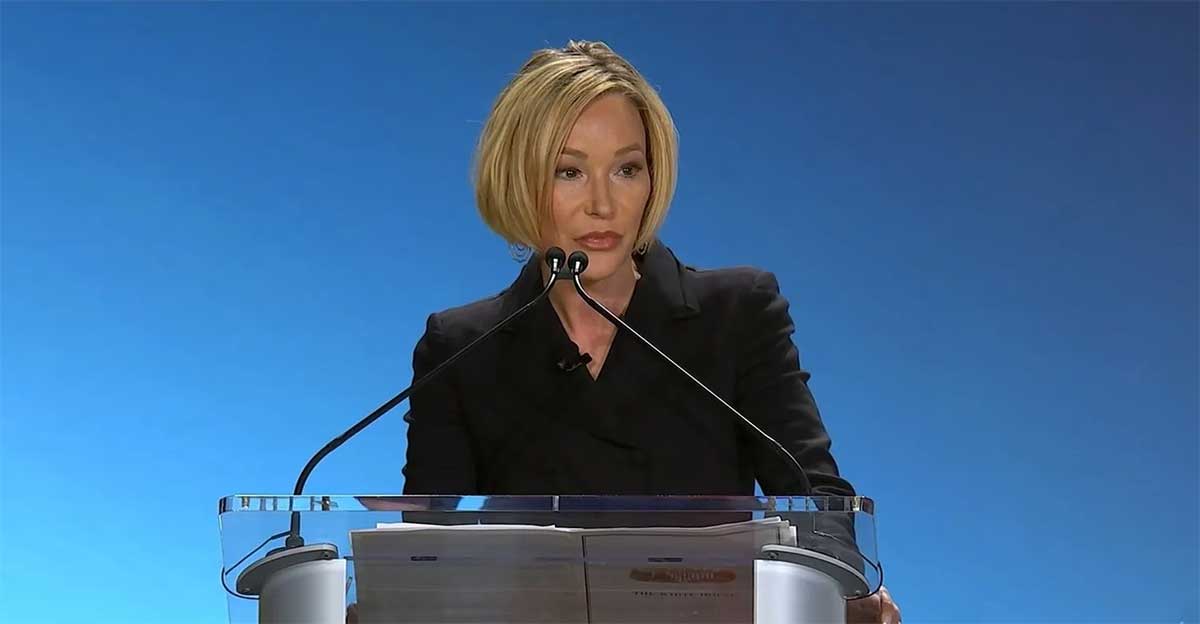
The article also highlights Paula White’s public stance on religious freedom, particularly her remarks at the “International Religious Freedom Summit” held in Washington, D.C. in early February. At this event, Paula White delivered a keynote speech emphasizing the universal importance of protecting religious liberty as a fundamental human right. Her comments extended beyond general principles and included expressions of personal support for Hak Ja Han (한학자) – also called Mother Han – the leader of the Family Federation for World Peace and Unification, often referred to in South Korea as Unificationism (통일교).
White spoke warmly about her personal connection to Mother Han, stating that she felt a deep sense of solidarity with her efforts to unite people of different faiths and defend religious freedom globally. The spiritual advisor also expressed concern for Mother Han’s well-being, dignity, and rights, framing these concerns within a broader call for international vigilance in protecting religious liberties.
Importantly, White did not limit her message to a single country. She called on Japan, South Korea, and all nations to uphold religious freedom in a manner that is “complete, fair, and consistent”. This phrasing underscores a key theme of the article: the idea that religious freedom should not be selectively applied or influenced by political considerations but rather treated as a universal and non-negotiable standard.
The article notes that White has made similar statements in the past, including at the previous year’s IRF Summit. Her repeated emphasis suggests that this is a core issue in her public advocacy and one that intersects with her political connections.
For a non-Korean audience, the significance of this story lies in the intersection of religion, diplomacy, and perception. It illustrates how informal networks – such as personal relationships between political leaders and religious figures – can play a meaningful role in international relations. It also highlights how concerns about religious freedom can influence diplomatic dialogue, even between close allies like the United States and South Korea.
Ultimately, the article portrays Paula White as a pivotal figure operating at the crossroads of faith and politics. Through her relationship with Trump and her advocacy on religious freedom, she has become an influential intermediary capable of shaping both high-level meetings and broader conversations about human rights on the global stage.
Featured image above: Paula White addressing the IRF Summit in Washington DC 2nd February 2026. Screenshot from video by IRF.