Victim of abduction and 12 grueling years of forcible detention describes the negative impact faith-breakers and lawyers had on his family that was constantly fed manipulated and hostile information
Tokyo, 21st March 2025 – Published as an article in the Japanese newspaper Sekai Nippo. Republished with permission. Translated from Japanese. Original article.
A Family Changed under Strange Circumstances
Victims of Abduction and Confinement Speak in Yokohama
by the editorial department of Sekai Nippo
prepared by Knut Holdhus
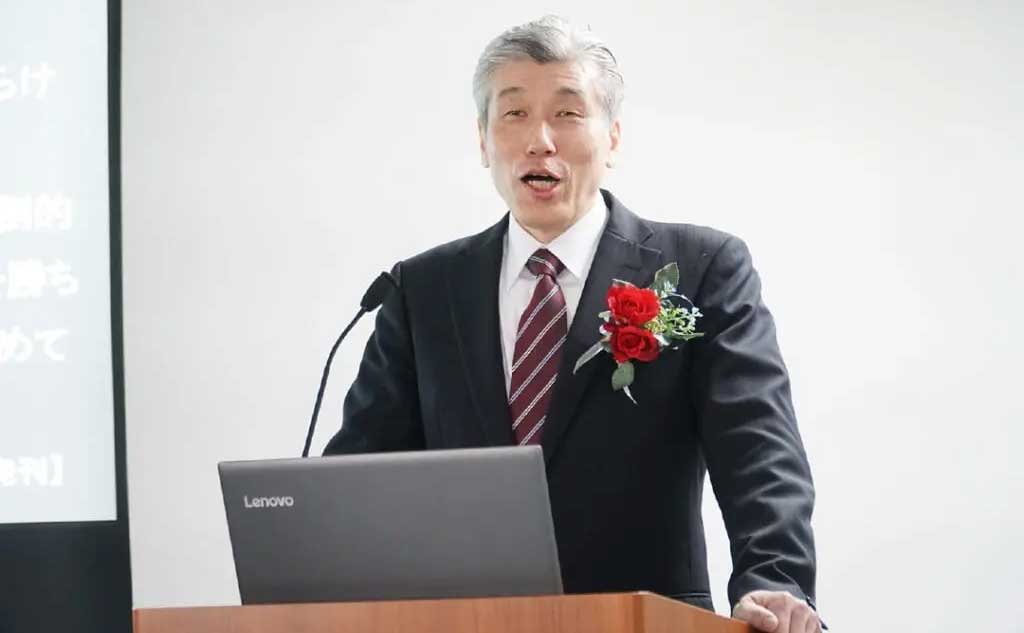
On 20th March, a believer of the Family Federation for World Peace and Unification (formerly the Unification Church) who was abducted, confined, and forcibly pressured to renounce his faith by relatives under the guidance of pastors and professional “faith-breakers” opposing the Family Federation, spoke at a panel exhibition in Yokohama. The event was hosted by the “Yokohama Citizens’ Association for the Protection of Religious Freedom and Fundamental Human Rights”.
Toru Goto (後藤徹) represented the “National Association of Abduction, Confinement, and Forced Deconversion Victims”. He had been confined for 12 years and five months and pointed out that former believers who were forced to leave the religious organization through abduction and confinement often developed hostility toward the organization, leading to an increase in lawsuits and other reported incidents.
He also noted that the day of the event marked exactly 30 years since the Aum Shinrikyo Tokyo subway sarin attack, which occurred while he was in confinement. Goto recalled being told by faith-breaking activists about the murder of lawyer Tsutsumi Sakamoto (坂本堤弁) and his family [See editor’s note 1 below].
Goto stated, “Under those strange circumstances, my family came to believe that if they released me, I would commit acts similar to Aum Shinrikyo.”
Last month, Goto published an autobiography detailing his experiences and appealed to the audience, “Was it the religious organization that changed my once close and ordinary family, or was it the influence of a third party? I want readers to decide for themselves.”
Sarutahiko Okami (pseudonym), co-representative of “Ame no Yachimata no Kai” [See editor’s note 2 below], an organization working to restore parent-child relationships disrupted by abduction and confinement, emphasized, “Repairing a parent-child relationship once it has been broken is not easy. The first step is for parents and children to face each other and foster mutual understanding through dialogue.”
Additionally, citing materials distributed to elementary schools across Japan, the event raised concerns that excessive measures against “child abuse” in Japan could lead to religious persecution. One example highlighted was that if parents provide religious guidance to their child, and the child later tells their school that they “didn’t like it”, school counselors and child welfare authorities might collaborate to separate the child from their parents, intentionally creating family divisions.
[Editor’s note 1: Tsutsumi Sakamoto (坂本堤, 1956–1989) was a Japanese lawyer and a key member of the notorious “anti-cult” organization National Network of Lawyers Against Spiritual Sales (全国霊感商法対策弁護士連絡会, Zenkoku Reikan Shōhō Taisaku Bengoshi Renraku-kai). He was especially known for his work against the Aum Shinrikyo group, which later carried out the 1995 Tokyo subway sarin gas attack.
Sakamoto’s legal efforts were seen as a significant threat to Aum Shinrikyo. This led its leader, Shoko Asahara, to order Sakamoto’s assassination in 1989. In November 1989, Sakamoto, his wife Satoko, and their one-year-old son Tatsuhiko were murdered by Aum Shinrikyo members. The attackers entered the Sakamoto’s home in Yokohama at night, drugged the family, and strangled them before disposing of their bodies in three different prefectures.
The case remained unsolved until 1995, when Aum Shinrikyo members confessed after being arrested for the sarin gas attack. The murders shocked Japan.
Tsutsumi Sakamoto is known for his activism pursuing legal action against Aum Shinrikyo based on the use of consumer protection law to reclaim donations to the organization. He represented so-called apostates, members who had left the group and become hostile to it. Sakamoto claimed that the Aum Shinrokyo were involved in unlawful activities years before the sarin gas attack in the Tokyo subway.]
[Editor’s note 2: The Japanese expression Yachimata (八衢) refers to a crossroads or intersection where multiple paths converge. It is often used in a metaphorical sense to symbolize choices, encounters, or the meeting of different fates.
In mythology and classical literature, 八衢 (Yachimata) can also evoke a mystical or sacred space where important decisions or transformations occur. It appears in the name of the deity Ame no Yachihoko (天の八衢), associated with crossroads and divine encounters in Japanese folklore.
As for the above-mentioned association Ame no Yachimata no Kai (天の八衢の会), the term symbolizes a place for reconciliation, dialogue, and resolution – a meeting point where estranged families can reconnect.]
Featured image above: Toru Goto (後藤徹), representing the “National Association of Abduction, Confinement, and Forced Deconversion Victims”, gives a lecture on the morning of 20th March 2025 in Yokohama, Kanagawa Prefecture Photo: Takahide Ishii (石井孝秀).