Authorities and courts are swayed: Investigative journalist and award-winning author claims the media has now become the first power
Tokyo, 26th June 2025 – Published as an article in the Japanese newspaper Sekai Nippo. Republished with permission. Translated from Japanese. Original article.
[Summary of Seiron Nippo Club Lecture by Nonfiction Writer Masumi Fukuda] The Grave Sins of the Mass Media and Today’s Witch Hunts – In Conjunction with the Release of the Film Fabrication
The Media Has Become the First Power
Distorted reporting of the truth worsens situations – If you have a counterargument, state it publicly!
by the editorial department of Sekai Nippo
prepared by Knut Holdhus
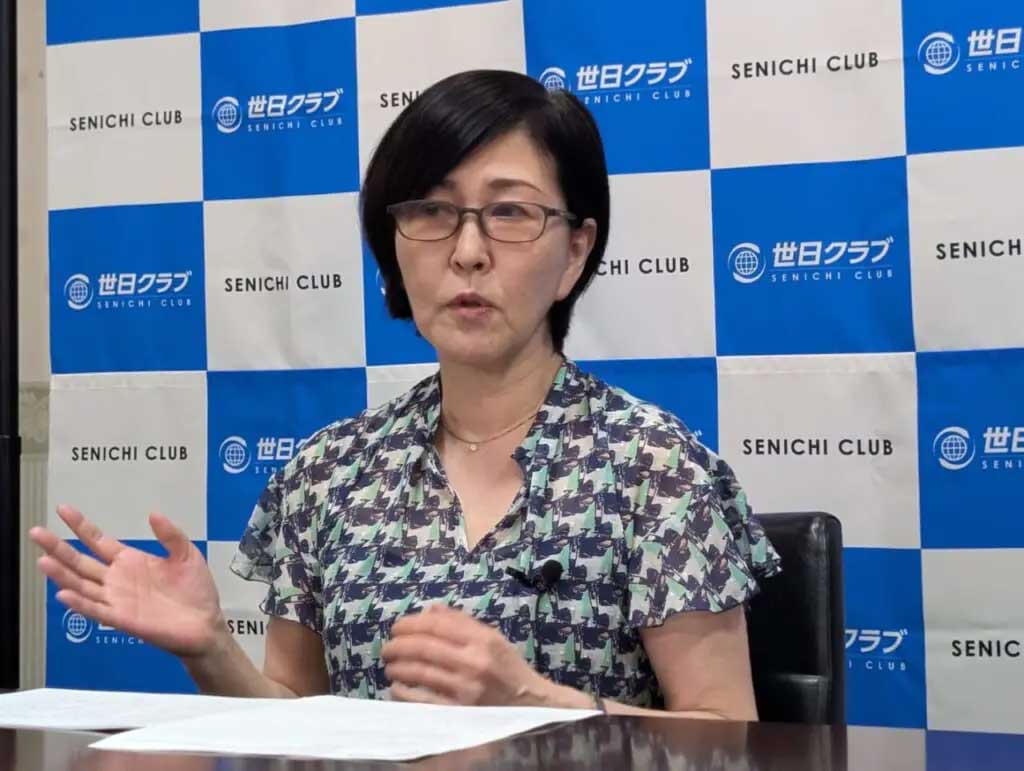
The regular lecture meeting of the “Seiron Nippo Club” (a group of Sekai Nippo readers) was held online on 21st June. Nonfiction writer Masumi Fukuda gave a talk titled “The Grave Sins of the Mass Media and Today’s Witch Hunts – In Conjunction with the Release of the Film Fabrication.” She argued that a key reason a teacher in Fukuoka City was falsely branded a “murderous teacher” by the public, despite being innocent, was the media’s early presumptive reporting. She also criticized coverage of the Family Federation for World Peace and Unification (formerly the Unification Church), likening it to this case, saying the media “demonized” the federation in a biased manner. She warned about the dangers of journalism, saying, “The media has now become the first power.” [See editor’s note below]
Below is a summary of her talk: I am single and have no children, so I wasn’t originally interested in school-related topics. The trigger was an article in Weekly Bunshun titled “Shall I Teach You How to Die?”: The Worst ‘Murderous Teacher’ in History Threatened a Pupil.
I was shocked by the headline. The article published the teacher’s real name, face photo, even photos of his home and school. It said the teacher committed abusive punishment due to racial prejudice and that the child had been diagnosed with PTSD.
An editor at Shinchosha asked me to follow up. I was reluctant but began investigating. While interviewing people near the school, one mother in a park said, “That parent is just after money. They’re exaggerating mild discipline.”
A girl who had the accused teacher in third grade said, “He never physically punished us.” A boy who knew the allegedly abused child through after-school care even called the child a “bad kid”.
Perplexed, I visited the teacher’s home. He agreed to talk. He had originally stayed silent at the principal’s instruction to leave it to the administration. But that led to a one-sided media trial painting him as a villain. From his words and demeanor, he did not seem like someone telling lies.
I asked why he apologized despite being innocent. He said, “Teachers and parents are not equals. The teacher must step back, or things won’t go well.”
That left a strong impression. The principal and vice principal, confronted daily by the student’s parent, accepted their claims without verifying with the class and told the teacher, “There was corporal punishment, right? Apologize!”
The teacher did, hoping to calm things down. Just one day of reporting made it clear how different the media narrative was from reality.
But the parent’s relentless accusations, the principal’s vague stance, and the media frenzy led the Board of Education to suspend the teacher for six months without hearing his side. Before he knew it, he was branded a “murderous teacher.”
When many people later realized the whole thing was fabricated, I asked a Nishinippon Shimbun reporter why they had believed the teacher was guilty. They said it was because the Board of Education had disciplined him and a psychiatrist at Kurume University Hospital diagnosed the child with severe PTSD.
But both the Board and the psychiatrist were likely pressured by the media’s excessive coverage. The media distorted the truth.
The child’s parent even filed a lawsuit. But what’s strange is why they didn’t report it to the police and make it a criminal case if it were truly abuse. They never did. In court, lie after lie from the parent was exposed. However, in the first trial and appeal, the fact that a public agency (the Board) had punished the teacher heavily influenced the ruling, and he lost.
Eventually, the teacher appealed to Fukuoka City. Ten years later, the city accepted the appeal, officially clearing him of wrongdoing. The film version dramatizes some parts, but for the teacher and his family, it must have been a living hell.
In cases of bullying at school, the media tends to demonize the school and teachers, jumping to conclusions in their reporting. When a child dies by suicide, the parents enter a kind of “invincible” status – if they speak publicly, including showing their face and name, the media takes it at face value. It becomes taboo to doubt them.
In truth, the causes of suicide are often complex. But the media simplifies it, portraying the situation as someone bullied the child, and the teacher failed to intervene. Schools are prevented from suggesting that home life may have played a role.
Magazine reporters routinely publish “jump articles” with little verification when writing about schools. That’s because schools and teachers rarely protest. The same pattern is seen in coverage of the Family Federation. From the start, the media created a storyline and “demonized” the organization.
When I asked newspaper and TV reporters why they don’t cover the abductions and forced de-conversions of Family Federation believers, they said they fear backlash from readers or viewers if they report anything remotely favorable to the Family Federation. But the public’s negative image of the religious organization stems from the media itself – a negative feedback loop.
At a press conference, an Asahi Shimbun reporter persistently demanded the Family Federation’s president apologize for the public uproar. But isn’t part of the blame with the media for its non-neutral, unfair reporting?
The media has now become the “first power” in society, and everyone is afraid of it.
Of course, the Family Federation also bears responsibility. Even when unfairly attacked, they didn’t respond or assert their side. This allowed unjust social stigma to stick.
Many of the anti-Family Federation books in bookstores are filled with inaccuracies. They should have protested each one. Instead of turning their backs on society in defeat, they should have made greater efforts to be understood.
What saddens me is that testimonies from ex-members who had been abducted and confined were used as grounds for the request for a court order to dissolve the religious organization. Of course, I have heard that even when the Family Federation appealed to the police, nothing was done, and even when they appealed to the Ministry of Justice, it was no use – they were in a situation of shimensoka (四面楚歌 – being surrounded on all sides with no allies). However, they should have made their case to the wider society, asserted themselves and refuted accusations. Somewhere, the negative cycle had to be broken.
[Editor’s note: The headline is a twist on the traditional idea of the “Fourth Estate” (media), implying that the media has now become the most powerful authority, surpassing even the three branches of government.]
Featured image above: Masumi Fukuda (福田ますみ), born in 1956 in Yokohama, Kanagawa Prefecture. Graduate of Rikkyo University’s Faculty of Sociology. After working with specialist magazines and editorial productions, she became a freelance writer. She covers themes such as crime and Russia. Her books include Fabrication: The Truth About the “Murderous Teacher” Case in Fukuoka (Shinchosha), Stalin: A Family Portrait (Bungeishunju), Assassination Nation Russia, and Monster Mother (both from Shinchosha). Photo: Sekai Nippo