Japanese author and TV personality: Key questions ignored by media “increasingly desperate to chase ratings”
Tokyo, 2nd September 2024 – Published as the 23rd article in a series in the Japanese newspaper Sekai Nippo. Republished with permission. Translated from Japanese. Original article
Hikari Ota comes under fire for “defending a cult”
by the Religious Freedom Investigative Team of the editorial department of Sekai Nippo
prepared by Knut Holdhus
“TV has become obsessed with pursuing the connections between Liberal Democratic Party (LDP) members and the former Unification Church. I think TV has a bad habit of getting ‘overheated’ in one direction.”
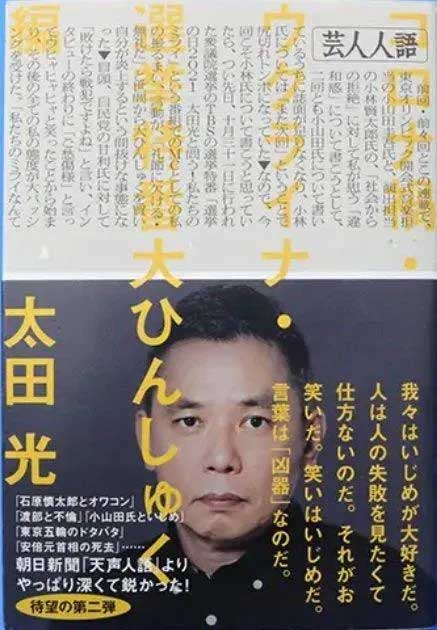
At the end of September 2022, Hikari Ota (太田光) from the comedy duo Bakusho Mondai published a book titled “Geinin Ningo: Corona Pandemic, Ukraine, and Election Special – The Great Displeasure Edition”. This 333-page book, which is quite thick to be a recent publication, was published by Asahi Shimbun and includes revised and expanded versions of his serialized essays from the literary monthly magazine “One Book” from December 2020 to August 2022. The opening words were written at the beginning of August in the afterword.
Hikari Ota serves as the MC for the Sunday morning current affairs variety show “Sunday Japon” (TBS), which discusses political and social issues. TV “wide shows” [Editor’s note: Japanese term for news and talk shows] have predominantly focused on criticizing the Family Federation for World Peace and Unification (formerly the Unification Church) over issues such as “spiritual sales” and high donations. Ota, on the other hand, often made statements that set him apart from other commentators, such as “No one can say that the teachings themselves are wrong.” However, other participants immediately refuted his comments. Additionally, on social media, he was criticized with comments like “He’s defending them!” and “Don’t put him on TV!”
For Ota, what matters most is not politics or religion, but “television”. This reflects his deep attachment to the medium. This is likely why, even though only a little over a month had passed since the assassination of former Prime Minister Shinzo Abe (安倍晋三), he was concerned about how television reporting was ‘overheating’ in one direction.
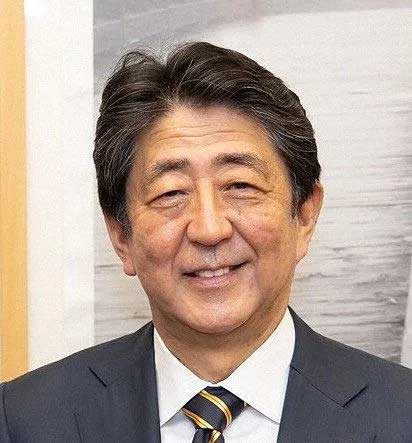
Immediately after the incident [Editor’s note: the assassination of Shinzo Abe], it was reported that the suspect, Tetsuya Yamagami (山上徹也), had told the police that his motive was “a grudge against the religious organization”. The media repeatedly criticized it, assuming that this grudge led to the assassination of Abe, who had sent a video message to an event related to the religious organization.
Regarding this media situation, Ota lamented in the afterword, “Is it really okay to base our understanding of the entire incident on fragments of statements we’ve heard and turn it into a discussion about ‘politics and religion’?”
It is unnatural for a grudge against the religious organization to be directed at Shinzo Abe, who was not a member. Moreover, it is said that the suspect’s mother made large donations to the organization and went bankrupt in 2002, which was 20 years ago when the suspect was 21 years old. If the motive for the crime was hatred towards the religious organization, too much time has passed. There is not only a distance between the assassination and the motive, but also a significant time gap between when the grudge was formed and the incident occurred. What happened to the suspect during this time?
There were some TV commentators who expressed how they felt uneasy about the gap between the fragmentary reports of the motive and the horrific crime that actually took place. However, this crucial question – a key to understanding the full scope of the incident – was pushed aside as the media, particularly on “wide shows”, became overly focused on criticizing the organization.
It’s not that the concept of “freedom of religion” didn’t cross the minds of the program producers. However, in the post-war social climate where being “non-religious” is considered the norm, there are likely few media professionals who have deeply considered the importance of faith. Moreover, the idea that infringing on ‘freedom of religion’ is a serious issue that shakes the very foundation of democracy may not have been fully considered.
With television struggling to maintain viewership in the face of competition from YouTube and other platforms, broadcasters have become increasingly desperate to chase ratings. This may have led to the overheated criticism of the religious organization.
In the afterword, Ota reveals an important fact when considering why “wide shows” have been biased against the Family Federation. He notes about his own show, which has been running for over 20 years, “I don’t recall ever covering the Unification Church before Abe’s assassination. Most of the younger staff don’t even know the name ‘Unification Church’.”
This situation is not limited to television staff but also extends to newspaper reporters and other journalists. As a result, program producers and reporters have relied on sources like lawyers who have long represented former members claiming damages from the religious organization, as well as activists like Eito Suzuki (鈴木エイト) and others who have opposed the organization. These individuals became regular guests on news and talk shows. Meanwhile, according to the Family Federation‘s Public Relations Department, Sunday Japon has not even once requested an appearance from them.
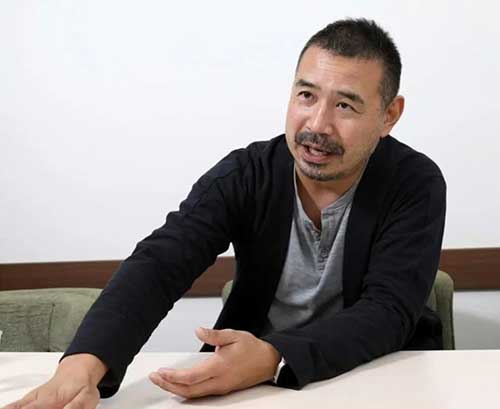
Regarding the media coverage of the Family Federation, nonfiction writer Masaki Kubota (窪田順生), author of “Infiltrating the Former Unification Church” (潜入 旧統一教会), points out that while it’s referred to as “reporting on the former Unification Church”, it has essentially become “reporting on ‘victims’”.
The media, which should protect freedom of religion, has instead become overly critical, crossing the line and spiraling out of control. This is how the situation has developed.
Click here to read more on Religious Persecution
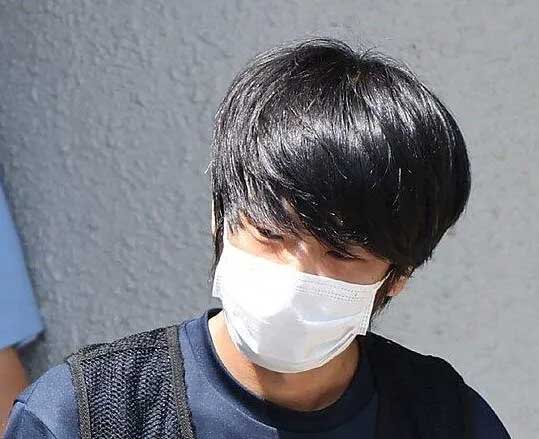
Featured image above: Tetsuya Yamagami, the man who killed Shinzo Abe, the former prime minister of Japan. Photo: Andrew2592009 / Wikimedia Commons. License: CC ASA 4.0 Int. Cropped