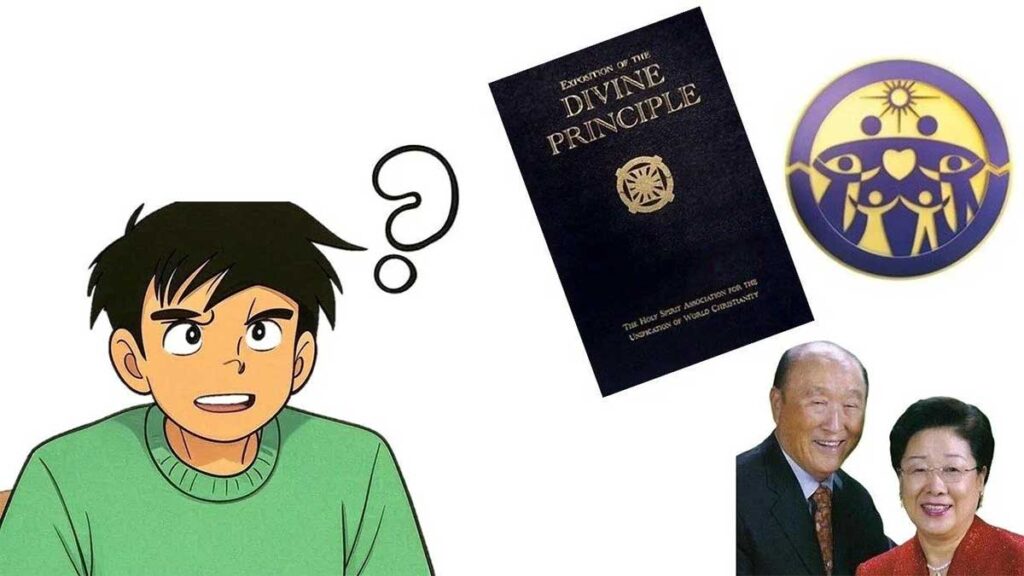
Rushed justice behind closed doors: Japanese scholar raises alarms on due process and religious rights as freedom of religion is undermined
Tokyo, 10th April 2025 – Published as an article in the Japanese newspaper Sekai Nippo. Republished with permission. Translated from Japanese. Original articles Part 1, Part 2, Part 3.
State Intervention as “Interference with Freedom of Religion”

by Tsuyoshi Toyoda (豊田 剛)
Prepared by Knut Holdhus
The Tokyo District Court recently issued a dissolution order for the Family Federation for World Peace and Unification (FFWPU, formerly the Unification Church). We spoke with religious scholar Toshihiro Ota (大田俊寛), who has studied the history of Western religious thought and “cult issues” like Aum Shinrikyo, about the legitimacy of this dissolution, the meaning of freedom of religion, and the issues with the Family Federation.
Interviewer: Tsuyoshi Toyoda (豊田 剛)
Questioning the process of resolving religious issues
– What are your thoughts on the Tokyo District Court’s decision to order the dissolution of the Family Federation?
Overall, my impression is: Why was there such a rush to complete the process? Freedom of religion is so vital that it’s often referred to as the “human right of human rights” and is deeply tied to the very purpose of the modern state.
I believe that a decision should have been made only after thoroughly examining the situation with as much transparency as possible and through repeated discussion and careful deliberation. If the decision is not convincing to many people – including Family Federation believers – it won’t lead to a true resolution of the issue and may leave future concerns unresolved. This decision might, in fact, backfire and lead to a broader and more complicated problem down the line.
– The court rendered its judgment behind closed doors and essentially assumed guilt. Was the process flawed?
Not just the trial – but also Prime Minister Fumio Kishida’s (岸田文雄) sudden reinterpretation of the law, the Agency for Cultural Affairs’ internal Religious Corporation Council deliberations, and the repeated use of the “right to question” – all of these steps were carried out in secrecy. I was honestly astonished by how little information was disclosed. As things stand, we’re not even in a position to verify whether the government’s actions were valid or rational.
The issues surrounding the Unification Church are extremely complex (multifaceted), but the government moved straight to a conclusion without thoroughly considering all aspects. That is deeply concerning.
Ideally, when dealing with religious issues, the state should first listen carefully to both victims and the religious group, issue appropriate recommendations for improvement, and if there’s no change, apply some form of monitoring or oversight. Only when the problems persist should a dissolution order be considered – with care and flexibility. Sadly, the Japanese government’s response this time seems to deviate significantly from that ideal.
– The court decision claims it does not prohibit or restrict freedom of religion. What’s your view on that?
As I mentioned in my book The Complete History of Monotheism, the modern concept of freedom of religion was first clearly defined by the 17th-century British philosopher John Locke in A Letter Concerning Toleration. In it, Locke argues that under normal conditions, the separation of church and state must be maintained, and the state should not intervene in religious matters. However, he also states that if public order is fundamentally threatened or citizens’ lives and property are at risk, the state must intervene in religious issues.
Naturally, when such intervention happens, some infringement on religious freedom is inevitable. Therefore, the state must be fully aware and prepared for this and ensure its intervention is both reasonable and minimal.
In the case of the Family Federation, interference with religious freedom had already occurred at the point the government began intervening. Despite that, the court’s verdict document states at its conclusion that the dissolution order was “not intended to infringe upon the spiritual or religious aspects of the religious corporation or its believers.”
From the perspective of someone who has studied the history of religious thought, this statement is difficult to accept. It feels like a surgeon saying, “I performed major surgery with a scalpel, but I didn’t harm the body or cause any pain.” It just doesn’t make sense.
Lowering the bar for the dissolution of religious corporations
– Do you think this court decision could affect other religious organizations?
According to modern state principles, targeting a specific religious group alone is unacceptable. The standards applied to the Family Federation must be equally applied to all religious organizations. That said, this particular dissolution order was clearly influenced by public outcry following the assassination of former Prime Minister Shinzo Abe (安倍晋三). So it’s unlikely that other religious groups will be immediately affected.
However, it’s undeniable that the government’s actions have significantly lowered the threshold for dissolving religious corporations, and the criteria for doing so have become less clear. It will be necessary to eventually disclose all the currently undisclosed procedural details and seriously reconsider whether the steps taken were truly appropriate and what approach should be followed in the future.
Negative image influencing the courts
– You’ve studied Aum Shinrikyo. From a religious studies perspective, what is the fundamental difference between Aum and the Family Federation (formerly Unification Church)?
Aum Shinrikyo and the Family Federation are fundamentally different religions, so it’s not easy to compare them directly. Aum was an exceptionally aggressive religion, to the point where it’s difficult to find comparable examples. Its founder harbored a destructive impulse and worshiped “Shiva”, the god of destruction. They preached a doctrine called “Vajrayana”, which interpreted murder as salvation. A select murder squad was formed within the group, and they killed not only external enemies but even fellow believers without hesitation.
I myself have not conducted detailed research on the Unification Church, so I can’t say much definitively. However, it doesn’t appear that Sun Myung Moon, its founder, had the same destructive tendencies as Asahara (Aum’s founder). If anything, Moon was a “dove-like” figure who aimed to transform the world into a utopia through peaceful means. There is a simplistic tendency to equate Aum and the Unification Church, but I cannot agree with that view.
There have been rumors that the International Federation for Victory Over Communism (IFVOC), one of the organizations affiliated with the Family Federation, operated a gun shop and may have had an armed group equipped with shotguns. I can’t verify these claims either. But at the time, the radical violence of far-left groups was more conspicuous, and perhaps the IFVOC felt compelled to defend itself in some way. These issues need accurate explanations from those directly involved; otherwise, they risk becoming hotbeds for conspiracy theories and excessive fear.
– What are the problems within the religious organization, and what needs to be improved?
As far as I understand, the main goal of the Unification Church is the “establishment of a Kingdom of Heaven on earth based on the Unification Principles”. From the 1960s to the 1990s, when Moon was actively preaching, there was a strong sense of urgency to realize this goal while the Lord of the Second Advent was still alive. Many followers pursued this mission with little regard for opposition from their families or society.
However, that zeal also led to problems, such as making excessive donations beyond their means, using “spiritual sales” tactics, solicitation under false identities, neglect of child-rearing, among others.
In recent years, the Family Federation has made PR efforts to improve its image. Yet I find it concerning that their core principle of building a “Kingdom of Heaven on Earth” is rarely discussed. Without explaining this theme thoroughly and engaging in frank discussions with the broader society, public understanding of the religious organization will remain shallow, and its overall image won’t change.
– The compliance declaration [See editor’s note 1 below] issued by the Family Federation in 2009 is said to have curbed excessive donations and “spiritual sales”, and lawsuits noticeably decreased. Yet the court’s impressions didn’t change.
The reforms of the religious organization had some effect, but they didn’t go far enough to fundamentally change the general image of the Family Federation.
One key reason is that reforms based on the compliance declaration [See editor’s note below] focused only on surface-level activities. There was no clear explanation of how core doctrines like “building the Kingdom of Heaven on earth”, “restoration of all things (all creation)”, or “conditions for indemnity (蕩減 – reparation, atonement, amends)” were reexamined or changed.
As a result, many Japanese continued to see the Family Federation as a group that tries to extract wealth from Japan (plunder Japan’s assets) to build a strange utopia centered on South Korea.
Even in the recent district court ruling, there were concerns that excessive donations might still be continuing post-compliance declaration [See editor’s note below].
While the religious organization has objected, pointing out that no concrete figures were shown for donation damages, I can understand the court’s concern.
The underlying tendency of the religious organization to raise funds for goals like the salvation of humanity and building a Kingdom of Heaven on earth may be temporarily suppressed, but has not fundamentally changed. This leaves believers continually exposed to potential donation pressure – a point that worries the general public.
Concerns of repeating past religious mistakes
– Large donations often accompany religious groups. From a religious studies point of view, what’s the issue here?
The relationship between religion and money is delicate and historically fraught. A classic example is the “indulgence” controversy in late medieval Christianity.
The Catholic Church, then extremely powerful, sold indulgences with claims that they could absolve sins or save ancestors from purgatory. This led to criticisms over whether salvation could be bought, sparking the Protestant Reformation and even religious wars.
While not directly equivalent, the Unification Church’s emphasis on human and financial power seems to echo some of these historical missteps. If a religion claims it will build a Kingdom of Heaven on earth using money, then naturally, people will expect concrete, visible results – and when these don’t materialize, believers will likely feel dissatisfaction.
Now that founder Sun Myung Moon has passed away (in 2012), and the early devout members are aging, it’s time to calmly reassess: was a Kingdom of Heaven on earth really built? Did this ideal ever have the power to truly improve reality?
The Unification Church has also tried to realize its ideals through ventures beyond religion – into politics, arts, academia, journalism, and business. It has established numerous affiliated organizations. Yet there is a serious lack of explanation about the nature, history, and relationship of these groups with the religious organization itself. I believe this is a factor that arouses suspicion and anxiety in the general public.
Expanding the deprogramming network
– Doesn’t the Tokyo District Court’s ruling to issue a dissolution order effectively legitimize violent acts by groups hostile to the Family Federation?
The district court’s decision to issue a dissolution order and its concerns about the Unification Church’s doctrine do not necessarily mean that the anti-Unification Church stance is justified. A major issue is the widespread use of forced de-conversion – known as “deprogramming” – through abduction, confinement, and even torture against Unification Church members.
This is thoroughly discussed in works like
- “Our Unpleasant Neighbor: The Tragedy of a Female Believer ‘Rescued’ from the Unification Church” by Kazuhiro Yonemoto (米本和広), and
- “Religious Persecution in Universities” and “The Dark Side of Japanese Religion – The Struggle Against Forced Renunciation of Faith” by Tadashi Muro (室生忠).
The international NGO “Human Rights Without Frontiers” also investigated this and published a report in 2012 titled “Japan: Abductions and confinement for the purpose of religious de-conversion”.
In Japan, it is said that the first person to carry out deprogramming of Unification Church members was Pastor Satoshi Moriyama (森山諭) of the United Church of Jesus Christ of Japan. Moriyama deemed the Unification Church a heresy and began vehemently refuting it.
From 1966 onward, with the help of family members of believers, he started confining believers in churches and coercing them to renounce their faith.
In 1967, an article titled “The Principle Movement That Makes Parents Cry” appeared in the Asahi Shimbun, which increased parental anxiety and led to a rise in consultations with pastors like Moriyama. This marked the beginning of a network of Christian pastors involved in deprogramming.
In the 1970s, as conflict between the International Federation for Victory over Communism (IFVOC) and leftist groups intensified, left-leaning politicians and intellectuals joined the anti-Unification Church movement.
By the 1980s, “spiritual sales” tactics became a serious problem, leading lawyers and media figures to launch campaigns against the church. Then in the 1990s, following the Aum Shinrikyo incident, public fear of “cult brainwashing and mind control” surged. As a result, theories of mind control were developed, and psychologists and religious scholars began “anti-cult” activities.
From the 1960s to the 1990s, the anti-Unification Church movement absorbed people from various fields while shifting its focus. Behind it all, repeated deprogrammings were carried out as a kind of “secret weapon against cults”. I call this network of relationships the “deprogramming network”.
– The district court adopted testimonies from former members who renounced their faith after being abducted and confined.
I’ve heard that many of the written statements submitted by the Ministry of Education (MEXT) came from people who were forced into donation lawsuits after being deprogrammed. In court cases in the UK involving the Unification Church, testimonies from people who had undergone deprogramming were treated with suspicion, and the courts instead ruled that the government’s actions were breaking the law. There is a significant difference from how Japanese courts have responded, particularly in whether the issue of deprogramming is being directly addressed.
What puzzles me is why Japanese authorities – such as the police and courts – do not treat deprogramming as a crime. In the West, deprogramming movements subsided precisely because they were prosecuted as crimes. Strangely, that did not happen in Japan.
“Private transport services” operated by former police officers
– Why didn’t deprogramming subside in Japan?
I suspect one major reason lies in the “peculiarities of Japan’s psychiatric care system”.
Historically in Japan, there was a custom of confining mentally ill individuals in so-called zashiki-ro (座敷牢 – prison cell in homes) [See editor’s note 2 below]. After World War II, this practice faded, but instead, many psychiatric hospitals were built, and the government pushed policies of institutionalization for mental illness. Japan has a system called “medical protection hospitalization”, which allows for involuntary hospitalization based on the judgment of a psychiatrist and the patient’s family – even if the person refuses. This system was often abused, leading to an enormous number of inpatients.
According to the book “Reportage: The Archipelago of Asylums – Questioning Japanese Psychiatry” by Naoki Kazama (風間直樹) and others, as of 2017, about 280,000 people were hospitalized in psychiatric institutions in Japan, with 340,000 psychiatric beds available – about one-fifth of the global total concentrated in a single country.
A business called “private transport services” developed to forcibly admit people to psychiatric hospitals, often operated by former police officers. Furthermore, not only psychiatric hospitals but also various mental rehabilitation centers, low-cost shelters, and retreat facilities run by so-called “extraction agents” (引き出し屋) [See editor’s note 3 below] reportedly functioned as places of confinement.
In my research into deprogramming of Unification Church members, I came to feel strongly that Japanese society has a kind of “backdoor solution” that involves solving the problem of so-called “disruptive individuals” through abduction and confinement – and that public authorities have supported this approach.
Going forward, we need to not only reexamine the issue of religious deprogramming but also look more broadly at the underlying problems in Japanese society that made it possible – and search for ways to reform them.
In a sense, the “Unification Church issue” is not just about a single religious organization. It could be seen as a convergence point for contradictions in postwar Japan across many sectors – politics, the judiciary, law enforcement, academia, and media. Regrettably, resolving these contradictions will likely take considerable time.
[Editor’s note 1: The 2009 compliance declaration of the Unification Church of Japan (now the Family Federation for World Peace and Unification) was a formal commitment by the organization to reform its practices in response to longstanding public criticism and legal challenges.
The Unification Church in Japan had faced numerous allegations related to recruitment tactics and donation solicitation, termed “spiritual sales” (霊感商法) by a hostile network of activist lawyers who had declared the religious organization an enemy. These issues led to multiple lawsuits orchestrated by the activist lawyers and significant media backlash. This prompted the organization to take measures to restore its reputation and demonstrate compliance with legal and ethical standards.
The religious organization pledged to stop possibly unethical donation practices, including what the hostile network of lawyers claimed amounted to “pressuring members into making large financial contributions under spiritual pretexts.”
This was in response to accusations from the same activist lawyers that followers “were being manipulated into giving away substantial amounts of money or property.”
The Unification Church stated it would enhance internal oversight to ensure compliance with ethical and legal standards. Measures included better training for leaders and stricter guidelines for evangelization and solicitation of donations.
After this compliance declaration, there was a significant decrease in the number of lawsuits against the Unification Church – since 2015 called the Family Federation. The religious organization has used this as evidence that it has improved its practices and should not be subject to dissolution.]
[Editor’s note 2: A zashiki-rō (座敷牢) is a traditional Japanese confinement room used historically for restraining individuals, typically within a private household. Zashiki (座敷) refers to a Japanese-style tatami-matted room. Rō (牢) means a jail or cell.
Historically, these rooms were used for confining family members who were mentally ill, violent, or otherwise considered disruptive or dangerous to the household or community. The practice was more common in the Edo (1603–1868) and Meiji (1868–1912) periods, before modern mental health care systems were established.
A Zashiki-rō was typically equipped with sturdy sliding doors reinforced with bars or locks, ensuring the person inside could not escape. It was located within a family home or a secluded part of the property, ensuring privacy. The confined individual was often left alone in this small, sparse room with minimal furnishings, and their basic needs were provided through a small opening or at designated times.
The term “zashiki-rō” today is often used metaphorically to describe situations of coercive confinement or control, as it evokes the idea of being trapped in a restrictive, oppressive environment. Such imagery is sometimes applied to cases of forcible detainment or isolation, like in the more than 4,300 instances of members of the Family Federation being abducted and confined.]
[Editor’s note 3: 引き出し屋 (hikidashi-ya) literally means “extraction specialists”; often refers to individuals or groups that forcibly remove people (often from new religious movements, what the same “specialists” call “cults”.)]
Toshihiro Ota (大田俊寛) – Born in 1974. Graduated from the Faculty of Sociology at Hitotsubashi University. Completed doctoral studies in Religious Studies and the History of Religion at the University of Tokyo’s Graduate School of Humanities and Sociology. Holds a Doctorate in Literature. Currently a part-time lecturer at Saitama University. Specializes in religious studies. Major works include “The Complete History of Monotheism” (Vol. 1 & 2, Kawade Shobo Shinsha), “The Thought of Gnosticism” (Shunjusha), and “The Spiritual History of Aum Shinrikyo” (Shunjusha).