Large report in Japanese magazine: Investigative journalist exposes how judges are swayed by media on a large scale in cases against the Family Federation
Prepared by Knut Holdhus
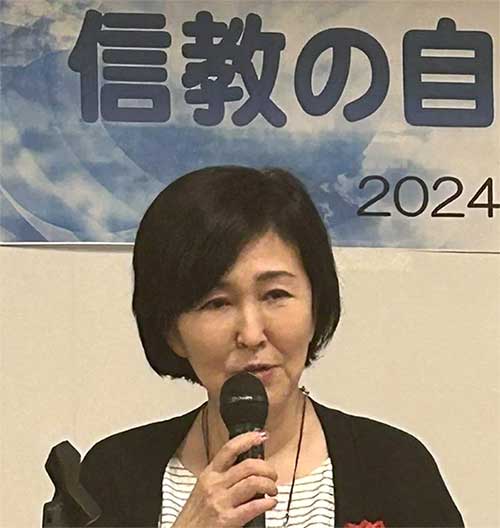
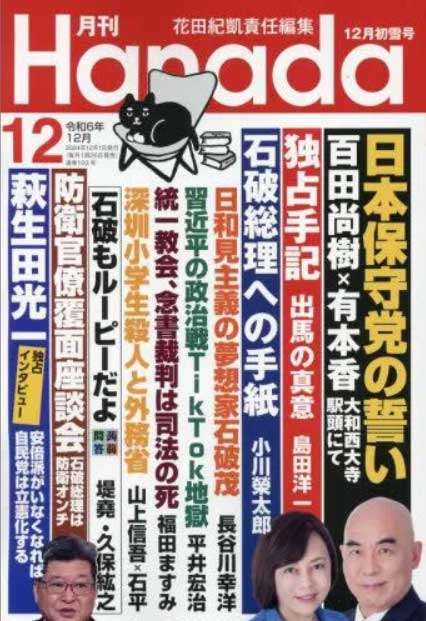
The Japanese magazine Monthly Hanada published in its December 2024 issue a critical examination of Japanese courts by award-winning Japanese author Masumi Fukuda (福田ますみ). She is known for her investigative journalism and exposes a judiciary swayed by external pressures, incapable of delivering impartial rulings based on evidence rather than societal biases.
She bases her analysis on a civil case about claims for damages against the Family Federation related to donations. The headline of the 10-page report (pp. 296-305) was “The Day Japan’s Judiciary Died – The Full Truth Behind the Former Unification Church Memorandum (念書) Trial”.
Judicial bias and media influence
Fukuda begins her article with two quotes from Attorney Yoshiro Ito (伊藤芳朗),
- “In civil lawsuits, there seems to be a framework in courts that says, ‘If it’s a cult, it loses.’”
- “Claims that would not normally be accepted in other cases are easily granted if the opposing party is a cult.”
This striking assertion, highlighting the apparent judicial bias in cases involving the Family Federation for World Peace and Unification (formerly the Unification Church), comes from Yoshiro Ito, a former member of the National Network of Lawyers Against Spiritual Sales, commonly referred to as the Nationwide Lawyers’ Network (Zenkoku benren).
Ito’s perspective shifted after he learned of numerous incidents where members of the Family Federation were abducted, confined, and coerced into renouncing their faith by faith-breakers, family members, and Christian pastors. Outraged by the deep involvement of the Nationwide Lawyers’ Network in such actions, Ito left the organization in 2005.
Subsequently, Ito took a stand as a plaintiff’s attorney in a civil lawsuit involving Toru Goto (後藤徹), who endured over 12 years of abduction and confinement. Ito’s testimony in court included the statements quoted above, shedding light on the systemic bias faced by the Family Federation.
As evidenced by numerous lawsuits, the federation faced repeated legal defeats, particularly in cases involving demands for monetary refunds. Court documents reveal that plaintiffs frequently alleged they were coerced into financial contributions through fear-based tactics – notably invoking “ancestral karma” and “the horrors of hell”. These claims were framed as “intimidation-induced false beliefs”.
Significantly, the legal representation for these plaintiffs was almost always provided by attorneys affiliated with the Nationwide Lawyers’ Network.
A lopsided burden of proof
Under normal circumstances, plaintiffs in such cases bear the burden of proof to substantiate their claims. However, these lawsuits were notable for the minimal evidence presented by plaintiffs. Despite this lack of substantiation, courts routinely ruled in their favor.
Ito’s observations underscore this pattern: “Claims that would not normally be accepted in other cases are easily granted if the opposing party is a cult.”
Masumi Fukuda explains, “To clarify, the Family Federation is not a cult. The term ‘cult’ lacks a clear definition and has historically been used to exclude ‘unpopular religions’. It is a discriminatory term that is no longer used by religious scholars in Europe and America.”
The fight for justice
Faced with these challenges, the Family Federation made concerted efforts to refute the allegations leveled against it. Accused members presented substantial evidence to counter the claims, though initial successes were rare.
Norishige Kondo (近藤 則重), Deputy Director of the federation’s Legal Affairs Bureau, described the uphill battle: “For example, on rare occasions, we feel that a presiding judge understands our arguments. This gives us hope for the outcome of the trial, but by the next hearing, that judge has been transferred – sometimes even outside of the usual spring transfer period. This has happened multiple times.”
Kondo also recounted an incident during a settlement discussion held in a court clerk’s office: “A witness overheard a presiding judge blurt out, ‘If I let the church win, I don’t know what the media will say about me.’ This clearly shows how excessively the courts are concerned about media and public opinion. While our church has been unjustly demonized by the media and the public, the courts seem to be swayed by this false image, operating under a compulsion to avoid rulings that might invite backlash against them for favoring the church.”
Despite these challenges, the Family Federation’s efforts were not entirely in vain. Kondo noted that prior to the assassination of former Prime Minister Shinzo Abe (安倍晋三) the situation began improving. On 20th July 2020, the federation’s success rate in lawsuits had risen to nearly 30%. Courts had begun to seriously consider the evidence presented and engage with the federation’s arguments.
A significant setback
However, the assassination of former Prime Minister Abe marked a significant setback. The Family Federation faced heightened backlash, exacerbated by a media-generated public outrage and intensified political scrutiny. The declaration by Prime Minister Fumio Kishida (岸田 文雄) to sever ties with the organization further compounded the situation, as did the government’s reinterpretation of the Religious Corporations Act to justify dissolution.
This chain of events culminated in the Ministry of Education, Culture, Sports, Science, and Technology’s request for a dissolution order against the religious organization. These actions effectively nullified the progress the Family Federation had achieved in the judicial arena, resetting their efforts to square one.
Conclusion
The memorandum trial against the federation reveals the complex interplay of media influence, public sentiment, and judicial decision-making. While the religious organization has made strides in advocating for fair treatment in the courts, the assassination of former Prime Minister Abe reignited widespread hostility, further complicating their struggle for justice. The trial’s legacy underscores the need for a judiciary free from external pressures, capable of delivering impartial rulings based on evidence rather than societal biases.
Featured image above: Masumi Fukuda delivering a speech on 23rd September 2024 in Chuo Ward, Chiba City, Japan. Photo: Tsuyoshi Toyoda (豊田剛)