[Communism That Erased God—Sang Hun Lee’s Ideological Journey and the Path to Human Liberation] ① A Young Man Who Sought to Reclaim His Homeland
By Jeong Seong-soo (Specialist in Religion)
This article was originally published in Korean in Segye Times, a major South Korean daily newspaper, under the column series “The Great Epic of the Korean People.” [Click here to view the original article.]
The Passion for National Liberation Turns Toward Communism
Looking back today from the first half of the 21st century, the 20th century was an era in which Communism captivated humanity most intensely. Communism promised an ideal society free from exploitation and inequality, where everyone could live freely and abundantly. In reality, however, it ended up suppressing human freedom and concentrating power in the state and party. In North Korea, it reached the point of placing a single ruler—the Suryeong (Supreme Leader)—in the position of the Absolute Being and idolizing him.
Dr. Sang Hun Lee (1914–1997), a medical doctor and the thinker who systematized Unification Thought, traced the deeper root of this failure to Communism’s philosophical starting point: its denial of God. To him, God was not merely an object of religious faith. God was the ultimate Origin who brought humanity and nature into existence, the starting point of love and conscience, and the very foundation of human dignity that neither state nor party could violate. Communism promised human liberation, but by defining human beings strictly through materialism and class struggles, it lost sight of that origin. His critique was that an ideology erasing God ultimately deprives humanity of its freedom and dignity.
Eventually, starting in 1989, communist regimes across Eastern Europe collapsed in succession, and in 1991, the Soviet Union was dissolved. However, Communism has not completely vanished from the earth. One-party ruling systems under communist lines persist in nations such as China, Vietnam, Laos, North Korea, and Cuba, representing nearly one-fifth of the world’s population. Even in free democratic societies, issues of inequality and alienation remain unresolved. While these problems must not be ignored, solutions should not be sought by turning the entire wealthy class into enemies or using state power to suppress individual liberty. Korea, too, must examine whether state power is excessively restricting individual freedom under the guise of public interest and reform. Retracing the history of an ideology that promised human liberation yet suppressed humanity ensures that no ideology or power ever reigns supreme over human beings. To find a path toward solving inequality and alienation while safeguarding both freedom and equality, we need to reexamine the promises and failures of Communism at this point in time.
“Communism That Erased God” is a serialized series based on the lectures, writings, papers, and testimonies of Sang Hun Lee. Rather than staying at the level of criticizing past failures, this series is an endeavor to seek a future human society where freedom and dignity are guaranteed, and where humanity lives together in love and responsibility. It retraces how Communism emerged to captivate humanity and through what process it transformed into a system that oppresses human beings. Furthermore, it aims to explore Unification Thought—presented by Sang Hun Lee as the alternative to Communism—and seek a path to restore human freedom, dignity, responsibility, and love based on Godism (Headwing Thought). Restoring God means establishing a social order where humans are not treated as tools for power and gain, but where people and nature are treated according to love and conscience, upholding the sacred dignity of humanity. (Editor)
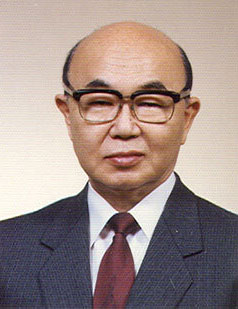
◼ Who Is Sang Hun Lee?
Sang Hun Lee was a medical doctor and a thinker who criticized communist theory and systematized Unification Thought as its alternative. Born in Jeongpyeong, South Hamgyong Province, he participated in the nationwide expansion of the Gwangju Student Independence Movement in 1929 while attending Hamhung High School. Due to his involvement in left-wing movements, he was expelled twice, from both Hamhung High School and Whimoon High School. Later, he graduated from Bosung High School and entered Severance Medical College (now Yonsei University College of Medicine) in 1936 to pursue medicine.
Though he once embraced Communism as the ideology to achieve national liberation, he grew skeptical when its philosophical foundation—materialism—failed to explain the source of love for one’s nation, humanity, love itself, and conscience. While exploring Christianity and philosophy, he encountered the teachings of Reverend Sun Myung Moon in 1956. Subsequently, he served as the founding president of the Unification Thought Institute, systematizing these teachings into Unification Thought—a comprehensive system covering humanity, the world, history, and society. Through Unification Thought, he sought an alternative to Communism and presented a direction for a new society based on Godism and Co-existence, Co-prosperity, and Co-righteousness. His written works include A New Critique of Communism, Critique of Kim Il-sung’s Juche Thought, The End of Communism, and Essentials of Unification Thought.
Anti-Japanese Spirit Inherited from His Father
During the Japanese colonial period, a young boy was caught by the Japanese police and subjected to severe torture. He was expelled from school twice. Nevertheless, he did not stop his anti-Japanese movement. Fighting against Japan, he prepared himself to die under torture around the age of 25 or 26. He even beat his own body with a club to test how much torture he could endure. That young man was Sang Hun Lee, the founding president of the Unification Thought Institute, who later devoted his entire life to the critique of Communism and the systematization of Unification Thought.
Sang Hun Lee threw himself into the communist movement believing that communist ideology was the path to national liberation. If one overlooks this period knowing only that he criticized Communism, one misses the most critical half of his ideological journey. He was not someone who viewed Communism from the outside; he entered directly into it, immersed himself in studying its theories, acted upon them, and only then questioned them from within before turning away.
Born in 1914 in Hwadong-ri, Sin-sang-myeon, Jeongpyeong-gun, South Hamgyong Province, as the third son of Confucian scholar Lee Su-yeong, Sang Hun Lee received a strong nationalistic education from his father from an early age. His father, a Confucian scholar, had participated in the March 1st Movement and suffered in prison after being arrested by the Japanese police. Upon his release from prison, his father shared with his young son the sorrow of Japan’s aggression and the loss of national sovereignty. His father’s anger and deep grief naturally seeped into the boy’s heart. In his own words, Sang Hun Lee grew into a youth whose mind was “hardened with anti-Japanese sentiment” from childhood.
In November 1929, the Gwangju Student Movement broke out. The students’ anti-Japanese struggle that began in Gwangju spread nationwide by the following spring. At that time, Sang Hun Lee, a first-year student at Hamhung High School, joined this expanding nationwide anti-Japanese student movement. He joined a secret student organization, distributed manifestos, and participated in street demonstrations. Although Japanese police patrolled the streets mounted on horses with swords drawn, they could not easily stop the students’ fierce resistance.
At the time, both nationalist and communist factions were behind the student movement. However, it was difficult for young students to distinguish clearly between the two. Both factions strongly opposed Japanese imperialism and called for the liberation of Korea. In Sang Hun Lee’s eyes, the communists appeared to possess far stronger organizational power than the nationalists. Communism even carried a democratic nuance and at times felt like an ideology more patriotic than nationalism. Fighting to reclaim the homeland and fighting for Communism did not seem like two separate paths.
Thus, he gradually became immersed in the sphere of influence of communist organizations. He eagerly read related books and learned about the flaws and inequalities of capitalist society. Communism’s theoretical explanation of a reality where the wealthy held the lion’s share while poor workers suffered deeply captivated the heart of this young man burning with a sense of justice. It was an era dominated by Japanese colonial rule, severe poverty, discrimination, and oppression. To him, Communism came as a promise that could liberate the nation, rescue the oppressed, and fundamentally transform an unjust world.
Communism did not emerge out of nowhere overnight. While individual freedom and private property rights expanded in modern society, issues such as a widening gap between rich and poor, fierce competition, and the dissolution of traditional communities also intensified. Communism sprouted out of a stream of thought seeking to criticize this reality and find an alternative.
In the 18th century, Geneva-born thinker Jean-Jacques Rousseau criticized private property and civilization for undermining humanity’s inherent freedom and equality. Following the Industrial Revolution, various socialist ideas emerged aimed at resolving worker poverty and exploitation.
In today’s society, terms such as the left wing, socialism, and communism are often used interchangeably, but it is necessary to distinguish among them. The left wing is a broad political category emphasizing equality and social reform. Socialism is a major ideology within that category that seeks to reduce economic inequality through the social ownership or control of the means of production. Communism is a revolutionary branch of socialism aimed at the total abolition of private ownership of the means of production and class distinctions. Therefore, while communists generally fall under the left wing, not all leftists or socialists are communists.
A distinction must also be made between states that adopt socialism as an official ideology and those that implement social-democratic policies. Nations like China, Vietnam, Laos, Cuba, and North Korea maintain socialist systems centered on the Communist Party or Workers’ Party. Conversely, countries like Sweden, Denmark, Norway, and Finland combine democracy and a capitalist market economy with high taxation and robust welfare systems. A nation cannot be classified into the same category as communist states simply because it implements welfare policies. When evaluating any system, however, one must examine not only its goals of equality or welfare, but also whether it safeguards individual freedom and rights while preventing the monopoly of power.
Karl Marx, often called the “father of communism,” systematized modern communist theory by combining his critique of the rich-poor divide and worker exploitation with materialism—the ideological foundation of communism—and a view of history based on class struggle. He believed that human consciousness and social institutions are governed by material relations of production, and that history progresses through the struggle between ruling and ruled classes. He argued that as capitalism collapses under its internal contradictions and the working class seizes power, society will pass through socialism to eventually reach a communist society where classes and the state completely disappear. To young people enraged by an unequal reality, Communism was far more than an economic theory or an ideal; it was a grand ideological system explaining the world, history, and the path of revolution as one unified whole.
Meeting Communism on the Path to National Liberation
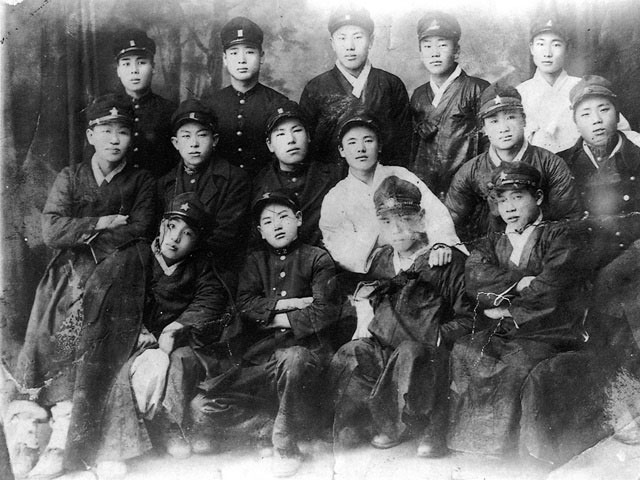
Sang Hun Lee grew increasingly militant in his struggle. Expelled from Hamhung High School, he transferred the following year to Whimoon High School in Wonseo-dong, Seoul. There, too, he participated in left-wing movements and was expelled once again. He was arrested several times, detained in holding cells, and subjected to harsh torture. His name was placed on the Japanese police surveillance list. When he boarded in Seoul, detectives barged into his room unannounced once or twice a week, searching through his desk and wardrobe. Even in his absence, they raided his room claiming to look for seditious literature.
After being expelled from Whimoon High School, he moved to Bosung High School in Hyehwa-dong, Seoul, to continue his studies. Bosung High School, his third school, was an institution with a strong nationalist tradition that opened its doors even to students expelled from other schools. Although Sang Hun Lee was arrested there as well for his anti-Japanese activities and spent several months in holding cells, he was finally able to graduate. Subsequently, in 1936, he entered Severance Medical College (now Yonsei University College of Medicine).
Sang Hun Lee recalled that the driving force behind him at the time was love for his nation and love for humanity. Phrases like “fighting and dying for the nation” and “dying for humanity” made his heart burn with zeal. He endured hunger and did not fear prison. Desiring no reward whatsoever, he prioritized the independence of his homeland and the liberation of suffering people over his own life. To him, sacrifice did not mean pain alone. While struggling alongside his comrades, he felt a intense sense of joy and fulfillment.
The Communism he embraced viewed matter prior to human mind and spirit. According to Marxist materialism, matter is an objective reality existing independently of human consciousness, while spirit and consciousness are phenomena that emerged as matter reached an advanced state of development. Human thoughts and feelings cannot exist apart from this material foundation. What one eats, how one works, and within what relations of production one lives shape human consciousness and social institutions.
This perspective exerted a powerful appeal on the youth of that era. Rather than attributing hunger and exploitation to individual laziness or fate, it explained them as systemic problems of social structure. Instead of telling the impoverished to endure and suffer, Communism urged them to transform the property relations and class structures that produced poverty. To the suffering populace, materialism was more than a philosophical trend—it was a sharp weapon for analyzing reality and transforming the world.
This longing could also be glimpsed in public opinion following Liberation. In a 1946 public opinion survey conducted by the U.S. Army Military Government in Korea (USAMGIK), 70% of respondents answered that they preferred socialism. That choice reflected their hope to overturn the colonial economic order and resolve poverty and inequality.
To Be Continued …