Japanese physician recounts his harrowing ordeal at the hands of unscrupulous faith-breakers in prison-like set-ups
Tokyo, 13th January 2025 – Published as an article in the Japanese newspaper Sekai Nippo. Republished with permission. Translated from Japanese. Original article.
Panel Exhibition Highlights Forced Renunciation of Faith in Prison-Like Conditions
by the editorial department of Sekai Nippo
Prepared by Knut Holdhus
Christian pastors and activists opposed to the Family Federation for World Peace and Unification (FFWPU, formerly the Unification Church) have stirred up fear among the families of members of the religious organization and forced members to renounce their faith, often involving abduction and confinement of believers. A panel exhibition organized by the “North Tama District Association for the Protection of Freedom of Religion and Fundamental Human Rights”, was held on 11th and 12th January in Tokyo exposing the realities of the harm caused to kidnapped members.
The exhibition featured panels detailing incidents where churches were attacked with stun guns and iron pipes to abduct members, cases of forced psychiatric hospitalizations, and other abuses. It also showcased a confinement manual compiled by Christian pastors known as “faith-breakers”, who advised families on forcing believers to renounce their faith.
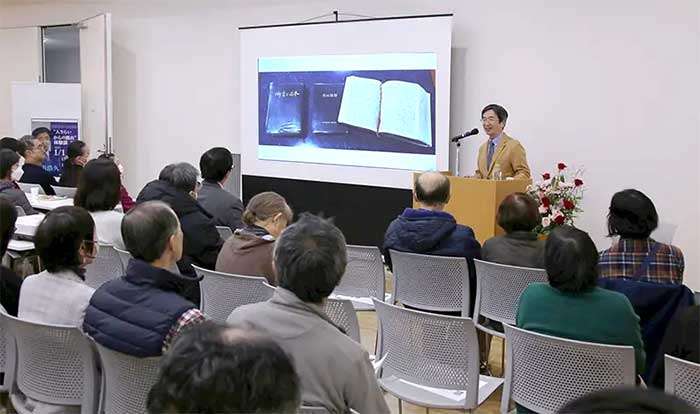
Additionally, Dr. Hirohisa Koide (小出浩久), who was confined for over a year, gave a lecture at the exhibition. He testified, “I was locked up in a Japanese-style room resembling a zashiki-rō (a type of confinement room, (see editor’s note below) from morning until night. Although the confinement locations changed, they all felt the same.”
He also recounted conversations with former members of the religious organization who said, “I can’t let go of anti-Unification Church books to avoid being drawn back into the organization.”
Dr. Koide expressed his hope, saying, “I wish people could have the opportunity to be honest with themselves and recover their faith.”
[Editor’s note: A zashiki-rō (座敷牢) is a traditional Japanese confinement room used historically for restraining individuals, typically within a private household. Zashiki (座敷) refers to a Japanese-style tatami-matted room. Rō (牢) means a jail or cell.
Historically, these rooms were used for confining family members who were mentally ill, violent, or otherwise considered disruptive or dangerous to the household or community. The practice was more common in the Edo (1603–1868) and Meiji (1868–1912) periods, before modern mental health care systems were established.
A Zashiki-rō was typically equipped with sturdy sliding doors reinforced with bars or locks, ensuring the person inside could not escape. It was located within a family home or a secluded part of the property, ensuring privacy. The confined individual was often left alone in this small, sparse room with minimal furnishings, and their basic needs were provided through a small opening or at designated times.
The term “zashiki-rō” today is often used metaphorically to describe situations of coercive confinement or control, as it evokes the idea of being trapped in a restrictive, oppressive environment. Such imagery is sometimes applied to cases of forced detainment or isolation, like in the more than 4,300 instances of members of the Family Federation being abducted and confined.]
Featured image above: 11th January 2025, Suginami Ward, Tokyo, Dr. Hirohisa Koide (小出浩久), a physician, talks about his experience of being abducted and confined. Photo: Reiwa Kato (加藤玲和).