Brewing huge scandal involving Japanese judges and authorities exposed by investigative journalists shocked by the partiality of the judiciary in the Supreme court handling of the civil case against the Family Federation
Prepared by Knut Holdhus
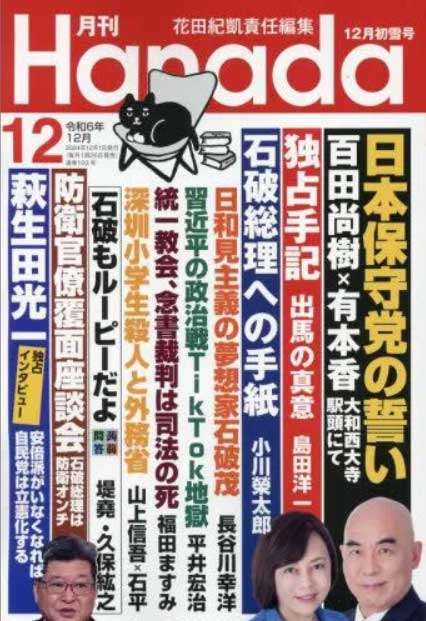
In a large 10-page report published in the December 2024 issue of the Japanese magazine Monthly Hanada, investigative journalist and award-winning author Masumi Fukuda (福田ますみ), highlights a civil case fought by hostile lawyers against the Family Federation in Japan. She exposes how the witch hunt against the religious minority after the July 2022 assassination of former Prime Minister Shinzo Abe has swayed the legal institutions of Japan to issue verdicts that always are sympathetic to the arguments of hostile anti-Family Federation activists and disregard evidence presented by the persecuted minority.
Fukuda’s extensive report was headlined “The Day Japan’s Judiciary Died – The Full Truth Behind the Former Unification Church Memorandum (念書) Trial”.
The Impact of the Abe Assassination on Japan’s Judiciary and Society
The investigative journalist describes how the assassination of former Prime Minister Shinzo Abe in 2022 reverberated across Japan, reshaping political, social, and judicial dynamics. A striking example is the Supreme Court’s ruling in a high-profile “memorandum trial” involving the Family Federation for World Peace and Unification (formerly the Unification Church), where political, media, and public pressures seemingly influenced judicial impartiality. This regression in judicial independence mirrors South Korea’s “emotional public sentiment law”.
[Editor’s note: South Korea’s “emotional public sentiment law” is not an official legal term or codified piece of legislation. Instead, it is often used metaphorically to describe situations where public sentiment, emotions, or popular opinion exert a strong influence on legal and judicial decisions, potentially overriding objective legal principles or evidence. This term reflects concerns that high-profile cases in South Korea sometimes involve significant public outcry or media pressure, which can lead to verdicts being swayed by societal emotions rather than strict adherence to the law.
The idea stems from instances where widespread public outrage or media campaigns influence prosecutors, judges, or lawmakers to take actions aligned with popular sentiment. Critics argue that such influence undermines judicial independence and can lead to verdicts or rulings that prioritize appeasing public emotions over upholding legal standards. In South Korea, controversial cases involving celebrities, politicians, or high-profile crimes often attract immense public and media attention. Cases such as child abuse or violent crimes have seen calls for harsher sentences due to public outrage, potentially impacting judicial outcomes.
The concept is relevant in discussions about balancing public accountability and maintaining the impartiality of legal institutions. There is a concern that Japan’s judicial processes, like South Korea’s perceived challenges, might be overly influenced by societal and media-driven emotional narratives.]
The Supreme Court’s Memorandum Ruling
On July 11, 2024, Japan’s Supreme Court invalidated a notarized pledge (memorandum) created by an elderly member of the Family Federation, sparking public and legal controversy. The plaintiff – a woman and her late mother – had sued the federation for 180 million yen, alleging coercive solicitation of donations. While lower courts dismissed the claims based on the pledge’s validity, the Supreme Court’s reversal ruled the memorandum exploitative, violating public order and morals.
Masumi Fukuda explains how the ruling marked a precedent for scrutinizing solicitation practices of religious organizations, framed against the “witch hunt” of the Family Federation following Abe’s assassination.
Case Background and Donations
The case centers on Hitomi Sugita (pseudonym), an elderly believer who joined the Family Federation through her third daughter and donated over 150 million yen to support the religious organization’s peace initiatives.
Masumi Fukuda writes, “Sugita became acquainted with the teachings of the Family Federation through her third daughter, also a member, and eventually joined the faith herself. She was deeply moved by the contributions of the founder, Sun Myung Moon, to world peace and aspired to live a similar life. This led her to make substantial donations to the church.
Sugita often spoke passionately about Sun Myung Moon, saying, ‘There’s no one as extraordinary as him.’ However, she later became a plaintiff alongside her eldest daughter, Iwata, in a lawsuit against the church and its members. It appears this was due to her inability to oppose Iwata, who was described as being ‘obsessed’ with reclaiming the donations her mother had made – a sentiment Sugita herself allegedly likened to that of a ‘demon’.”
Her financial contributions stemmed from a compensation payment for repurposed land. Sugita had spoken with passion about her faith and Reverend Sun Myung Moon’s teachings. However, verbal hostility from her eldest daughter Kyoko Iwata (pseudonym) against the federation – largely echoing negative claims made by faith-breakers and activist lawyers – led Sugita to draft a notarized pledge affirming her voluntary donations and relinquishing any future claims against the federation.
In 2017, Sugita and Iwata sued the church for damages. Despite Sugita’s notarized affirmation, Iwata isolated her mother, obtained legal guardianship based on an Alzheimer’s diagnosis, and contested the federation’s practices as manipulative. Lower courts upheld Sugita’s pledge (memorandum), but the Supreme Court’s later ruling deemed it invalid.
Memorandum Context
Sugita created the memorandum in 2015 to defuse tensions with her family. At a notary public’s office on 2nd November 2015, she affirmed her voluntary donations, even recording a video to confirm her intentions. Despite these steps, Iwata’s subsequent actions – isolating Sugita, alleging diminished mental capacity, and petitioning for guardianship – raised questions about manipulation and coercion.
Alzheimer’s Diagnosis and Isolation
In 2016, a controversial Alzheimer’s diagnosis stated Sugita could not perform basic calculations, paving the way for Iwata’s guardianship. However, Sugita later displayed logical coherence and emotional clarity during a meeting with her third daughter. She expressed joy, reaffirmed her faith, and refuted allegations of coercion. Audio recordings contradicted claims in a subsequent document – purportedly written by Sugita – that denied her earlier statements. The discrepancies cast doubt on the authenticity of the diagnosis and Iwata’s intentions.
Supreme Court’s Overturning of Lower Court Rulings
The Supreme Court’s judgment invalidated the memorandum on grounds that Sugita, under the “psychological influence” of the Family Federation, could not make rational decisions. The court concluded that the pledge unfairly restricted her ability to seek redress and criticized the federation’s solicitation methods as exploitative.
Masumi Fukuda writes that critics, including the Family Federation, argue this ruling undermines religious freedom and mischaracterizes faith-driven donations as coercive. Donations, they assert, are a longstanding religious practice, voluntary acts of faith seen in traditions worldwide. The court’s framing of Sugita as “psychologically influenced” echoes the discredited concept of “mind control”, further raising concerns about judicial bias influenced by activist lawyers, media narratives, and public sentiment.
Family Federation’s Defense
The Family Federation contended that:
- Sugita made donations freely, with full mental capacity.
- The notarized pledge was created voluntarily, under legal scrutiny by a notary public.
- Iwata manipulated the legal process to isolate Sugita, exploiting her guardianship to reclaim funds contrary to Sugita’s wishes.
Audio evidence and notarized documents supported their claims, but the Supreme Court’s ruling dismissed these defenses, prioritizing allegations of undue influence and coercion.
Public Sentiment and Media Influence
The assassination of Abe drew attention to the Family Federation due to his alleged ties with the group. Media coverage amplified scrutiny of the organization’s practices, casting a shadow over the judiciary’s independence. The court’s decision appeared to align with public outcry rather than legal precedents, eroding trust in the impartiality of Japan’s legal system.
Contradictions and Ethical Questions
Several contradictions highlight the complexity of the case:
- Cognitive abilities: Despite the Alzheimer’s diagnosis, Sugita demonstrated mental acuity in interactions with her third daughter, contradicting claims of incapacity.
- Conflicting documents: Sugita’s notarized pledge and recorded statements refuted allegations of coercion, while subsequent documents appeared to be manipulated by Iwata.
- Religious freedom vs. exploitation: The court’s ruling challenges the boundary between protecting individuals from exploitation and respecting their religious autonomy.
Legal and Societal Implications
Masumi Fukuda explains that the ruling sets a controversial precedent, potentially enabling lawsuits against religious donations and undermining notarized agreements’ legal reliability. Critics fear it disregards the personal agency of believers, conflating faith-based actions with coercion. The Family Federation’s argument – that such rulings foster distrust in the judicial system and infringe on religious rights – echoes broader concerns about the role of public sentiment in shaping legal outcomes.
A Cultural Perspective on Donations
In many cultures, large religious donations are viewed as virtuous expressions of faith. Sociologists and religious leaders argue that framing such acts as irrational diminishes their spiritual significance. The Supreme Court’s decision challenges this perspective, suggesting Japan’s judiciary struggles to balance secular law with religious practices.
Conclusion
The Abe assassination catalyzed profound societal and judicial shifts in Japan, exemplified by the Supreme Court’s memorandum ruling. This case underscores the tensions between public sentiment, judicial independence, and religious freedom, raising critical questions about the judiciary’s role in a rapidly evolving sociopolitical landscape. As debates continue, the implications for Japan’s legal system and religious liberties remain far-reaching and deeply contentious.
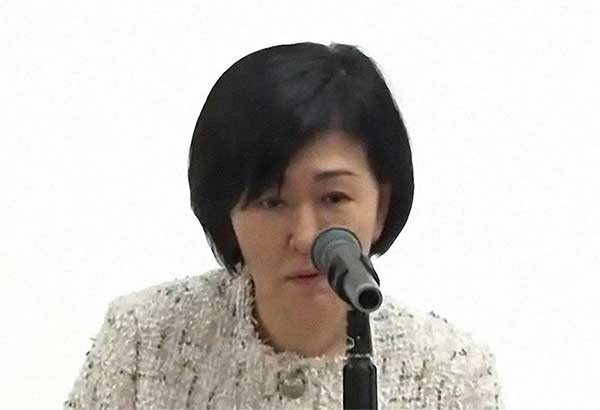
Featured image above: Masumi Fukuda speaking at a conference in Japan on 25th December 2024. Photo: Screenshot from transmission by FFWPU