Young Japanese man tells how he went from being a rebellious and troubled teen to finding a deep faith that can help others
Tokyo, 14th October 2024 – Published as the 33rd article in a series in the Japanese newspaper Sekai Nippo. Republished with permission. Translated from Japanese. Original article
From Troubled Teen to Church Leader
by the Religious Freedom Investigative Team of the editorial department of Sekai Nippo
prepared by Knut Holdhus
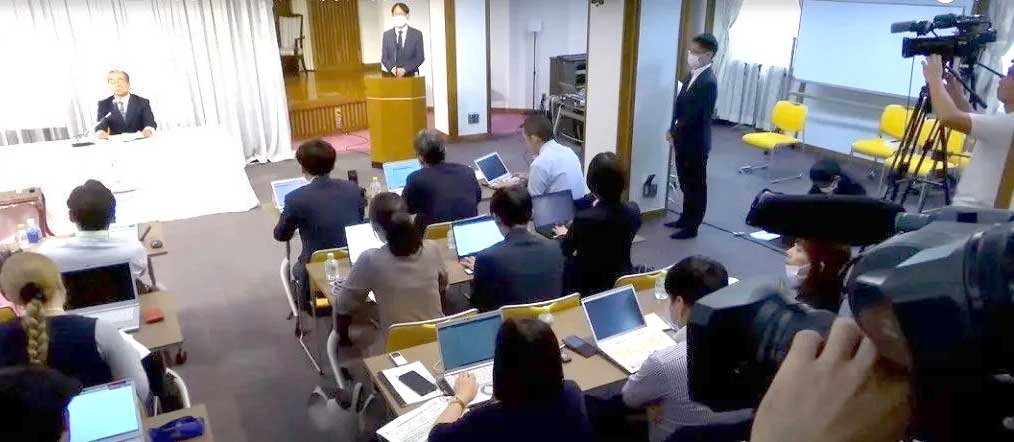
On 20th October 2022, three months after former Prime Minister Shinzo Abe was shot, the Family Federation for World Peace and Unification (formerly the Unification Church) held a press conference. As numerous television cameras lined up, twenty second-generation believers took the stage to report that they had been appointed as leaders of churches across the country. One of those who stood there was Kenryu Kageyama (影山権龍).
“It was truly a bolt from the blue. I never expected it.”
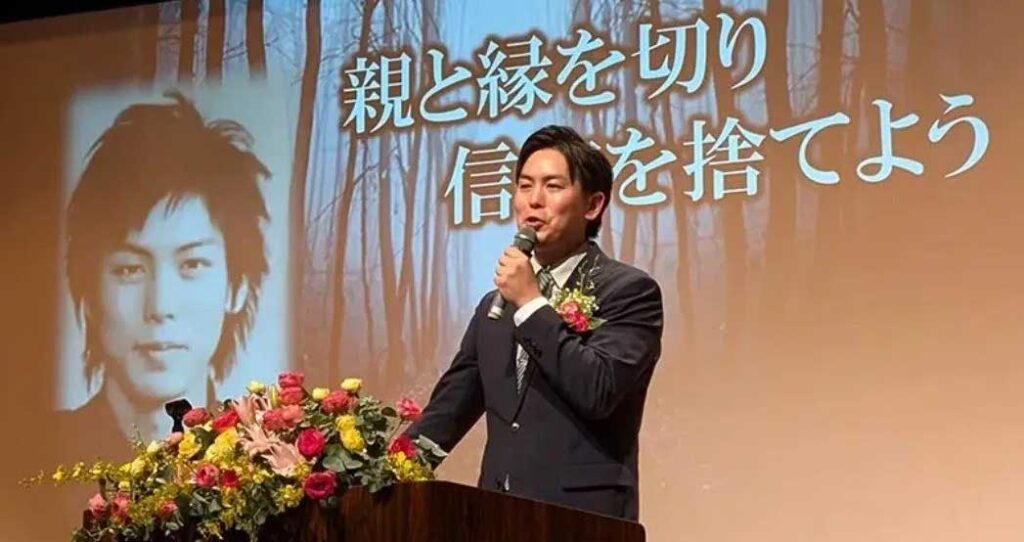
He expressed his honest feelings that he felt utterly unqualified for the role. On 20th July this year, Kageyama took the stage at a symposium held in Niigata City on the theme of freedom of religion and shared his story: “In my middle and high school years, I was rebellious. I opposed my parents’ faith, disliked the word ‘religion,’ and did not believe in the existence of God. I even found my parents’ presence bothersome.
At that time, I witnessed people around me turning to alcohol and cigarettes to escape reality. Additionally, when I was in the second year of junior high school, a close senior, one year older than me, was beaten to death in a group assault on a field late at night. That cast a shadow over my heart.
The gap between the church teachings – like ‘going to church is wonderful’, ‘God exists’, ‘living for others is beautiful’, ‘you are a child of God’ – and reality was too large. So, as I entered university, I thought about cutting ties with my parents and abandoning my faith.
Even in such a situation, I was able to open my heart to a senior second-generation believer whom I looked up to as an ‘older brother’ in the church. When I confided all my troubles to him, he unexpectedly responded, ‘It must have been tough, it must have been painful, you endured well.’ When I asked why he was crying, he said, ‘Because Kenryu, you are my younger ‘brother’. If my younger ‘brother’ is suffering, isn’t it natural for us to share that feeling as ‘siblings’?’
Feeling the warmth of my senior’s heart, I recall, ‘I felt a bit of love reach my heart, which had been frozenfaith,.’”
During the workshop, as he prayed in the mountains, he deeply realized, “I have suffered, but my parents have suffered too.” In that moment, he felt what he called “the voice of God” saying, “I have loved you and always will.” It was the answer he had long sought.
Kageyama points out that there are many similar second-generation believers, “The negative image of second-generation religious believers being forced into the faith and abused is ingrained – so it’s as if we’re all viewed as victims by society. However, I want to emphasize that there are many second-generation believers who positively and willingly practice their faith.”
Kageyama currently serves as a church leader for a wide range of age groups. The attack on former Prime Minister Abe highlighted the church’s structure, where voices from grassroots members were often not reflected in the organization. The 2nd-generation leader says, “We haven’t been proactive or creative in our approach. We need church management that reflects the voices of grassroots believers. The church should be an organization that supports its members, and the main actors in church management should be each individual believer.”
With this conviction, he established a church management committee. An elderly believer who participated in the symposium lamented that, while church leadership had gotten younger, “there aren’t many people from the younger generation.” Japan faces a demographic shift toward an aging society, and the membership of the Family Federation is no exception. Kageyama has a strong awareness of the issue, saying,
“Religious communities across Japan are grappling with the issue of passing on faith. Our challenge is to build a church where we can pass the baton to second-generation members while preserving the traditions established by our elders.”\
Click here to read more on Religious Persecution
Featured image above: Kenryu Kageyama talking about his struggles as a second-generation religious person – 20th July 2024, Chuo Ward, Niigata City. Photo: Tsuyoshi Toyoda (豊田剛) / Sekai Nippo