Publication of old photos begs the question if left-wing Asahi Shimbun is party organ of left-wing party
Tokyo, 20th September 2024 – Published as an article in the Japanese newspaper Sekai Nippo. Republished with permission. Translated from Japanese. Original article
Asahi: Was there no dissent about the photo of Shinzo Abe and the former Unification Church?
by Tetsu Iwasaki (岩崎 哲)
Prepared by Knut Holdhus
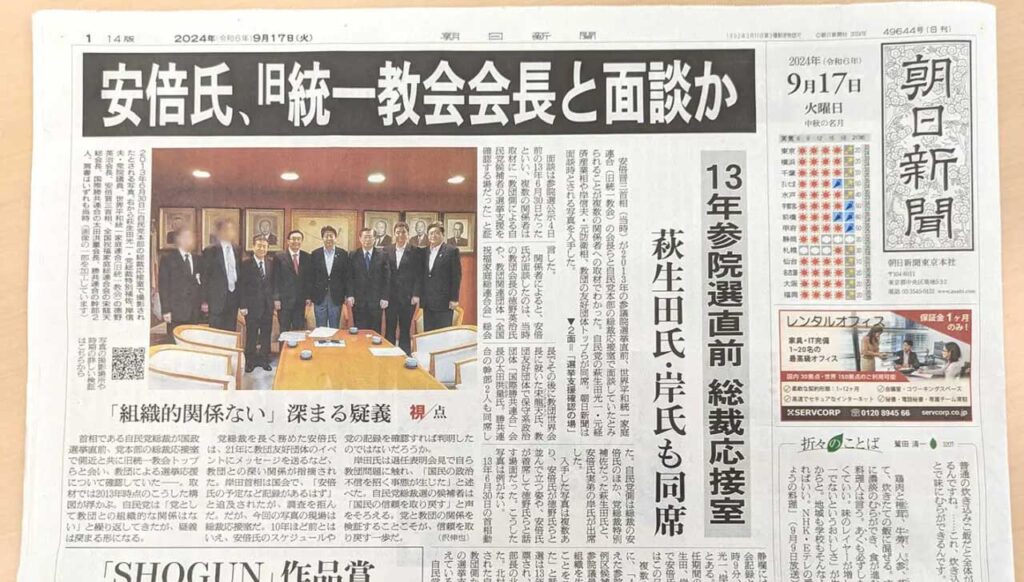
My acquaintance said, “It felt like reading a party organ paper.” It was the 17th September edition of the Asahi Shimbun. The headline read, “Did Abe meet with the leaders of the former Unification Church?”. The paper prominently featured a photo and article reporting that the then-Prime Minister Shinzo Abe (安倍晋三) had met with senior officials of the former Unification Church (Family Federation for World Peace and Unification) in the president’s reception room in the Liberal Democratic Party’s headquarters.
On this day, while most other newspapers had front-page articles like “Another Assassination Attempt on Trump” or “SHOGUN Wins Emmy Award”, the Asahi Shimbun dedicated almost all of its front and second pages to this 11-year-old story from 2013. This decision clearly indicates that the Asahi Shimbun strongly believed, as a news organization, that this was a story they wanted to highlight and report.
Although there are some differences depending on the newspaper company, the layout of the morning (or evening) edition is decided in a meeting. Even though it is not as formal as a meeting, the editorial executives, especially the layout editor, gather with the desks responsible for submissions from each department, such as the political, economic, social, and international news departments, to decide which articles will be placed on the front page, whether to include photos, and whether to expand related articles in the inner pages. I don’t know how Asahi Shimbun does it, but in any case, newspaper companies decide the layout in meetings.
On days when there is no strong candidate for the front-page top article, the desks from each department are reluctant to submit articles, yielding to each other, and in the end, pushing the responsibility onto one another. However, when they have an article, they strongly recommend, they will push aside articles recommended by other departments to take the top spot. While consensus is the basic principle here, sometimes the top article is decided (or predetermined) somewhat forcefully based on the intentions of the higher-ups, depending on the company.
We have no way of knowing exactly how the layout of that day’s Asahi Shimbun was decided. However, there must have been a discussion on “why we need to report this topic on the front page and the entire second page at this moment.” And, because they reached an agreement in the meeting, the next day’s morning edition was produced. Furthermore, this will be recognized as a “corporate decision”.
The article that day aimed to demonstrate that the “organizational relationship” between Abe’s Liberal Democratic Party and the former Unification Church was “almost proven”. As the LDP presidential election entered its final stages, they likely wanted to challenge the LDP, which had declared it would “cut ties”, by saying, “What about this?”
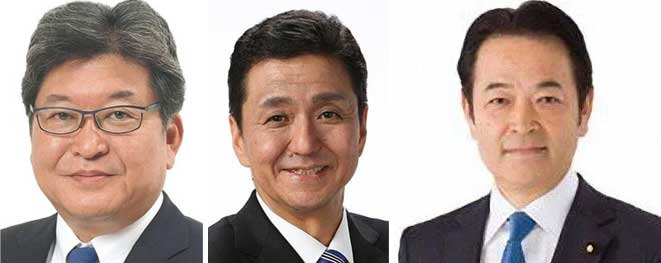
However, the article mentioned that at the time, before the House of Councilors (Upper House) election, there was talk of “supporting candidate Tsuneo Kitamura (北村経夫)”, but it cannot be definitively said that the Liberal Democratic Party and the former Unification Church “exchanged an agreement document as organizations to cooperate in the election”.
Also present were former Minister of Economy, Trade and Industry Koichi Hagiuda (萩生田光一) – then Special Assistant to the President – and former Defense Minister Nobuo Kishi (岸信夫元) – who had switched from the House of Councillors (Upper House) to the House of Representatives (Lower House) in the previous year’s election. None of the top three party officials were there, however, so it cannot be said that the LDP members present were officially representing the ‘party’ as a whole.
In response to the Asahi Shimbun report, there were doubts on social media, with comments like, “Is this really a subject worth such coverage?” There was criticism such as, “We’ve had enough of the Unification Church stories already!”
While there is “freedom of the press”, allowing them to report what they want, the question remains whether there was any “resistance” within the Asahi Shimbun itself to giving the article such prominence. If not a single person raised any objections, and if no one proposed other articles during the layout meeting, resulting in unanimous agreement, then I would be impressed by how unified the organization must be. Of course, that is putting it mildly.
The article covered almost the entire front page and the entire second page. With so much space being taken up by this, I wonder if there were any complaints from other departments that had prepared articles. This isn’t just a matter of individual departments being concerned that their articles didn’t make it into the paper. Rather, as a newspaper, which should deliver a variety of information to its readers, was everyone really satisfied with this decision?
Moreover, how did the photo end up in Asahi’s hands in the first place? On the Asahi Shimbun video site Kaisetsu Jingo (解説人語), it was explained that the image was sent to Asahi Shimbun Digital’s “Investigative Reporting Team”. This suggests it was provided as a tip-off.
The only people who know about the existence of this photo are those involved and the people in the photo, but it is unlikely that the Liberal Democratic Party would disclose it. Therefore, it is natural to think that it was leaked from someone associated with the former Unification Church. This means it was provided to Asahi Shimbun. But it makes you wonder whether the church has been careful enough in managing the photo. This is yet another question.
Click here to read more on Religious Persecution
Featured image above: Front page of Asahi Shimbun published on 17th September 2024