
Members of religious minority denied contracts because of their faith
Tokyo, 16th August 2024 – Published as the 21st article in a series in the Japanese newspaper Sekai Nippo. Republished with permission. Translated from Japanese. Original article
Discrimination felt by the cancellation of contracts
by the Religious Freedom Investigative Team of the editorial department of Sekai Nippo
prepared by Knut Holdhus
The news coverage surrounding the assassination of former Prime Minister Shinzo Abe became a major sensation when police information emerged shortly after the incident. This information stated that Tetsuya Yamagami (山上徹也), the accused, harbored resentment toward the high monetary donations made by his mother, a member of the Family Federation for World Peace and Unification (formerly known as the Unification Church). The criticism of the Family Federation became so intense and frequent that it overshadowed the heinous nature of the crime itself.
Amidst this, members of the Family Federation began to experience various forms of victimization, including discrimination, verbal and physical abuse, and damage to property.
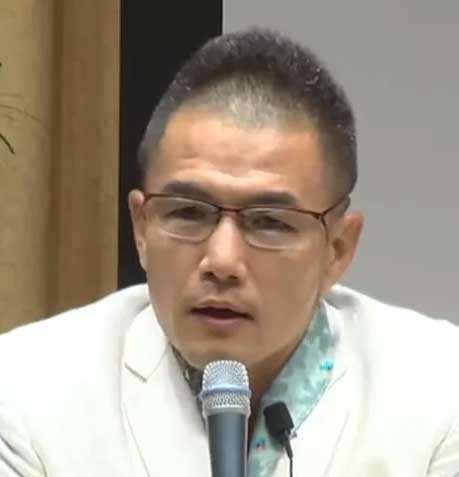
This year marks the 60th anniversary of the Family Federation‘s registration as a religious corporation. At an international symposium held in France in June, international lawyer Tatsuki Nakayama (中山達樹) emphasized that “during this period, the Family Federation has never been involved in any criminal activities.”
However, the Kishida administration, without going through the Cabinet, changed the interpretation of the Religious Corporations Act overnight. They decided to include “acts that are unlawful according to civil law” as a condition for exercising the right to question religious organizations. Consequently, the government petitioned the courts to issue a dissolution order against the Family Federation based on the Religious Corporations Act. As a result, many members are concerned that discrimination and harm will increase even further.
There are also problems affecting daily life, such as difficulties in making purchases. At a press conference on 7th November last year, Family Federation Chairman Tomihiro Tanaka (田中富広) cited cases such as “being refused real estate contracts”, “being denied the purchase of flowers or catered lunch boxes”, and “a famous automobile manufacturer banning the sale of cars, making it impossible to buy one”.
One such case occurred in March at a Nissan-affiliated used car dealership in Aichi Prefecture, where an employee of the Family Federation in the same prefecture attempted to purchase a car under the organization’s name but was refused. Although there was no issue when the employee initially expressed the intention to purchase under the organization’s name, they were later contacted by the dealership’s representative, who informed them that the sale could not proceed despite the contract (under the organization’s name) having already been stamped.
When the representative was contacted by phone for confirmation, he explained that the refusal was because the Family Federation was “a group that has caused public concern” and was “facing a request for a dissolution order from the Ministry of Education, Culture, Sports, Science and Technology”, making it “socially inappropriate, and not suitable for the company to engage with”.
In Tokyo, a Toyota-affiliated used car dealership also canceled a vehicle purchase contract after the payment had been made and the delivery date set. In September last year, a church employee visited the dealership, requested a quote, and expressed the intention to purchase under the organization’s name. While exchanging documents and setting the delivery date, the dealership contacted them on 10th October of the same year, stating they wanted to cancel the vehicle sale contract. The reason given was again “a decision based on public opinion”.
The church employee in charge said, “This clearly feels like discrimination to us. We had paid the money and set the delivery date, but the unilateral cancellation left us very depressed.”
The Family Federation has sent letters of protest to both companies through their lawyer, demanding the sales refusal be retracted, citing unfair discrimination and prejudice.
There have also been difficulties with real estate contracts. Yoshihiro Tsuda (pseudonym), an employee of the Family Federation living in Ibaraki Prefecture, faced rejection from a guarantor company when he tried to rent a property under his name for his parents to relocate to last year.
Tsuda recalls, “Because my elderly parents had to quit their jobs, they needed to move out of the house they lived in. Since my parents and my sister’s family all lived in Saitama, I was looking for a property within Saitama Prefecture.”
In September of last year, Tsuda found a suitable property, and after consulting with the real estate company, he filled out the contract on behalf of his parents, including his name, occupation, and income. He explains, “The real estate company seemed to think it would probably be okay, as they were only focused on the income aspect, but later, I received a notification that the application had been halted during the review process.”
He was not given a detailed reason for the rejection. Tsuda was left with an uneasy feeling, suspecting that his religious beliefs may have negatively impacted the contract.
Click here to read more on Religious Persecution
Featured image above: Yoshihiro Tsuda (pseudonym), who was refused a real estate contract, in the morning of the 10th August 2024 in Ibaraki Prefecture. Photo: Takahide Ishii (石 井 孝 秀) / Sekai Nippo