
By Mark Lincoln
About ten years ago, I was working for a large corporation in my hometown of Omaha, Nebraska. The company, like many large corporations, was eager to develop a reputation for diversity, equity and inclusion (DEI) by supporting groups within the company. Groups already existed for veterans, African-American employees, and those with disabilities. A new employee resource group for gays and lesbians had just been created.
While the campaign for gay rights had been framed as a civil rights issue, I had always seen it as a moral issue. I let my views be made known in our online company chat room. At one point, my manager called me to his office to explain that if I continued airing my views in the company chat room, I could be in danger of losing my job.
Preferring not to interrupt my breadwinner status for my family, I ended my participation in the online discussion. So ended my first public experience with the LGBTQ phenomenon. The issue was highly emotional and politicized; a hot topic with little middle ground.
About five years later, I approached a middle-aged lady in the Family Dollar parking lot asking if she would help us with our One Million Family Blessing campaign. She immediately asked me what I thought about gay people. I told her I felt sorry for them because they could not have children. That offended her. She became upset and complained to the manager. He came out to talk to me because he could see how upset the lady was, but he had received the Blessing a few days before.
So ended my second experience with the LBGTQ phenomenon leaving me dissatisfied regarding my ability to relate with the people of that community.
A few years later, after I retired, I was doing American Clergy Leadership Conference (ACLC) ministerial outreach at an Episcopal Church. I was aware that this denomination had a very liberal policy on gay ordination and marriage. Father John, the pastor, was kind enough to sit down with me for a chat. I brought up the topic of the need for the body of Christ (i.e., all Christian churches) to unite as one and use their combined strength to fight evil in the world. Seemingly out-of-the-blue, Father John asked me what I thought about homosexuals.
This time, I was not in a parking lot talking to a local shopper. We were two ministers with a background in Biblical scriptures; a strong common base, I thought. When I answered that the Bible is very clear about homosexuality calling it wrong (Lev. 18:22), he disagreed with me, arguing that “God is a God of love, not judgment.”
I chose the word “phenomenon” in my title because a “phenomenon” is defined as a fact or situation that is observed to exist or happen, especially one whose cause or explanation is in question. If I have learned anything about the LGBTQ phenomenon, it is that the phenomenon is very complex with a constellation of issues.
A Survey of Unificationist Attitudes
As part of a master’s degree project at HJI (formerly UTS), I conducted a survey to investigate current and former Unificationists’ attitudes toward the phenomenon. A total of 59, out of approximately 150 surveys were returned. 43% of the respondents were male, 57 % female; 71% were first generation; 29% second generation; 7% were single, 93% were married; 3% identified as LBGTQ; 97% did not; 69% said they knew persons in the UC community who are LBGTQ; 31% did not.
Three questions on the 10-question survey solicited opinions. The first questioned whether LGBTQ individuals were born that way (7% answered “Yes”), is an orientation that developed over time (64% answered “Yes”), they don’t know (23% answered “Yes”), or Other (5% answered “Yes”). The second questioned whether it is possible to become ex-gay. 90% of respondents answered “Yes.” 10 % answered “No.” Two of the three LGBTQ respondents answered that they also believed it was possible to become ex-gay. The final question was open-ended for respondents to write as much or as little as they wished regarding their honest opinion of the LGBTQ phenomenon.
As noted, “phenomenon” implies a fact or situation “whose cause or explanation is in question.” In their written responses, survey respondents commented on the sources of same-sex attraction (SSA). Their responses grouped into five main categories:
- Nature and nurture. These responses suggest that the innate/immutable argument, that homosexuals are born that way and cannot change, is too simplistic. These respondents stated while a person may inherit a certain proclivity toward homosexuality, there are other cultural and social factors that influence whether or not that person develops a same sex attraction.
Comment: In his book, Gay Children, Straight Parents: A Plan for Family Healing, Richard Cohen, former Unificationist and founder of the International Healing Foundation, says SSA springs from many sources: “There is never one thing alone that causes SSA. A combination of several variables leads to homosexual desires in men and women.”
In Coming Out Straight, Cohen lists ten potential variables, some nature and some nurture, that may contribute to same sex attractions: heredity, temperament, hetero-emotional wounds, homo-emotional wounds, sibling wounds/family dynamics, body image wounds, sexual abuse, social or peer wounds, cultural wounds, and other factors such as divorce, death, intrauterine experiences and influences, adoption, and religion.
- Nature. A few respondents stated that LGBTQ people are born that way, and therefore it is not possible to become ex-gay.
Comment: So far, no gay gene has been found by scientists researching the issue. In a study of some 470,000 volunteers from the UK and the U.S. who had reported engaging in same-sex sexual activity, researchers did not find a linked gene or any genetic pattern identifying a person’s sexual orientation. However, a wide range of insects and animals exhibit same-sex sexual behavior. Scientists are not sure why. Different perspectives are being explored.
- Societal influence. With increased social acceptance and the normalization of LBGTQ lifestyles, some respondents emphasized the decisive role of social and cultural influences, particularly in educational environments and media, including recent understandings of gender as a choice.
Comment: The same social and cultural influences that influence choices as to sexual preference render it difficult for those experiencing SSA to find a place in the UC community.
- Spiritual phenomenon. A number of respondents attributed SSA to resentful spirits who had negative experiences with someone of the opposite gender, angelic interference or “last days” phenomena.
Comment: This group of respondents believes the cause for homosexual behavior is predominantly spiritual and see spiritual liberation work at the workshops in Cheong Pyeong in Korea, as the primary way to liberate one from this spiritual imprisonment. While some cases may respond to such spiritual treatment, most reversals of SSA tendencies occur in those who are unhappy with their identity and seek therapy to understand its roots in their childhood and are eager to experience a full flourishing of their heterosexuality.
- Nurture. These respondents attributed SSA to traumatic sexual experience, usually at a prepubescent age, sexual abuse at home or outside the home, or unhealed emotional wounds in the family as well as unmet needs for love in the family.
Comment: These responses point to the central need for parental love in the family. Any problems in the family, leading to lack of parental love towards the child(ren) will impact their growth and may lead to unexpected issues later, including SSA.
Conclusion
It is fair to say that what Unificationists think about the LGBTQ phenomenon has been greatly influenced by what Rev. Sun Myung Moon has said in his various speeches. His viewpoint is well represented by the Unificationist “Position Statement on Homosexuality” which points to the sexual love shared by husband and wife as the supreme example of the joy God wants us to have and that “husband and wife together reflect the image of God as male and female.”
In light of this framework, and consistent with the world’s major religions the statement rejects as sinful all forms of sexual behavior, both homosexual and heterosexual, that take place outside of marriage between a man and a woman. At the same time, it recognizes that “society has maligned and mistreated those who acted upon same-sex attractions, while being much more lenient with heterosexual sin” and defines “such hypocrisy” as “tragic.”
We have to walk a very fine line that honors every person as a child of God while at the same time recognizing the fundamental pair system expressed throughout creation. An elder UC member, who has worked in this ministry for a number of years, noted that falling back on the traditional Christian approach of “loving the sinner, but hating the sin” would not be well-received in the LGBTQ community. It is too judgmental. His more nuanced approach, “love the being, but not the doing,” helps us walk the fine line between truth and judgment.
My wife and I attended a Sunday service at the Metropolitan Community Church of Omaha (a nation-wide gay-affirming church with branches in 40 cities), to establish a relationship with the local LGBTQ community. We were encouraged by an elder brother mentor who has been ministering to the LGBTQ community in the UC for a number of years. He knew it was important to meet some of the people in the gay community in Omaha, even though they were not UC members. The result was what our mentor hoped for, an understanding that gays and lesbians are human beings seeking happiness just like us. So ended my fourth experience with the LGBTQ phenomenon. ♦
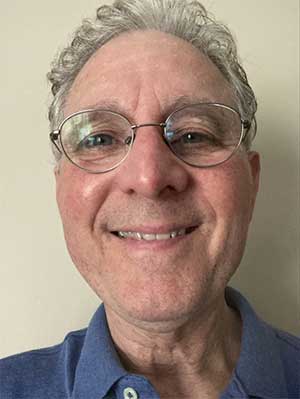
Pastor Mark Lincoln was born in 1955 in Omaha, Nebraska, and is the oldest of eight children. His father was the second generation of Russian Jewish immigrants and his mother the first generation of Polish Catholic immigrants. Mark is a 2024 graduate of the HJ International Graduate School with an M.A. in religious studies. Mark and Yoko have one daughter, Katherine, who received the marriage Blessing in 2016 and has given them three grandchildren.
🦻Listen to this text using the NaturalReader Google Chrome extension. Download it here.