
Leading scholar warns of new threats to new religious movements
A comment by Dr. Massimo Introvigne, founder of CESNUR, an independent network of scholars, and editor-in-chief of Bitter Winter, a magazine on religious liberty and human rights. The comment was made during Session V, “New Religious Movements and Contemporary Threats to Religious Freedom”, 12th April 2024, the second day of an international online 3-day conference on “Peace and Public Leadership: Addressing the Challenges of Our Times”, organized by HJ International Graduate School for Peace and Public Leadership, New York, USA.
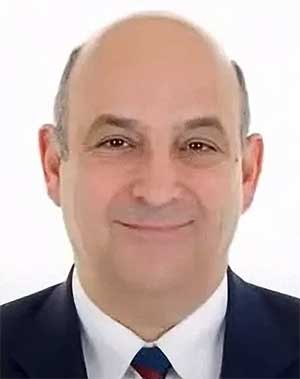
Dr. Introvigne was asked by the moderator of the panel discussion, Dr. Franco Famularo,
“I’m wondering whether you regard threats to new religious movements (NRMs) – let’s use that term today – to be more serious, less serious, or about the same as threats to NRMs during the so-called ‘cult wars’ of the 1970s to the 1990s.
And you might think about the role of the internet and social media here, which weren’t a presence in the earlier period.
But I wonder whether the situation is worse, better, or pretty much the same. That’s “A”. And “B” – you’re known for your encyclopedic approach to new religious movements – and you did a case study of the Family Federation. I’m wondering if you could briefly tick off other case studies of religious liberty crises for an NRM that you could have chosen for case studies if you had decided to.”
Yes, we could have a full conference on this, but to be brief, I believe we are going back to the times of the “cult wars”, but not everywhere.
The main example is what happened just two days ago in France.
In 2001, France tried to pass a law criminalizing “cults practicing brainwashing”.
But after the objections of scholars – which were perhaps less important – and of the constitutional court – which were perhaps more important – they went back to the expression “mental manipulation”. Then the constitutional court said, “Not good enough”.
And so they passed the About-Picard law, which incriminate the “abuse of weakness” (abus de faiblesse).

Then, after many years, they realized they had not “captured” many new religious movements. Particularly, they lost their main case, about what in 2001 they regarded as their two main targets – the Jehovah’s Witnesses and Church of Scientology.
And so, two days ago, finally, they passed a new law where they go back to something they called “psychological subjugation”, which is really “brainwashing”.
And it has two differences from “abuse of weakness”.
First, the person should not necessarily be weak. Everyone can be a target of psychological subjugation or subjection.
And number two, it is not necessary, as it was in the 2001 law, that the victim of “psychological subjection” causes harm to him- or herself. It is enough that there is a deterioration in their mental health.
But according to the governmental anti-cult agency MIVILUDES, being part of a “cult” involves a deterioration in the mental health.
So, we are very much back to 2001, and of course, in Japan, we are back to the eighties, when the National Network [National Network of Lawyers Against Spiritual Sales] launched its campaign against the Unification Church.
But that’s not happening everywhere, even if we see the Unification Church case in Japan being referred to in countries such Italy or Germany or even Kenya or South Africa in order to pass anti-cult legislation there.
But I believe some landmark criticism of the “brainwashing” hypothesis and the notion of “cult” has been established by both US courts and the European Court of Human Rights.
So what we saw as this deteriorating situation for new religious movements is so far localized in a few countries, such as France and Japan.
And of course, it never went away under totalitarian regimes, such as China or Russia.
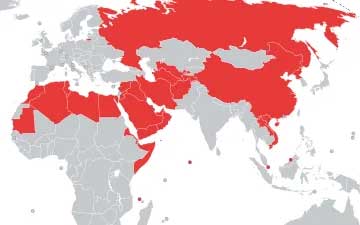
In terms of the most targeted movements, I believe, globally, another movement which is targeted in many countries is the Jehovah’s Witnesses. We can call it a “new religious movement”, an “old new religious movement”, a “religious minority”.
Of course, its opponents, including the French government, simply called it a “secte”, which should be translated as “cult” and not “sect”.
And in Japan, a set of actions against Jehovah’s Witnesses have just been started. I’m an expert witness in this case, together with my colleague Holly Folk from Western Washington University.
So the Jehovah’s Witnesses are next, also in Japan. And, of course, in Russia, they are banned and have been liquidated, all their property has been confiscated, and with many of them put in jail.
But they’re attacked also in several democratic countries, including Spain right now.
And so, the Jehovah’s Witnesses would have been an excellent case study we could have proposed today. But, of course, there are several others, too.
Featured image above: Dr. Massimo Introvigne 6th April 2023. Photo: FOREF. Published with permission.