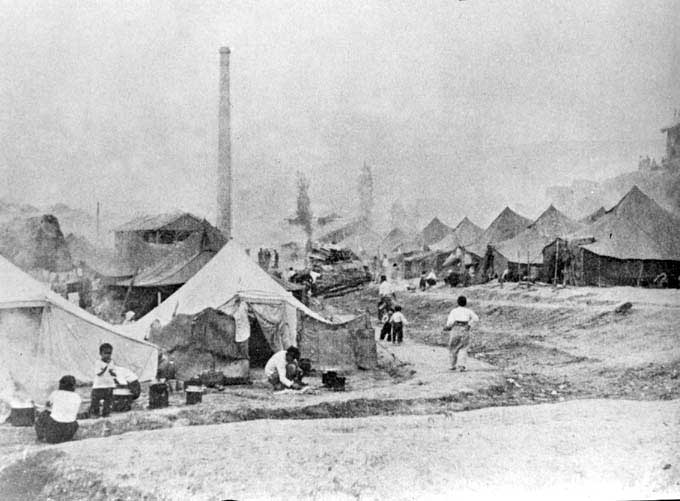
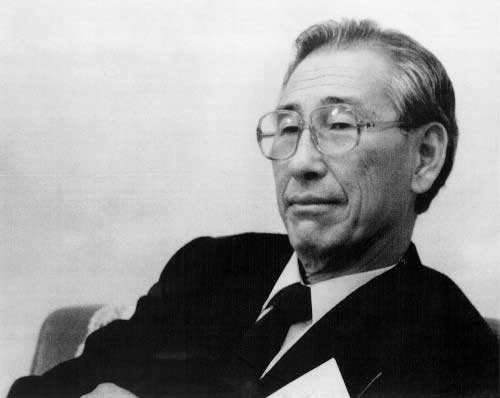
Aum Duk-moon was born in Seoul on March 10, 1919. He met Father at the Waseda Technical High School in Tokyo in 1941 and then later a few years later in the course of their work. Remarkably, the two met again in refugee-flooded Busan during the Korean War early in 1951, days after Father had arrived there at the end of his long trek from North Korea after escaping the Hungnam labor camp. Father stayed at Mr. Aum’s home for a time and taught him the Principle. Mr. Aum went on to found a successful architectural design company.
In an interview Peace TV conducted with him in 2010, Mr. Aum—who was then ninety-one years of age—reminisced about earlier times, offering a unique perspective on stories we have heard from Father himself. Last week and this week we are posting the English translation of what he said.
Part 2 (Click here to read Part 1)
How long did you stay together in the Beomnetgol mud-hut?
We lived through one winter in the Beomnetgol mud-hut. I met him at the “forty steps”[1] in early January. He stayed in our home for about two months. We stayed about a month and a half in Jagalchi Village, and then we went to the laborers’ house in front of Choryang Station in Choryang-dong and stayed there for a month or less. After that, we went into that hilly spot, Beomnetgol.
We built the hut there and stayed from late autumn to early summer or early spring. If you add it all up, we stayed together for about a year.
After that, you went back to your family because of your job. Is that right?
Yes. I couldn’t stay apart from my family any longer, so I had them come out to Busan…. There is a hot spring in Busan called Dongnae Spa. I built a small shack there and lived there with my family.
Is that how you came to part from Rev. Moon?
Yes, that’s why we parted company.
In the years since then, you’ve probably heard of the many projects Rev. Moon has been involved in. What character trait do you think allowed him to make an impression in such a variety of fields?
He has no selfish desires or mercenary thoughts. He doesn’t keep any money aside for himself.
Can you elaborate?
He never keeps money aside for such purposes or for his personal comfort. He doesn’t think about living in clover. He’s thrifty and has a clear philosophy. That philosophy, as I said before, is the messianic philosophy, if you will. He sets a good example for others.
When he went to the United States, he held a great rally in Washington, bringing together three hundred thousand people. His leadership was quite remarkable. Some aspects of his character are extraordinary. He was fundamentally different from other people. I knew from the first that he was such a man; everyone became aware of it from various things, starting with the Divine Principle.
You can’t criticize him in any way. He is the most virtuous of men.
He lived frugally in Beomnetgol?
He transcended such matters as how he dressed, ate and lived, and he didn’t sleep very much. So at night, when Beomnetgol seemed stuffy, we’d climb the hill behind the village to a big rock. When you looked down from that big, flat rock, which was like sitting in a pavilion.[2] You could see the port[3] that was full of American ships, which were all brightly lit. We’d look down at them, and he’d ask me to sing. When I was young, I liked to sing, but I didn’t know popular songs. I liked classical music and arias. He never seemed to stop once he started asking me to sing. He’d ask me to sing again and again and when I’d finished, he’d ask if I knew any other songs. Once it got started, it lasted at least two hours.
He wouldn’t sleep much at night. We’d be tired out and sleeping, and when we woke up, he’d already have cooked breakfast for us. We didn’t have a kitchen at that time so the outdoors served as our kitchen, He would wake us up and tell us to have breakfast. He was very frugal and would not be concerned for himself at all. What can I say? You can’t even find a mother in the whole world who is like that. You can’t imagine. And there was nothing he wouldn’t eat, even sour kimchi.
In his autobiography, we read that from that time in Beomnetgol, when Exposition of the Divine Principle was written and they began propagating it, his movement was often denounced by other Christian churches. What did you, as a friend and follower, feel about Rev. Moon being called the founder of the “heretical Unification Church”?
Because of that, we were much criticized and abused by other religions. They had come to regard us as heretics in the first place because religion had gone wrong from the start. So in order to set things straight, we needed to go through a certain course.
To go through that process, we needed to be considered heretics; otherwise, we couldn’t fulfill the course. Therefore, to straighten out something that has gone wrong and carry out the process that will straighten everything out, we needed to hold formal events that others would view as heretical. In short, we needed to carry out formal events to restore everything to its proper place, but those were heretical from the viewpoint of others, seemingly very strange, and couldn’t be interpreted sensibly. But in a deep internal sense, they needed to be carried out.
That’s why, sometimes, even I was half in doubt and could not fully believe everything, because the process was so complicated. But as you go deeper and deeper, you come to see that they needed to be carried out, because otherwise nothing can be corrected, and nothing fits together.
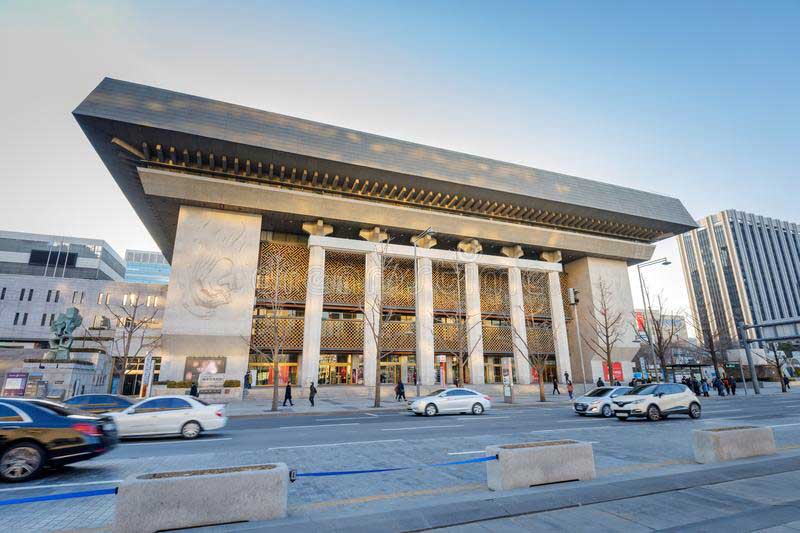
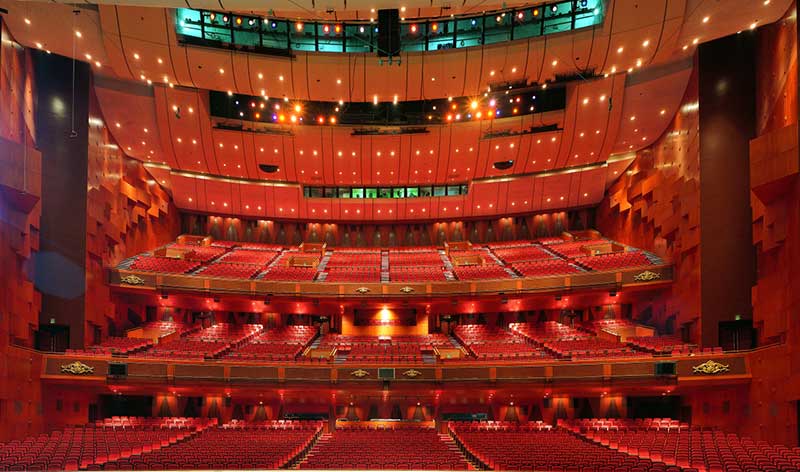
Seoul’s iconic Sejong Center for the Performing Arts was designed by Aum Duk-moon
Are you saying that if there is a reaction to something, it needs to be restored to its proper position?
If something has fallen out of place, you need to put it back. This work of restoring everything to its proper place has caused us to be accused of being heretical by others.
What do you think the value of Rev. Moon is as a friend in this day and age? What is his value in Korea, or in modern society?
His merit lies in his single-hearted devotion; he hasn’t changed at all for decades. Being persecuted and abused and taken to the police station is not a problem for him; when it comes to the providence, he has never changed. He has kept to the one path without changing, just going his way, even though he has had to face many hardships, even death.
He has given up wealth and prosperity to follow that path. That’s what’s so great about him. That’s why I could not accuse him of being a heretic.
What do you talk about when you meet Rev. Moon nowadays?
He misses the good old days. He remembers that when he was persecuted by others, I still recognized him and understood him and that even in the difficult times when we lived in Bumin-dong and we were persecuted, abused, and in the end, thrown out by a fearsome old woman who was the owner, I still stood by his side and worked with him. I also did many other things for him.
On Sundays, because we didn’t have a church then, Mr. Kim [Won-pil] came to our home in Bumin-dong. He had come south with Rev. Moon after his time in Hungnam Prison. He didn’t have anyone to turn to for help, so he used to work in a large eating-house wearing black rubber shoes on his bare feet, washing dishes in exchange for food.
In the past, he had been a grade school teacher, but he had followed Rev. Moon and endured many hardships, even imprisonment, and had come to Busan with him. There, he did the lowest work in the large eating-house, a job shunned by others, and because he was washing dishes barefoot in the cold winter, his feet became quite badly swollen.

When you wear rubber shoes, your feet get very dirty. Because you walk shuffling your feet, your feet become black with dirt. He would wash his feet cursorily and walk to my home, because he had no money to get a ride, and his feet would be very dirty. My home was on the second floor, and he would leave footprints on the stairs as he came up. Then the old woman, the owner, would shout at us. She was the mother of a pro-Japanese policeman, and she shouted abuse at us, saying the Korean people were helpless. This would startle my wife, so before she heard those words, she would go down very quietly with a cleaning rag and wipe his footprints off the stairs.
I then got a job as the overall designer and director for a police hospital that was being built. At that time, designers were scarce. After I began following Rev. Moon, however, to use the Unification Church expression, demons and devils interfered with me, and seemingly for no reason I lost my job.
I was unemployed at a time when we were refugees and needed all the money we could make. There were five of us and I was jobless. My wife would go out to sell the things she’d brought with her when we got married, as well as new clothes that she hadn’t worn even once. With that money, she bought rice. She kept it a secret, but Rev. Moon, being quick-witted, knew what she was doing. He knew that instead of nagging and whining, she supported him and me in that way. Rev. Moon was deeply moved and very thankful to my wife for doing so much for him, and he has more than expressed his thanks to her.
Do you talk about these kinds of things when you meet?
Because no one else knows about them, he likes to listen to these stories when I’m there. He brings them up himself, and since it is he who brings them up, and there are other members around, I can’t avoid talking about them. How we felt at the time is something no one apart from us knows about. He doesn’t usually talk about such things. These things come up only when we are talking together.
If I were to go into all these interesting topics, it would indeed make quite an interesting story.
Aum Duk-moon and True Father met and spent time together at various times throughout their long lives, which in a way ran a parallel course. Mr. Aum was a year older than True Father and died in July 2012, just two months before True Father ascended. It was not easy for Father to have friends in the usual sense due to his special mission, but Aum Duk-moon and True Father were close from when they were in their early twenties, and that personal closeness remained a feature of their relationship.
[1] A street that was a haven for refugees and dock workers
[2] Probably a reference to the fact that it afforded a view out over the ocean
[3] Busan harbor, where Father had worked as a laborer for a time