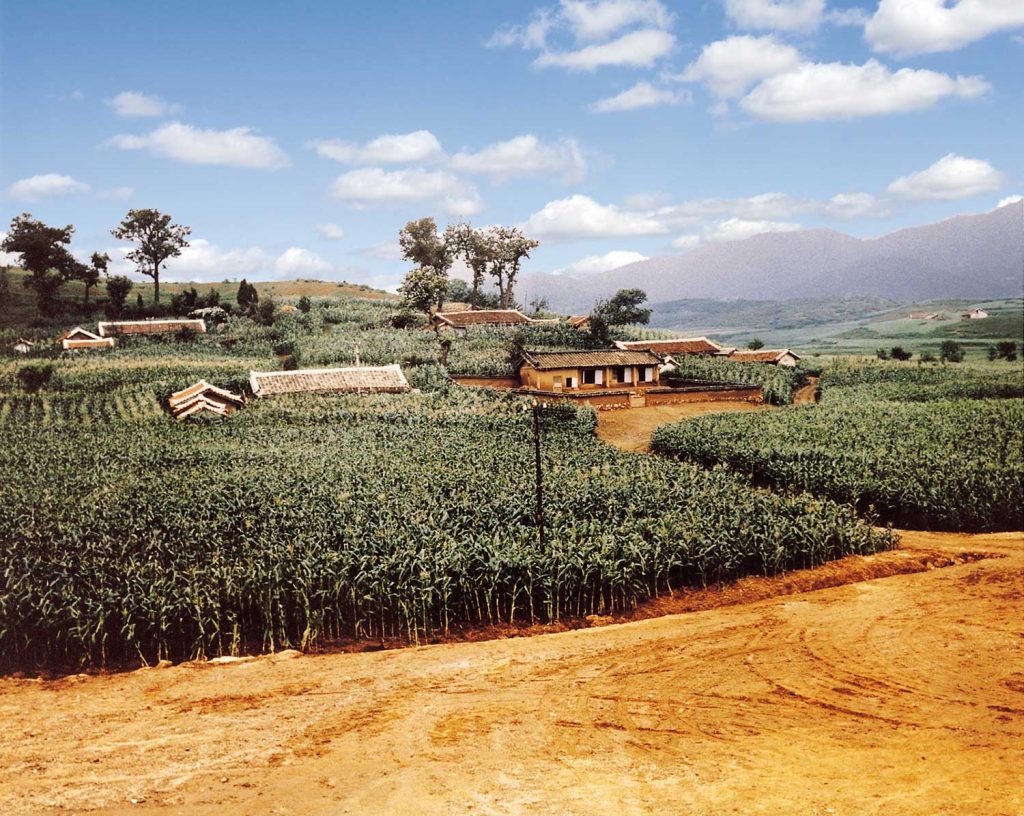
From the 1960s True Parents initiated and supported a global movement to confront the communist ideology and its practice. Father would speak about North Korea and its leader Kim Il Sung. Yet, against all the odds, in the later months of 1991 True Parents were able to visit North Korea. That they could go at all was a miracle and that they could engage so personally, meaningfully and productively with the leader of the strongest communist dictatorship of all time evidences the great work of God. Not long after Father and Mother and their party returned from Pyongyang, Dr. Peter Kim gave the following testimony to the American members in New York.
By Dr. Peter Kim
World Mission Center (New Yorker Hotel), New York City
December 15, 1991
Part 4 (Click here to read Part 1 and Part 2 and Part 3)
The North Korean secret police reported to Kim II Sung what had happened. But instead of being angry, he became more curious to meet Father. We were told Premier Kim II Sung called Deputy Prime Minister Kim around midnight and said, “I am more interested now to meet with Rev. Moon. Rearrange the meeting.”
So first thing the next morning, they came up to my room and asked how many suits I had. I had only one. They said, “You had better wear the best you have and if it is not ironed, give it to me and we will press it.” We knew the time was coming.
Beautiful North Korea
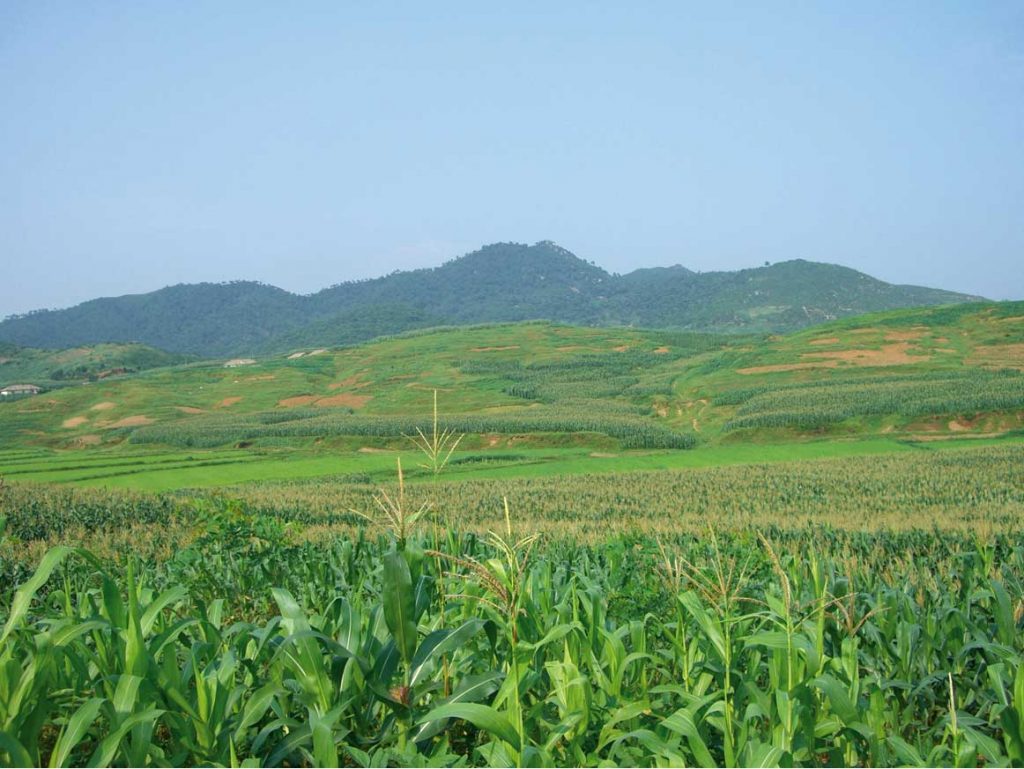
They told us we would be able to meet Premier Kim II Sung, but they did not tell us when. Then they said, “Let’s go to see the Diamond Mountains.” We flew to the Diamond Mountains area, which is magnificent. Nearby there is a beach and lake, even a hot spring. This mountain area is about forty-five miles long and about twenty miles wide. There are many mountain peaks and twentytwo valleys. It takes at least one day to enjoy each valley. It would take at least three or four weeks to see the entire area. There are many beautiful waterfalls and rock formations. Until I went there, I could not imagine how beautiful it is. Father spent two days there and saw two valleys.
There are many legends and stories about the Diamond Mountains. One tells of an old man who lost his health and hope for living. He retired to these mountains and decided to see their beauty before he died. Leaning on his cane, he went up the mountainside and came upon a spring. He drank from the spring and became so young and healthy that he forgot about his cane and came down the mountain without it. This is why they call that spring “The Spring of Forgetting Your Cane.” Father drank some water out of one of the springs. Doesn’t he look younger now? [Laughter]
We were supposed to meet Premier Kim II Sung, but again something happened. Even while we were climbing the mountains, Father was constantly educating Kim and one other man who is very powerful in the communist party. Father constantly pounded on them with head-wing and true love, saying, “Juche ideology is not going to work; the world is not that small. You people are in a cave; you have to open the door. Otherwise North Korea will be doomed.” Father knew time was short, so he had to give him them as much of his teaching as he could. At one point Deputy Premier Kim said to Father, “Rev. Moon, you are high up there, I am low. I want to go to a lower person like Dr. Pak and talk, so you go ahead.” And he retreated.
Deputy Premier Kim got scared again that day. He called Premier Kim II Sung’s office again and said, “I can’t bring Rev. Moon! If I bring him there, I know that everything will be destroyed, including my family. I cannot risk that.” So we had to fly back to Pyongyang instead of seeing Kim II Sung. His location was always a secret.
Father visits his hometown
On December 4 Father signed two separate communiques and then went to visit his hometown on December 5. Father’s hometown is in the countryside, far from any airport, so the North Korean government provided two fourteen-passenger military helicopters. The first helicopter was for Father and Mother and our party, and a delegation from the North Korean government. The second helicopter was for the media.
We landed on the playground of the elementary school. Hundreds of people from around the entire county came out to watch and wave. They never saw anybody come home in helicopters or with a government escort. Even there in the rural countryside, a Mercedes Benz was waiting. Father was greeted again by his sister and relatives.
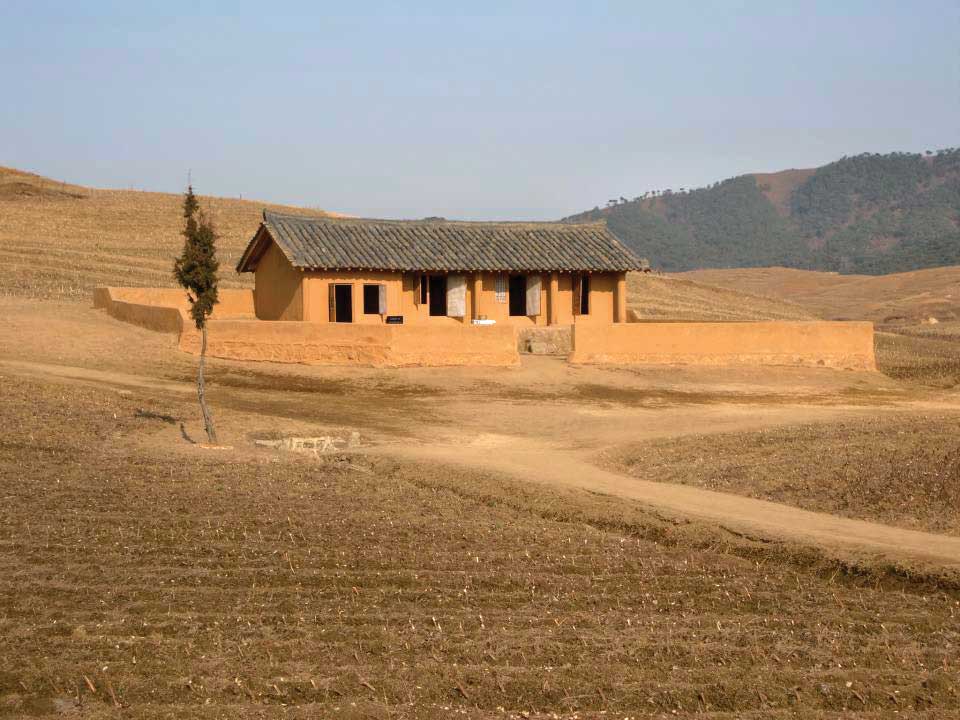
We drove to Father’s nephew’s house and took pictures. It was nearby. When Father saw the rice paddy which his family used to own, he stopped the car, went into the paddy, and took some pictures. Then Father was driven to the house where he was born and grew up. For one week several hundred people had been mobilized to build a new road to his original house. They painted the entire house and even built a front yard and steps. When we went there, the front yard was still muddy because they put new dirt. Inside, I accidently touched one of the poles and the paint was still wet. They had really tried to give a nice homecoming and good feeling to Father.
The main part of Father’s birth place, with four rooms, was still intact. Think about the feeling we had visiting there, seeing the house and standing in the yard. Father went into the room where he had been born and prayed. Father’s comment was, “This house used to be very big, but now it is small.” To a small child the house looks big but to a grown up the house looks rather small.
When we went into the living room, Father pointed to a small Korean-style window on the wall. Father said, “This used to be pretty big because I used to come in and out of this small window.”
So many memories came to Father’s mind, but he could not enjoy them so much. As he had said at the airport, he was not there just to visit his hometown and see the relatives, but for the reunification of Korea. Even then his relatives were crying and crying, but Father kept telling them, “Don’t cry, don’t cry.” Suppose Father cried, what would happen?
We took many pictures. A couple of other houses and a well in front of Father’s house were still there. Father has told many stories about that well and about catching a kingfisher on a cliff with red muddy soil. The bird has a long beak and is a little bit bigger than a sparrow. This bird dug holes on the cliff and laid eggs there. Father used to share with us the story of making steps to climb up the cliff and catch the eggs from those holes. All those stories I heard over and over. I stood in front of Father’s house to see if I could see the cliff, and there it was about a thousand meters away from his house.
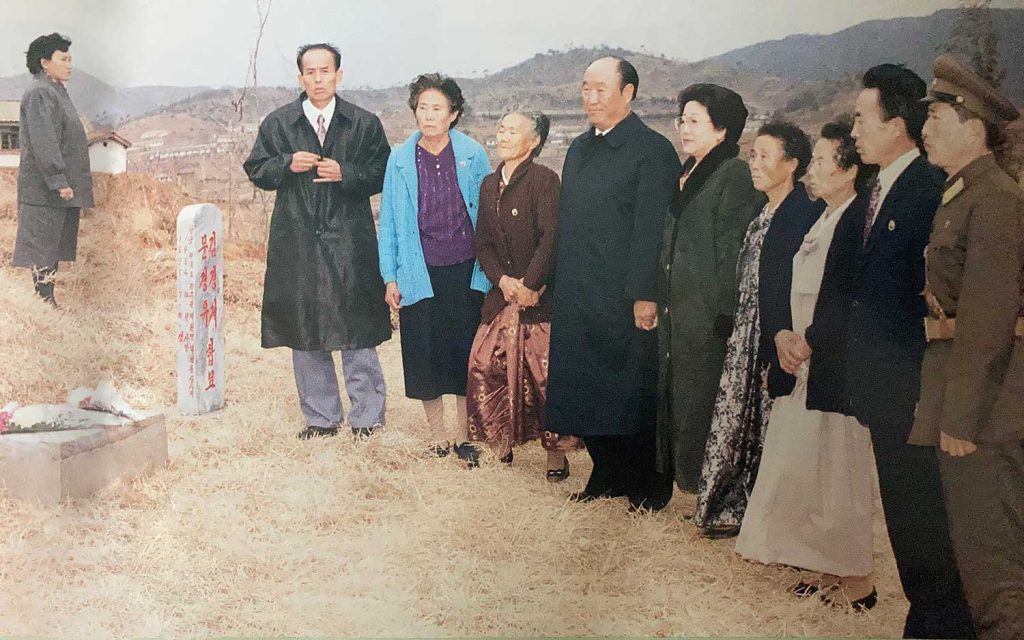
Father’s house is not really occupied now. That village is almost vacant. The relatives moved out and settled in another village about a mile away. Before they went to have lunch, Father went to see his father and mother’s gravesite, which is not far away from his original house. The government had even put a headstone in front of those graves. The sod on the graves was newly put down. On the headstone they put both names, the date they passed away, and the children’s names, including Father’s name and Father’s brother.
A couple of other relatives’ graves were there. In Pyongyang we told the North Korean officials that we wanted to have some rice cakes, fish, or some food in addition to flowers when Father goes to visit the gravesite. I don’t know why—maybe it is not their custom anymore in North Korea—but somehow nothing was prepared except two small flower bouquets. When I saw Father and Mother just putting two small bouquets on the headstone, with no fruit or rice cake whatsoever, I felt so sad. But there were no stores or supermarkets there, so I could not go and get anything.
After that, we had lunch at Father’s nephew’s house. In that old small room they put a table. Father and Mother, and Father’s elder sister, younger sister, nephew, and sister-in-law sat together, also Dr. Pak and I. Of course, the county head of the communist party and the head of the communist women’s organization sat at the table. The North Korean government must supervise everything that happens. They were afraid that maybe Father’s sisters or family members might make some comments about their system, about Juche ideology, or about their living situation. So without being invited, they came and watched what everybody was doing. That was sad to see.
But watching Father’s family was beautiful. Father’s younger sister called him “Oppa,” which means “elder brother.” I had never heard him called that. Obviously, there is not enough food in the countryside around there. But they brought a professional chef to prepare delicious food, with many different dishes. A few items were done locally, like rice cake, which I enjoyed most, and com on the cob, which Father used to eat a lot.
Father’s younger sister said, “Oppa, this corn is what you used to like very much, so please eat this. We have a lot.” On purpose they always say, “We have a lot.” When I asked them, “Please eat this, this is delicious,” they said, “We can eat later, we have plenty.” The communist officials were watching, so they could not say they want to eat it. So Father ate about half and then gave it back to her, saying, “Now you eat it.” Then she ate a little bit more and said, “I have more, I will eat later, you eat more.” They went back and forth. It was beautiful to watch.
True Mother brought three bags full of gifts—sweaters, Korean dresses, and fabric. Father gave Christian Bernard watches to the government officials who sat there. The government officials did not expect it, but were so happy and just stood up and received the gifts. I had some doubt that Father’s family would be able to keep the gifts, so I had some things in my own bag. I was sitting next to Father’s sister-in-law and passed under the table the women’s stockings I brought to her. Though I did not know I was going to North Korea, I told my wife I felt I needed some gifts that poor country people do not have. My wife gave me about fifteen pairs of women’s stockings and said, “This is all I have.” I carried them all the way and gave them there.
When we left the house, I took the corn half-eaten by Father because Father and his sister had shared it together. One of the people in the room said, “We have more untouched corn, take this one.” But I said, “No, this one is okay.”
Continued next week…